
How To
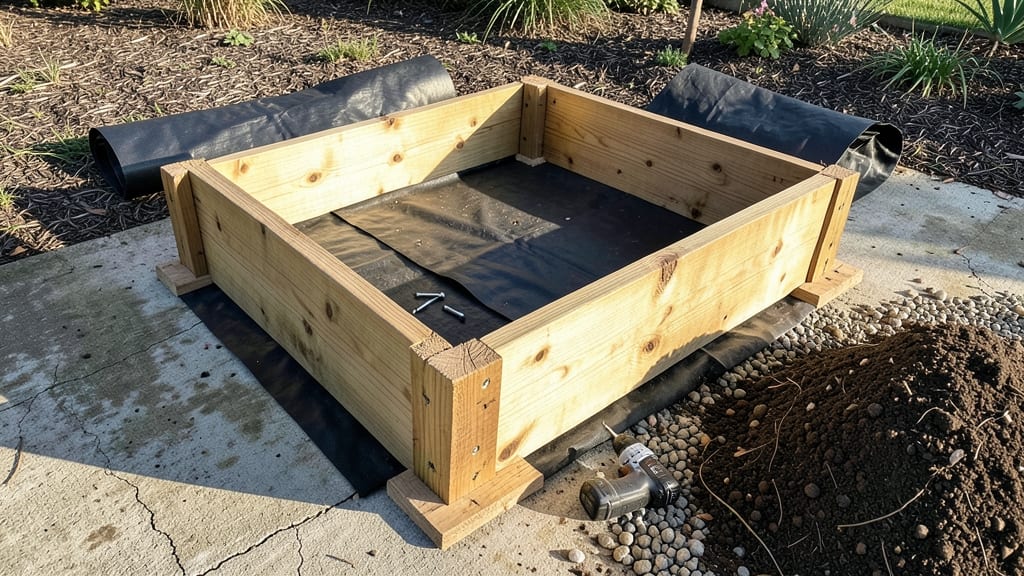
Yes, you can put a raised garden bed on concrete, but stability and drainage require careful planning—use leveling pads, gravel bases, or lightweight materials to prevent cracking and ensure proper root growth while avoiding moisture buildup beneath the bed.
Concrete surfaces offer durability but lack natural drainage, which can trap moisture beneath your bed and weaken the structure over time. 🌱 The key is balancing weight distribution—heavy cedar or metal beds may crack the slab if not properly supported, while lighter materials like composite lumber reduce pressure.
I recommend starting with a gravel base (2-3 inches deep) to improve drainage and add leveling pads under the corners to distribute weight evenly. This simple setup prevents shifting while keeping roots healthy by allowing excess water to escape.
For added stability, consider adjustable legs or a perforated base—these let air circulate and prevent water pooling. If your concrete slab is already cracked, skip the raised bed entirely and opt for in-ground planting or a lightweight fabric-lined bed instead.
The right approach depends on your bed's material, size, and the concrete's condition, but these solutions work for most DIY gardeners.
💡 In This Article
- How to Stabilize Raised Garden Beds on Concrete Surfaces
- Best Materials and Techniques for Concrete Garden Bed Setup
How to stabilize raised garden beds on concrete surfaces
Concrete slabs create a stable foundation but pose unique challenges for raised beds due to their rigid, non-forgiving nature.
The primary concern is weight distribution—concrete has a compressive strength of about 3,000-4,000 psi, but concentrated pressure from heavy materials (like untreated cedar or metal) can cause cracks over time. This happens because concrete absorbs moisture and expands when wet, while garden beds add downward pressure.
The solution lies in spreading the load across a larger surface area to prevent stress points.
Start with a gravel base (2-3 inches deep) spread evenly across the concrete area where your bed will sit. This creates a 1-2 inch gap between the bed's base and the slab, allowing moisture to escape while distributing weight.
For extra stability, place leveling pads (like rubber or plastic grid mats) under each corner—these compress slightly to absorb minor unevenness in the concrete while preventing direct contact. If your bed has adjustable legs, set them to 1-2 inches above the gravel to maintain airflow underneath.
Material choice matters significantly here. Lightweight composite lumber (weighing ~3 lbs per linear foot) is ideal for concrete surfaces, while untreated cedar (weighing ~4-5 lbs per linear foot) requires additional support.
Metal beds are the heaviest option—steel alone can weigh 10+ lbs per linear foot—and should only be used with a wide gravel base (3+ inches) and leveling pads at all four corners.
The goal is to keep the total weight per square foot under 50 lbs to avoid stressing the concrete.
Drainage is equally critical. Without proper airflow, moisture trapped beneath the bed can cause root rot in plants while also weakening the concrete over time. Use perforated bed frames or fabric liners with drainage holes to allow excess water to escape.
For extra protection, consider a landscape fabric layer between the gravel and concrete to prevent fine particles from clogging drainage paths. This dual-layer system keeps roots healthy while maintaining structural integrity.
If your concrete slab already shows cracks, skip the raised bed entirely—those cracks will only widen under additional weight. Instead, opt for in-ground planting with a lightweight fabric-lined trench or a surface-level planter box that sits directly on the ground.
The key is matching your bed's design to the concrete's condition, not forcing a solution that could lead to costly repairs down the line.
For visual reference, imagine your bed sitting on a cushion of gravel with four support points (the leveling pads) instead of resting flat. This creates a stable platform that prevents shifting while allowing water to escape—just like how a good foundation supports a house without cracking under pressure. 💫