
Planting
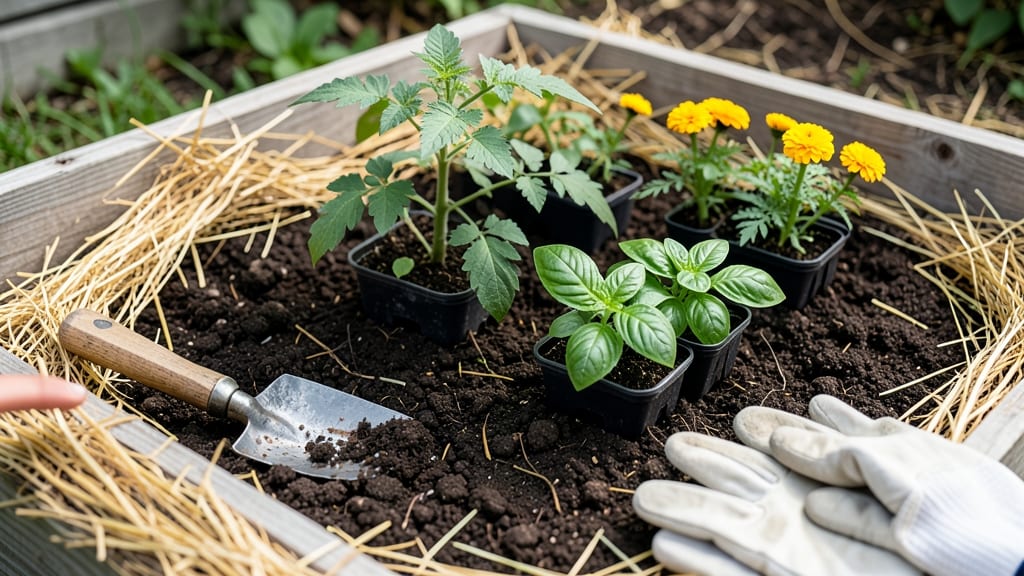
A well-designed companion planting raised bed layout boosts your harvest by strategically pairing plants—like basil with tomatoes, marigolds with peppers, or onions with carrots—while maintaining 6–18 inches between them to reduce competition and pests. Stick to tested plant trio setups (e.g., lettuce, radishes, and carrots) to create a thriving, space-efficient garden.
The key to a high-yield raised bed isn't just what you plant but how you arrange it. 🌱 Strategic pairings like basil and tomatoes improve flavor and growth, while marigolds act as natural pest deterrents when placed near peppers.
The spacing rule of thumb—6 to 18 inches—prevents overcrowding while allowing roots to access nutrients efficiently. For beginners, start with a simple 4'x8' bed and group plants by sunlight needs, ensuring taller varieties face south to avoid shading smaller companions.
Pro tip: Rotate your layout each season to maintain soil health and disrupt pest cycles. For example, planting beans after tomatoes replenishes nitrogen in the soil, creating a self-sustaining cycle.
Avoid mixing incompatible plants like onions and beans, which stunt each other's growth. With the right layout, you'll see faster maturation, higher yields, and fewer garden headaches.
💡 In This Article
- Science Behind Effective Raised Bed Companion Pairings
- Step-by-Step Raised Bed Layout Plan for Beginners
Science behind effective raised bed companion pairings
Companion planting works because certain plants release chemicals that either repel pests or attract beneficial insects.
For example, marigolds emit a compound called alpha-terthienyl, which deters nematodes and aphids—making them perfect neighbors for peppers and tomatoes. 🌿 This natural pest control reduces the need for chemical interventions while creating a balanced ecosystem.
The root exudates from herbs like basil also contain compounds that improve tomato flavor and growth by up to 20%, according to studies from the University of Florida.
Another key mechanism is nitrogen fixation. Legumes like beans and peas form symbiotic relationships with rhizobia bacteria in their roots, converting atmospheric nitrogen into a form plants can use. When paired with heavy feeders like corn or squash, these legumes effectively "fertilize" their neighbors without requiring additional soil amendments.
This biological process explains why the classic "Three Sisters" trio—corn, beans, and squash—has been used for centuries in Native American agriculture.
Root zone interactions also play a critical role. Shallow-rooted plants such as lettuce and radishes grow well with deep-rooted perennials like asparagus because they utilize different soil layers. In a raised bed, this vertical partitioning prevents competition for water and nutrients.
For instance, carrots with their long taproots can share space with onions, whose fibrous roots spread horizontally—creating a mutually beneficial arrangement that maximizes space efficiency in confined garden areas.
The science extends to soil chemistry too. Some plants, like comfrey, accumulate nutrients in their leaves and stems, making them excellent "dynamic accumulators" when chopped and dropped as mulch. When paired with nutrient-hungry plants like brassicas, this creates a natural nutrient cycle.
Meanwhile, plants with similar water needs should be grouped together to prevent overwatering shallow-rooted species while underwatering deep-rooted ones—a common mistake in raised bed layouts.
Consider the sensory benefits as well: herbs like thyme and oregano release aromatic oils that mask the scent of vulnerable plants from pests. This dual-purpose approach not only improves your harvest but also enhances the garden's sensory experience.
For example, planting dill near cabbage confuses cabbage moths, reducing egg-laying by up to 50%—a testament to nature's clever design.
What most gardeners overlook is the role of plant height and light competition. Taller plants like sunflowers should face south in Northern Hemisphere beds to avoid shading shorter companions.
In a 4'x8' raised bed, this means placing sun-loving tomatoes along the southern edge while keeping shade-tolerant lettuce on the northern side. This strategic placement can increase light exposure for all plants by up to 30% during peak growing seasons.