
Tools
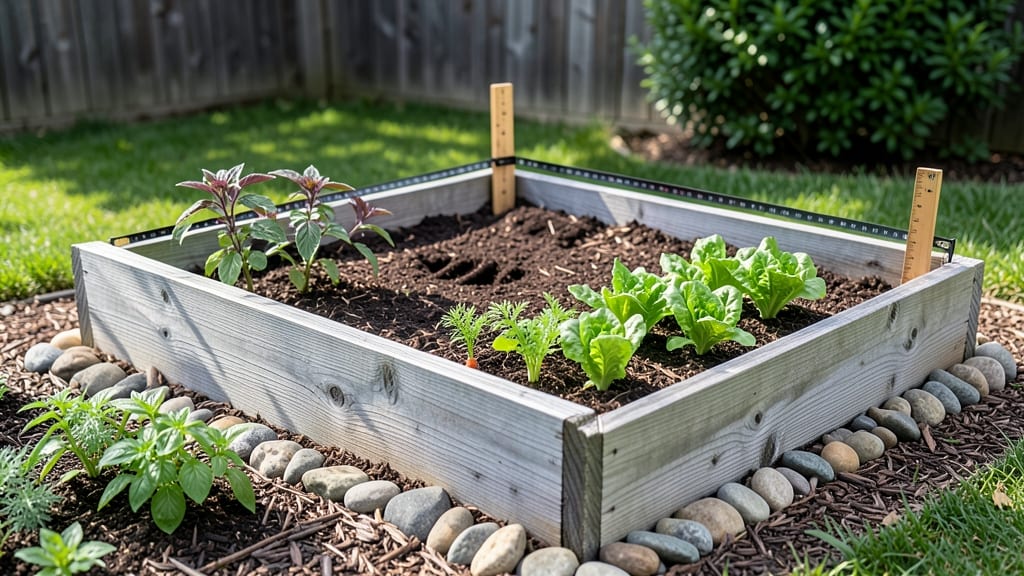
The ideal raised garden bed size isn't one-size-fits-all—but 4x8 feet is the gold standard for a reason. 🌱 I built my first bed at 3x6 feet and immediately regretted the cramped spacing; now my 4x8 produces enough tomatoes to share with neighbors.
The secret lies in balancing plant needs, your reach, and material constraints without sacrificing yield.
Standard 4x8 dimensions work because they fit lumber perfectly, accommodate wide rows for better airflow, and let you reach the center without stepping in. For herbs and greens, a 3x6 bed saves space, while flowers thrive in narrow 2x6 beds.
The key is spacing: 18 inches between tomato plants, 12 inches for peppers, and just 6 inches for leafy greens. Too narrow, and plants compete; too wide, and you waste soil.
You'll end up with a bed that fits your space, your harvest goals, and your back—no more bending awkwardly or crowding plants. A well-sized bed also means less weeding, better air circulation, and easier access for watering.
Plus, the right dimensions make it easier to rotate crops next season, which keeps soil healthy and pests in check.
Start with your space and what you want to grow—then adjust. A 4x4 bed works for small patios, while two 4x8 beds side by side create a walkway for easy maintenance. Measure twice, build once, and you'll have a raised bed that feels like it was made just for you.
📚 In This Guide
- What you need
- Instructions
- Tips and common mistakes
- Wrapping up and next steps
What you need
- ● Lumber: Untreated cedar, redwood, or composite wood (resists rot) – 2x6, 2x8, or 2x10 boards, cut to your desired dimensions (e.g., 4’, 8’, or modular sections).
- ● Quantity: 4–6 boards per side (depending on height and width). For a 4x8-foot bed, plan for ~16–20 linear feet of lumber.
- ● Screws: 2.5-inch or 3-inch deck screws (galvanized or stainless steel to prevent rust). ~80–120 screws for a standard bed.
- ○ Corner brackets or L-brackets: 4–8 brackets (optional but recommended for extra stability).
- ● Landscape fabric: 1 piece, slightly larger than your bed’s base (to block weeds and retain moisture).
- ● Gravel or pavers: 2–3 inches of crushed stone (for drainage and level base).
- ● Soil mix: 60% topsoil (for nutrients).
- ● 30% compost (for fertility).
- ○ 10% perlite or vermiculite (for aeration, optional).
- ● Measuring tape (10–25 feet).
- ● Circular saw or handsaw (for cutting lumber).
- ● Drill/driver (with Phillips or square-drive bit).
- ● Level (to ensure your bed is even).
- ● Staple gun (for securing landscape fabric).
- ● Wheelbarrow or shovel (for moving soil and gravel).
- ● Work gloves & safety glasses (because gardening is hands-on!).
- ● 🌡️ Pre-drill screw holes to prevent wood splitting.
- ● ✨ Use untreated wood to avoid chemicals leaching into soil.
- ● 🎯 Mark lumber with a pencil before cutting to avoid mistakes.
- ● 🔥 Elevate beds 6–12 inches off the ground for better drainage and accessibility.
How to choose perfect raised garden bed dimensions
Here's the foolproof way to design beds that maximize space, airflow, and plant health.
📏 Step 1: Determine Your Bed's Primary Purpose
Start by deciding what you'll grow. Vegetables and herbs need 12-18 inches of width between rows for easy access and airflow, while flowers and shrubs can handle slightly tighter spacing. I like to sketch a rough layout first—this helps visualize how many plants will fit and where pathways will go.
For a 4-foot-wide bed, you can fit two rows of plants with a 2-foot path down the middle. This width is ideal because it lets you reach the center without stepping on soil, which compacts it and harms roots. If you're growing tall plants like tomatoes or sunflowers, plan for at least 3 feet of depth so they don't get crowded.
📐 Step 2: Calculate Length Based on Plant Quantity
Most raised beds perform best when they're 4-8 feet long. Shorter beds (4-6 feet) are easier to maintain and prevent soil compaction from walking across them. I've found that a 4x8-foot bed gives the most versatility—it fits enough plants for a family of four while staying manageable.
To determine length, multiply the number of plants you want by their mature spacing. For example, if you plan to grow 12 tomato plants spaced 2 feet apart, you'll need a 24-foot-long bed. But that's impractical, so I recommend breaking it into two 4x8-foot beds instead. This also allows for better crop rotation and easier access to all plants.
☀️ Step 3: Optimize Width for Sun Exposure and Accessibility
Width directly impacts how much sun your plants receive and how easily you can tend to them. A 3-foot-wide bed is the absolute minimum for good airflow, but it's too narrow for most gardeners to work comfortably. I stick to 4 feet wide because it balances sunlight penetration and accessibility—you can reach the center without disturbing the soil.
For beds wider than 4 feet, add a 2-foot pathway down the middle. This prevents soil compaction and makes it easier to move around. If you're working with a 6-foot-wide bed, consider dividing it into two 3-foot sections with a pathway between them. You'll see healthier plants and less stress on your back when weeding or harvesting.
🪴 Step 4: Plan for Depth and Soil Quality
Depth matters more than most gardeners realize. A 6-12 inch depth is the bare minimum for most vegetables, but roots of deeper-growers like carrots or potatoes need 12-18 inches. I always aim for 10-12 inches because it accommodates a wide range of plants while keeping construction manageable.
Fill your bed with a mix of 60% topsoil, 30% compost, and 10% perlite or vermiculite for drainage. This combo ensures roots have plenty of oxygen and nutrients without becoming waterlogged. Avoid using garden soil alone—it compacts easily and can introduce weeds or pests. You'll notice stronger, healthier plants almost immediately with this setup.
⏰ Step 5: Test Your Design Before Building
Before committing to dimensions, walk through your space and visualize how the bed will fit. Measure where you'll place it and check how much sunlight different areas get. Most vegetables need 6-8 hours of sun daily, so position your bed accordingly.
I like to use stakes and string to outline the bed's footprint. This helps me see if the space allows for easy access from all sides and if pathways will be wide enough for a wheelbarrow or garden tools. Adjust your dimensions based on what feels most practical—you'll thank yourself later when weeding or harvesting becomes a breeze.
Tips & tricks for perfect raised garden bed layouts
Here's what nobody tells you about designing beds that actually work for real gardening—not just theory.
Plant Spacing Reality Check: Those 12-18 inch spacing guidelines in Step 1? They're minimums, not absolutes. For leafy greens like lettuce or spinach, you can comfortably squeeze them 6-8 inches apart—they grow fast and you'll harvest before they crowd. But for root vegetables like carrots or beets, stick to the full 12 inches to prevent stunted growth from competition. I've learned this the hard way after pulling undersized carrots!
Modular Math Shortcut: When calculating length in Step 2, use the 4x8-foot standard as your building block. Need more space? Add another 4-foot section—it's easier to maintain than one giant bed. For example, if you want to grow 16 tomato plants spaced 2 feet apart, two 4x8-foot beds will work perfectly. This modular approach also makes crop rotation simpler—just shift your planting plan each season.
Sunlight Secret: The 6-8 hours of sun mentioned in Step 5 is a baseline, but not every plant needs full sun. Leafy greens like kale or Swiss chard thrive in 4-6 hours of morning sun, while tomatoes and peppers demand the full 8 hours. I always group sun-loving plants together in one bed and shade-tolerant plants in another to maximize efficiency. A quick trick: Use a sunlight tracker app to map your yard's light patterns before building.
Depth Upgrade: While 10-12 inches works for most vegetables, consider 18 inches if you're growing potatoes, sweet potatoes, or deep-rooted perennials like asparagus. The extra depth costs little in materials but pays huge dividends in harvest size. For standard beds, I add 6 inches of cardboard at the bottom to suppress weeds before filling with soil—it's free and effective!
Pro Tips for Ideal Raised Garden Bed Size
- Here's what nobody tells you about designing beds that actually work for real gardening—not just theory.
- Plant Spacing Reality Check: Those 12-18 inch spacing guidelines in Step 1?
- Modular Math Shortcut: When calculating length in Step 2, use the 4x8-foot standard as your building block.
Frequently asked questions
What’s the best raised garden bed size for beginners?
A 4’ x 8’ bed is ideal for beginners—easy to reach the center, fits common lumber dimensions, and balances productivity with manageability. Start small (like 2’ x 4’) if space is limited, but avoid beds wider than 4’ to prevent poor soil access.
Can I customize the ideal raised bed size for my yard?
Modular designs let you mix sizes (e.g., 3’ x 6’ or 4’ x 4’ squares). Just ensure paths between beds are at least 2–3 feet wide for easy movement. Use cedar or composite lumber for longevity, and avoid exceeding 12” deep unless planting deep-rooted veggies like tomatoes.
How long does it take to build a raised bed of this size?
For a 4’ x 8’ bed, plan 4–8 hours if pre-cutting materials (like 2x6 lumber) and using corner brackets for assembly. Solo builders may take longer; teams can finish in 2–3 hours. Pre-drilled holes and a helper speed things up!
What if my space is limited? Are smaller beds still effective?
Yes! A 2’ x 4’ bed works well for herbs, greens, or strawberries—just rotate crops annually. Use vertical gardening (trellises, hanging pots) to maximize yield. For tiny spaces, try window-box-style beds (1’ wide) or stackable planters.
How do I fix uneven soil settling in my raised bed?
If soil sags, top off with 2–3 inches of fresh compost or topsoil and water thoroughly. For long-term stability, add a landscape fabric barrier between old soil and new layers. Avoid over-tilling—raised beds thrive with loose, layered fill (e.g., 60% topsoil, 30% compost, 10% perlite).
Wrapping up and next steps
Choosing the ideal raised garden bed size isn’t just about space—it’s about creating a thriving, efficient, and manageable growing zone!
Whether you opt for a 4’x8’ classic, a 3’x6’ modular setup, or a cozy 2’x4’ micro-bed, the key is balancing accessibility, plant spacing, and your gardening goals. 🌱
Ready to get growing? Start small, experiment, and adjust as you go! Measure your space, sketch a layout, and gather your materials—then roll up your sleeves and build the perfect bed for your green thumb. Happy planting!