
Lawn
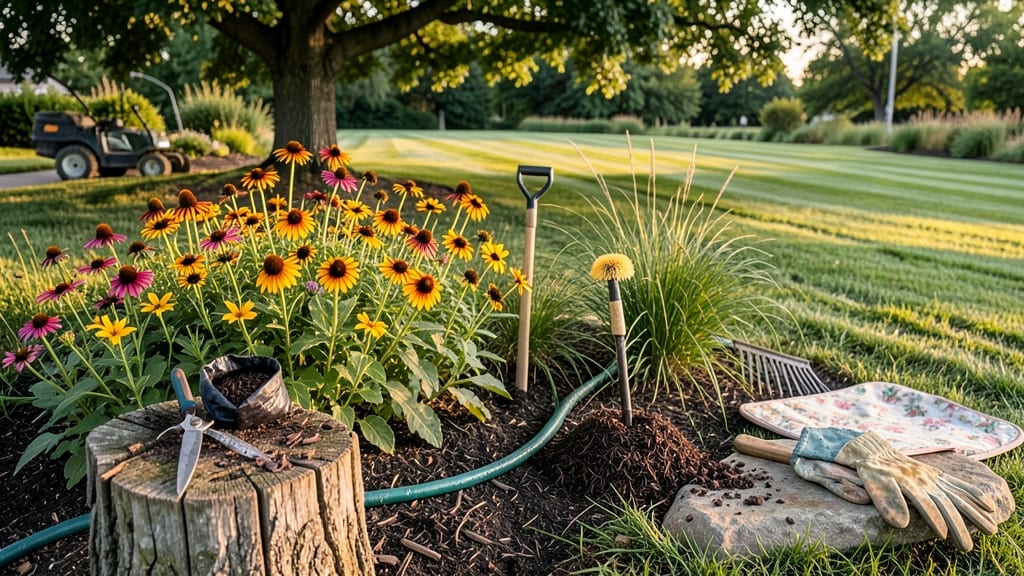
Maintaining lawn and flower bed maintenance involves regular mowing, weeding, mulching, and fertilizing throughout the seasons to preserve both beauty and health. Prioritize soil quality, consistent irrigation, and pest management for long-term success.
Your yard's lawn and flower bed maintenance depends on understanding how each season demands different care.
For example, spring is all about aerating compacted soil and removing winter weeds before they take over, while summer focuses on mulching to retain moisture and prevent weeds. 🌱 Fall is critical for fertilizing perennials so they store nutrients for next year's blooms, and winter prep—like protecting tender plants—varies dramatically by climate zone.
I've seen firsthand how skipping these steps leads to patchy lawns and struggling flowers, but mastering the timing makes all the difference.
Time management is key for busy homeowners. Electric trimmers cut mowing time in half, while drip irrigation systems handle watering automatically. My favorite hack? Mixing compost tea with water for a natural weed killer that also feeds your soil—it saves money and reduces chemical use.
Even just scheduling tasks by zone (like mowing before watering) can shave hours off your weekend chores.
💡 In This Article
- Seasonal Lawn and Flower Bed Care Breakdown
- Time-Saving Tools and Techniques for Busy Gardeners
Seasonal lawn and flower bed care breakdown
Spring is when your lawn and flower beds wake up from dormancy, making it the perfect time to fix last year's damage. Aeration—using a core aerator to pull small soil plugs—relieves compaction from winter foot traffic and allows water, air, and nutrients to reach roots.
Without this step, grass roots suffocate, leading to thin, patchy growth. In flower beds, this is when you should also remove winter mulch to inspect for overwintering weeds like chickweed or creeping charlie, which spread aggressively if left unchecked.
The science behind summer mulching is all about moisture retention and temperature regulation. Organic mulch like shredded bark or straw breaks down slowly, releasing nutrients while creating a protective barrier that keeps soil 5-10°F cooler than exposed ground.
This is crucial because summer heat causes soil microbes to become less active, reducing nutrient availability. For flower beds, apply 2-3 inches of mulch, keeping it 2 inches away from plant stems to prevent rot.
In hot climates (USDA zones 8-10), you might need to mulch twice—once in early summer and again after midsummer rains.
Fall fertilization is often overlooked but critical for perennials that store nutrients in their roots for next year's blooms. A slow-release fertilizer with a 10-10-10 or 5-10-5 ratio provides balanced nitrogen, phosphorus, and potassium.
The key timing is 6-8 weeks before your first frost, giving plants enough time to absorb nutrients before dormancy. For lawns, this also strengthens root systems to better withstand winter stress. In cooler climates (zones 3-6), consider a late fall application of compost to improve soil structure over winter.
Winter care varies dramatically by climate zone. In northern regions (zones 1-5), focus on protecting tender perennials with burlap wraps or straw mulch to prevent freeze-thaw damage. Southern climates (zones 7-10) require different strategies—like avoiding heavy mulch that could smother plants in mild winters.
The biggest mistake I see is overwatering dormant plants, which can lead to root rot. Instead, water only when soil is completely dry 2-3 inches deep, typically once every 2-4 weeks depending on your zone.
Climate zones also dictate when to prune. In warm climates, late winter (February-March) is ideal for shaping perennials before new growth begins. But in colder zones, wait until after the last frost to avoid damaging tender shoots.
The rule of thumb is to prune when 50% of spring-blooming plants have pushed through the soil—this ensures you're not cutting off next year's flower buds. For example, peonies should never be cut back too aggressively, as their blooms form on old wood.
One advanced technique worth mastering is soil testing. Most home test kits measure pH and basic nutrients, but professional labs can analyze micronutrients like manganese or zinc deficiencies that cause yellowing leaves. For instance, a pH below 6.0 locks out phosphorus, while above 7.5 reduces iron availability.
Adjusting with elemental sulfur (for high pH) or lime (for low pH) can transform struggling plants overnight. 🌱