
Tools
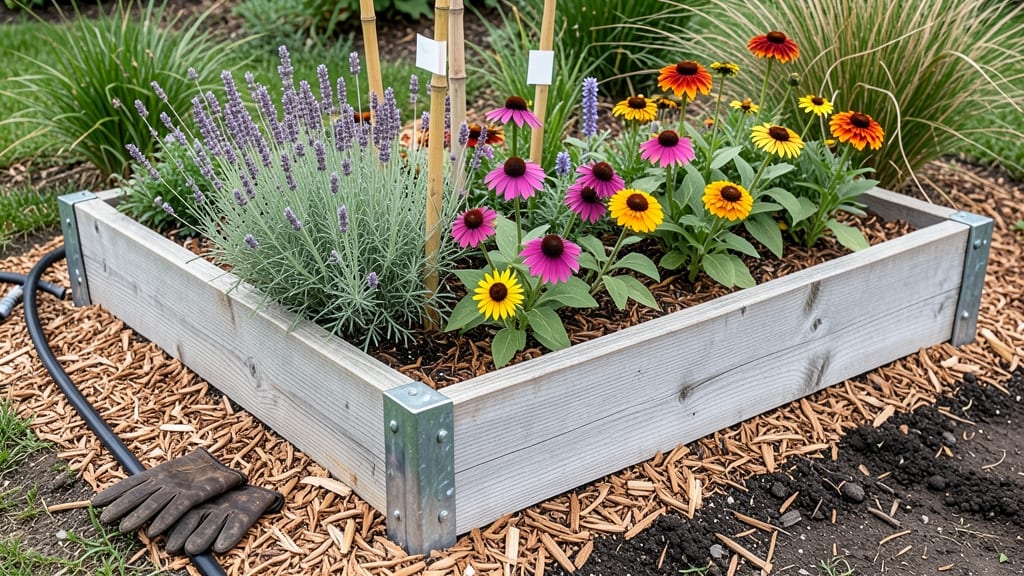
A raised bed flower garden layout should organize plants by sunlight needs, height layers, and seasonal bloom cycles to create visual harmony and reduce maintenance. Start with tall perennials at the back, mid-height annuals in the middle, and low-spreading flowers at the front for airflow and easy access. Group plants with similar water needs and color palettes for cohesive design.
A well-planned raised bed flower garden layout maximizes space and beauty by layering plants strategically. 🌸 Tall perennials like delphiniums or hollyhocks should anchor the back row, while mid-height annuals such as zinnias or salvia add mid-season color.
Front-row flowers like pansies or sweet alyssum create a lush border that spills over the edges. The key is pairing sun-loving plants together and shade-tolerant varieties in cooler spots, ensuring each plant thrives without competing for resources.
This approach also simplifies maintenance—grouping plants with similar water needs means less frequent irrigation adjustments, and color-themed sections create stunning visual flow. For example, pairing purple clematis with blue salvia and white alyssum creates a cohesive look that blooms from spring to fall.
The layered design not only enhances airflow but also makes harvesting and pruning easier, reducing the time you spend tending to your garden.
💡 In This Article
- Designing a Raised Bed Flower Layout by Sunlight and Seasonal Needs
- Top 10 Raised Bed Flower Combinations for Pollinators and Low Maintenance
Designing a raised bed flower layout by sunlight and seasonal needs
The foundation of any successful raised bed flower garden starts with understanding sunlight patterns. Most flowering plants fall into three categories: full sun (6+ hours of direct light), partial shade (3-6 hours), and shade-tolerant (less than 3 hours).
For example, sun-loving varieties like black-eyed Susans or coneflowers should occupy the southern or western sides of your bed where sunlight intensity peaks. In contrast, shade-tolerant plants like impatiens or ferns thrive in the northern or eastern sections where morning light dominates. 🌞
Layering by height creates visual depth while optimizing airflow—critical for preventing fungal diseases in dense plantings. Begin with tall perennials (3-5 feet) like hollyhocks or delphiniums at the back, followed by mid-height annuals (1-3 feet) such as zinnias or salvia in the middle.
Front-row flowers like sweet alyssum (6-12 inches) or creeping thyme (3-6 inches) spill over the edges, creating a soft, inviting border. This progression also makes harvesting and maintenance easier, as taller plants don't shade out shorter varieties prematurely.
Seasonal bloom cycles are the secret to year-round color. Early spring bloomers like crocuses or daffodils should share space with late-season varieties such as chrysanthemums or asters. For example, pairing spring bulbs (March-April) with summer annuals (June-August) ensures continuous blooms without gaps.
The key is selecting plants with staggered maturity dates—like planting snapdragons (May-July) alongside black-eyed Susans (July-September)—so one variety fades just as another peaks. 🌸
Water needs play a surprisingly large role in layout decisions. Grouping plants with similar moisture requirements—such as drought-tolerant lavender with rosemary—eliminates the need for frequent irrigation adjustments. For instance, the dry soil zone might feature sedum or Russian sage, while the moist soil section could host hostas or lobelia.
This zoning reduces water waste by up to 40%, according to University of California Extension studies, while keeping each plant thriving in its ideal conditions.
Color coordination enhances visual appeal while simplifying design choices. Monochromatic sections (e.g., varying shades of blue from salvia to agapanthus) create a calming effect, while complementary colors (purple clematis + yellow black-eyed Susans) make blooms pop.
Pro tip: Use 3-5 color families throughout your garden to maintain harmony without overwhelming the space. For example, a soft pastel palette (lavender, blush pink, mint green) works beautifully for cottage-style gardens, while bold jewel tones (emerald, ruby, sapphire) add drama to modern designs.
Finally, consider the 3-4 inch spacing rule for most flowers, which allows roots to expand without crowding. Taller plants need 18-24 inches between them, while compact varieties can sit just 6-12 inches apart. This spacing ensures adequate airflow, reducing the risk of mildew while making weeding and pruning more efficient.
For instance, planting bee balm (18 inches tall) 2 feet apart prevents overcrowding, while petunias (12 inches tall) can sit 10 inches apart for a dense, lush look. ✨