
Planting
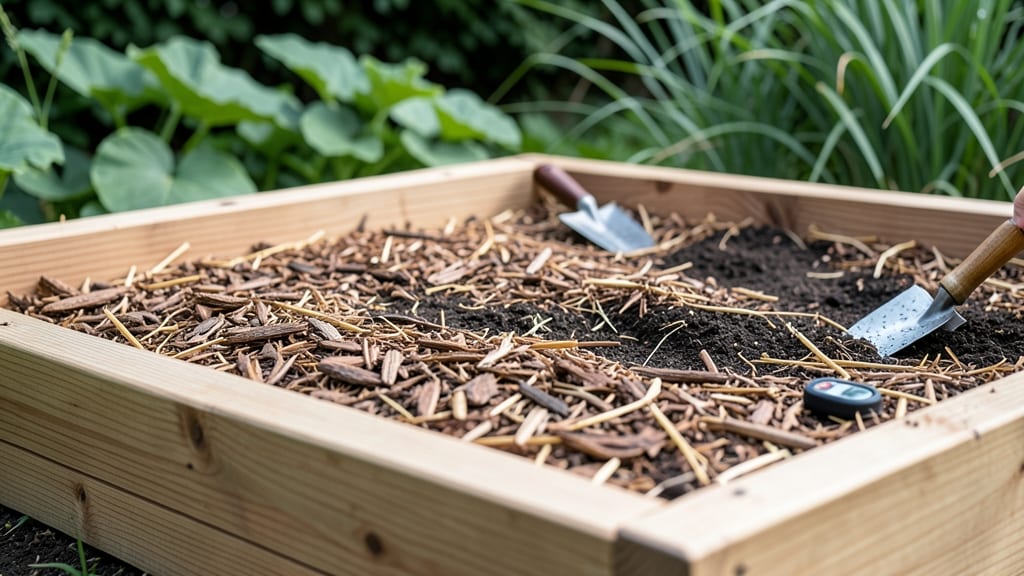
Your raised bed mulch layer is the unsung hero of garden success—keeping roots cool in summer, moist in drought, and protected all year. 🌱 I learned the hard way that skipping this step means fighting weeds, watching soil dry out, and battling temperature swings that stress plants.
The right mulch transforms your raised bed from a seasonal project into a thriving ecosystem that works for you.
The secret lies in three simple layers: a coarse base to improve drainage, a mid-layer of organic matter to feed soil, and a top layer of mulch to lock in moisture. You don’t need fancy materials—straw, wood chips, or even shredded leaves work perfectly.
Most gardeners overlook how depth matters: aim for 3-4 inches total, and you’ll see fewer weeds, less watering, and happier plants by midseason.
By summer’s end, you’ll notice plants growing stronger with fewer pests and less stress. The soil stays consistently moist, roots stay cool, and beneficial microbes thrive. This isn’t just about saving water—it’s about creating a garden that works with nature, not against it.
Works for vegetables, flowers, or herbs in any climate. Whether you’re in a hot desert or a cool mountain zone, the same principles apply. Let’s get your raised bed set up for year-round success!
When Mulch Layers Break Down
A well-designed raised bed mulch layer acts as a protective shield for your soil, but sometimes it fails to perform as expected. Understanding why mulch degrades—whether too quickly or unevenly—helps you maintain its effectiveness year-round. Here’s a deep dive into the science behind mulch breakdown and what triggers it.
Mulch doesn’t just sit idle—it’s a hotspot for microbial life. When temperatures rise, especially in summer, decomposing organic matter (like straw, leaves, or grass clippings) heats up, accelerating the work of bacteria and fungi. These microbes break down mulch faster than it can replenish soil nutrients, leading to:
- Rapid decomposition: Thin mulch layers (under 2–3 inches) decompose in weeks, losing their insulating properties.
- Heat stress on plants: Overly active microbes can raise soil temps by 10–15°F, shocking roots if mulch is too fine or nitrogen-rich (e.g., fresh grass clippings).
- Nutrient loss: Quick breakdown releases nitrogen too fast, causing "burnout" where plants can’t absorb it efficiently.
Actionable fix: Balance carbon-rich (brown) and nitrogen-rich (green) materials in a 3:1 ratio. For example, mix shredded leaves (carbon) with composted manure (nitrogen). In hot climates, opt for coarser mulch (like wood chips) that decomposes slower.
Mulch’s moisture-retention superpowers can backfire if conditions swing extremes. Here’s how water plays a role:
| Problem | Why It Happens | Signs to Watch For |
|---|---|---|
| Excessive moisture | Compacted mulch or clay-heavy soil traps water, creating anaerobic zones where microbes drown and switch to methane-producing pathways. Fungal growth (like mold) thrives, breaking down mulch into sludge. |
|
| Drought-like dryness | Fine mulch (e.g., hay or pine needles) dries out quickly, forming a crust that repels water. Beneath, soil stays parched, and mulch turns to dust. |
|
Actionable fix:
- For wet climates: Use permeable mulch like straw or cedar chips, and avoid piling it thicker than 3 inches. Add gypsum to clay soil to improve drainage.
- For dry climates: Choose water-holding mulches (e.g., coconut coir or composted bark) and fluff it annually to prevent crusting.
Mulch isn’t just food for microbes—it’s an all-you-can-eat buffet for pests. When critters move in, they:
- Fragment mulch: Earthworms (good!) and pill bugs (neutral) break down mulch into smaller pieces, speeding decomposition. But rodents, slugs, and insects (bad!) chew it into unusable pulp or drag it away.
- Create air pockets: Burrowing animals (like moles) disrupt mulch’s insulating layer, letting heat escape in winter or cold air seep in during summer.
- Introduce pathogens: Fungal spores from decomposing mulch can hitchhike on pests, spreading diseases like Phytophthora (root rot).
Actionable fix:
- Use coarse mulch (e.g., bark nuggets or wood chips) that’s harder for pests to chew.
- Add diatomaceous earth (food-grade) to deter slugs and insects without harming plants.
- Install hardware cloth barriers (1/4-inch mesh) under mulch if rodents are a problem.
Not all mulch is created equal—and some materials actively hurt soil health over time. Here’s what goes wrong:
| Offender | Problem | Impact on Mulch |
|---|---|---|
| Fresh sawdust | Highly acidic (pH < 4) and nitrogen-hungry. | Locks up nitrogen in soil, starving plants and speeding its own decomposition into a powdery mess. |
| Black walnut leaves/twigs | Contains juglone, a toxin that inhibits seed germination and microbial activity. | Mulch breaks down too slowly, forming a suffocating mat that blocks water and air. |
| Chemically treated wood chips | Residues like chromated copper arsenate (CCA) (banned but still lurking) or herbicides. | Toxic to microbes and plants, creating a sterile layer that decomposes erratically. |
Actionable fix:
- Test your mulch: Use a soil pH kit to check if materials are too acidic (aim for 6.0–7.0). Amend with lime if needed.
- Avoid fresh wood: Always use aged, untreated wood chips or straw. If using sawdust, compost it first to stabilize nitrogen.
- Diversify sources: Rotate between leaf mold, composted manure, and straw to balance pH naturally.
Pro Tip: 🔍 Inspect mulch annually—especially in spring and fall. If it’s breaking down faster than expected, replenish in layers (2–3 inches) rather than dumping a thick pile, which can suffocate soil.
Fixing Common Mulch Layer Mistakes
Mulch is a gardener’s best friend—when it works right. But even the best-laid plans can go awry if moisture evaporates too fast, weeds take over, or pests invade.
Here’s how to diagnose and fix the most common mulch layer problems in your raised beds, plus tips to keep them thriving all year.
Cause: Thin layers, organic mulch (like straw or leaves) decomposing too fast, or overwatering.
How to Fix It:
- 🍳 Layer Strategically: Start with a 3-inch base of carbon-rich material (wood chips, shredded bark, or cardboard) to slow decomposition. Top with 1–2 inches of nitrogen-rich mulch (straw, grass clippings, or compost) to balance nutrients.
- 👨🍳 Use Long-Lasting Mulches: Switch to inorganic options (gravel, rubber mulch, or landscape fabric) in high-traffic areas or for perennial beds. For organic beds, cypress mulch or hardwood chips decompose slower than pine or cedar.
- ⏰ Refresh Seasonally: In spring and fall, fluff and replenish mulch to maintain thickness. Remove old layers if they’ve compacted into a dense mat.
💡 Prevention Tip:
- Test your mulch’s age. If it’s fresh (like newly shredded leaves), mix it with coarser materials (like pine needles) to extend its lifespan.
Cause: Gaps in coverage, thin mulch layers, or using mulch that decomposes unevenly (like grass clippings).
How to Fix It:
- 🔪 Seal the Base: Before adding mulch, lay down cardboard or newspaper (no glossy ink!) to block weed seeds. Wet it down to help it break down slowly.
- 🥘 Increase Thickness: Aim for at least 3–4 inches of mulch—this shades out weeds and creates a barrier. Wood chips or straw work best for weed suppression.
- 🎯 Spot-Treat Invaders: If weeds pop through, pull them early (before they seed) or smother with a fresh mulch top-up.
💡 Prevention Tip:
- Choose dense mulches. Shredded bark or leaves create a tighter layer than loose straw, reducing weed gaps.
Cause: Mulch piles attract slugs, earwigs, or rodents (like voles or mice) seeking shelter and food scraps.
How to Fix It:
- 🔥 Keep Mulch Dry: Moisture-loving pests (slugs, snails) thrive in damp mulch. Avoid overwatering and ensure good drainage in your raised bed.
- 🌡️ Use Repellent Mulches: Cedar chips or pine needles naturally deter some pests. For slugs, diatomaceous earth (food-grade) sprinkled lightly on top can help.
- ✨ Block Rodents: If mice or voles are the issue, add a hardware cloth barrier (1/4-inch mesh) under mulch in problem areas. Keep mulch away from bed edges where pests can burrow in.
💡 Prevention Tip:
- Rotate mulch types seasonally to disrupt pest life cycles. For example, switch from straw (which holds moisture) to gravel in winter to deter slugs.
Cause: Lightweight mulch (like straw or leaves), wind exposure, or improper application.
How to Fix It:
- 🍳 Anchor the Mulch: For straw or hay, lightly rake it into the soil edges or weigh it down with rocks or bricks at the bed’s perimeter.
- 👨🍳 Choose Heavy Mulches: Wood chips, shredded bark, or compost stay put better than loose materials. For windy areas, use a mulch mat under organic layers.
- 🔪 Create Windbreaks: Plant tall perennials or shrubs around the bed’s edges to act as natural barriers.
💡 Prevention Tip:
- Apply mulch after rain—slightly damp mulch sticks better to soil than dry fluff.
Cause: Thick, dark mulch (like black plastic or fresh wood chips) traps heat, risking root burn.
How to Fix It:
- 🥘 Lighten the Color: Switch to light-colored mulches (straw, pine straw, or gravel) in hot climates. These reflect sunlight instead of absorbing it.
- 🔥 Thin the Layer: Reduce mulch depth to 1–2 inches in peak summer, then rebuild to 3+ inches in fall/winter for insulation.
- 🌿 Add Shade: If possible, plant taller crops or use shade cloth over the bed during the hottest months.
💡 Prevention Tip:
- Monitor soil temp. If it’s above 90°F (32°C), it’s time to adjust mulch thickness or type.
Cause: Using only carbon-rich mulch (like wood chips) without nitrogen, or only nitrogen-rich mulch (like grass clippings), leading to soil pH or fertility issues.
How to Fix It:
- 🍳 Balance Your Layers: Follow the "Brown on Bottom, Green on Top" rule:
- Base layer (3–4 inches): Carbon-rich (wood chips, straw, leaves).
- Top layer (1–2 inches): Nitrogen-rich (compost, grass clippings, manure).
- 👨🍳 Test Your Soil: Use a DIY soil test kit every 1–2 years. If mulch is causing acidity (pine needles) or alkalinity (lime-rich mulch), amend with compost or sulfur as needed.
- ⏰ Rotate Mulch Types: Alternate between fast-decomposing (compost) and slow-release (wood chips) to maintain steady nutrient flow.
💡 Prevention Tip:
- Chop and drop green manure plants (like clover or vetch) into your mulch layer to naturally boost nitrogen without overloading the soil.
- 🔄 Refresh, Don’t Replace: Instead of hauling away old mulch, fluff and top up with fresh material each season.
- 📅 Mulch on a Schedule: Spring (after last frost), fall (before hard freezes), and mid-winter (to prevent erosion) are the best times to adjust layers.
- 🌱 Match Mulch to Plants: Delicate perennials need soft mulch (straw), while heavy feeders (tomatoes, peppers) benefit from compost-heavy layers.
With these fixes, your raised bed mulch will protect soil, suppress weeds, and keep pests at bay—without the guesswork! 🌿
Frequently asked questions
What's the ideal depth for a raised bed mulch layer?
Aim for 3-4 inches total depth—this balances moisture retention, weed suppression, and nutrient release. Split it into layers: 2-3 inches of coarse material (wood chips, straw) at the bottom, then 1 inch of finer organic matter (compost, leaf mold) on top. Too thin (<2 inches) won't protect roots, while too thick (>5 inches) can suffocate soil.
Can I use grass clippings as mulch in raised beds?
Only in moderation—fresh grass clippings are high in nitrogen and can mat down or attract pests. Use them as a top layer (1 inch max) mixed with carbon-rich materials (like straw or leaves) in a 3:1 ratio. For best results, compost them first or use them sparingly in spring when plants need a quick nitrogen boost.
How often should I refresh my raised bed mulch?
Check it twice a year—once in early spring (after last frost) and again in fall (before hard freezes). Fluff the existing layer and add 1-2 inches of fresh mulch if it's broken down to under 2 inches. In hot climates, you may need to refresh every 3-4 months since organic mulch decomposes faster.
Will mulch help with frost protection in winter?
A 4-inch mulch layer can protect roots from freezing temps down to 10°F (-12°C). Use straw, leaves, or wood chips—they trap heat and insulate soil better than light materials. For extreme cold (<0°F), add an extra 2 inches of mulch or cover with burlap or row fabric during hard freezes.
What's the best mulch for suppressing weeds in raised beds?
Wood chips or shredded bark are the gold standard—they create a dense, long-lasting barrier that blocks light. For faster results, use cardboard or newspaper (no ink!) as a base layer under 2-3 inches of organic mulch. Avoid fine materials like hay, which can let weeds poke through. In high-weed areas, consider landscape fabric under mulch for extra protection.