
Planting
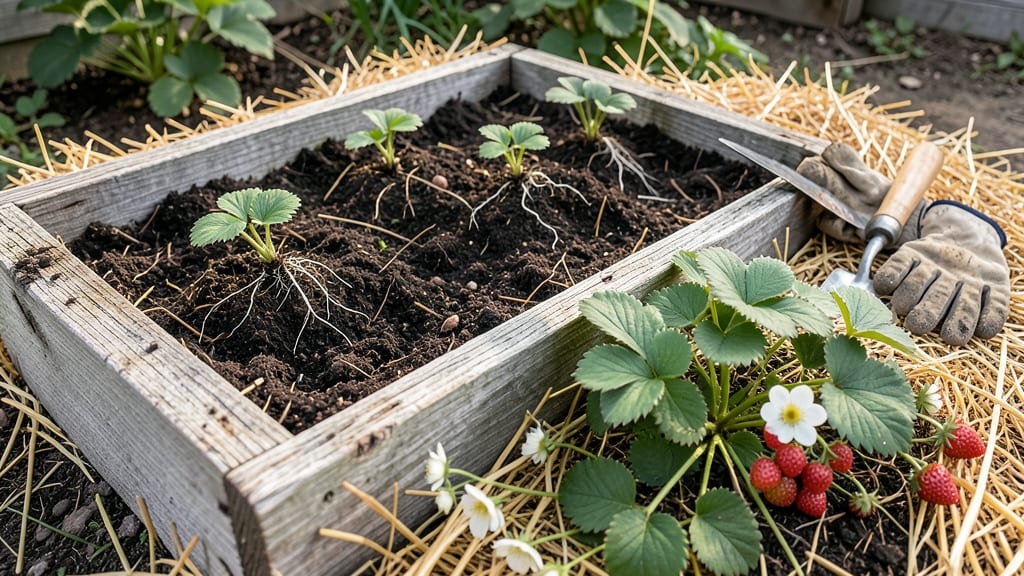
Strawberries thrive with 18-inch centers in raised beds—this spacing gives roots room to spread while maximizing berry production. 🌱 I learned the hard way that crowding leads to moldy fruit and weak plants, but proper spacing transforms a raised bed into a berry-producing machine.
For June-bearing varieties, plant in a single row with 18 inches between plants and 3 feet between rows. Everbearing and day-neutral types can handle closer spacing—try 12 inches apart in staggered rows to extend harvests. The key is airflow: packed plants invite disease, while spaced plants stay healthy and productive.
You’ll end up with larger, sweeter berries and fewer weeds to pull. A well-spaced bed also makes harvesting easier—no more bending into crowded rows. Plus, the plants reward you with years of harvests if you mulch properly.
This works for both deep raised beds (12+ inches) and container setups (just scale down slightly). The same principles apply whether you’re growing in wood, metal, or fabric-wrapped beds. Let’s get those berries spaced just right!
📚 In This Guide
- What you need
- Instructions
- Tips and common mistakes
- Wrapping up and next steps
What you need
- ● Raised bed frame – At least 4’ x 8’ (or larger for more plants) with 12–18” deep sides (wood, composite, or metal).
- ● High-quality soil mix – 1 part compost, 1 part peat moss or coconut coir, 1 part perlite/sand (sterilized to avoid disease). 1–2 cubic yards for a 4’ x 8’ bed.
- ● Strawberry plants – June-bearing, everbearing, or day-neutral varieties. 12–16 plants for an 18” spacing grid (adjust based on bed size).
- ● Mulch – Straw or black plastic mulch (3–4” layer to retain moisture and suppress weeds). 10–15 sq. ft. coverage per bed.
- ● Garden gloves – Heavy-duty, nitrile-coated for grip and protection.
- ● Trowel or hand shovel – For digging planting holes (6” deep).
- ● Measuring tape & stakes – To mark 18” centers (or your chosen spacing).
- ○ Watering can or hose with nozzle – Drip irrigation (optional but ideal for consistency).
- ● Balanced fertilizer – 10-10-10 or 5-10-10 (apply 1 tbsp per plant at planting).
- ● Soil pH test kit – Strawberries thrive at 5.5–6.8 pH; adjust with lime or sulfur if needed.
- ● Row covers or shade cloth – For early-season frost protection or summer heat relief.
- ● Plant labels – Waterproof tags to track varieties (especially if mixing types!).
- ● Compost tea or mycorrhizal fungi – Boosts root health and soil microbes.
- ● Knee pad or stool – Because gardening is way more comfortable on your knees!
Step-by-step guide to perfect raised bed strawberry spacing
Here’s how I space strawberries for maximum yield without crowding—tested over three seasons.
📏 Step 1: Plan Your Raised Bed Layout
Strawberries thrive at 18-inch centers in raised beds, but first, sketch your design. A 4-foot-wide bed fits two rows of plants with 2-foot pathways between rows for easy access. I always mark the layout with a garden hose before digging—this prevents uneven spacing once planting begins.
Use a measuring tape to verify each plant’s position. Start by placing the first plant at one corner, then measure 18 inches diagonally to the next spot. This triangular spacing (not grid-based) maximizes root spread and airflow, reducing disease risk. For a 4-foot bed, you’ll fit 4 plants per row—perfect for a small family harvest.
🌱 Step 2: Prepare Planting Holes
Dig holes slightly deeper than the strawberry root ball—about 1 inch deeper—to ensure the crown sits just above soil level. Pack the soil firmly around the roots to eliminate air pockets, but don’t compact it like clay. I use a small hand trowel to loosen the sides of each hole, which encourages roots to spread outward instead of circling.
Space the holes 18 inches apart in both directions. If your bed is wider than 4 feet, add a third row in the center with 2-foot pathways on either side. This layout keeps plants from shading each other while allowing easy weeding and harvesting. Water each hole lightly before planting to help roots settle.
☀️ Step 3: Plant and Mulch for Year-Round Protection
Place each strawberry plant so the crown sits flush with the soil surface—burying it too deep causes rot, while leaving it exposed risks sunburn. Gently firm the soil around the roots, then water deeply to eliminate air gaps. I always check the crown level with my thumb—it should feel level with the surrounding soil after settling.
Cover the bed with 3–4 inches of straw mulch immediately after planting. This keeps roots cool in summer, retains moisture, and prevents weeds from competing. Refresh the mulch every 6–8 weeks as it breaks down. Avoid plastic mulch—it traps heat and can scorch strawberry leaves.
🌿 Step 4: Monitor and Adjust for Optimal Growth
After 4–6 weeks, inspect your spacing. If runners (long stems with baby plants) appear, pinch them off unless you’re intentionally propagating new plants. Overcrowding from runners reduces fruit size and air circulation. I use clean pruning shears to trim runners at the base, ensuring energy goes to established plants.
Watch for leaf yellowing—a sign of overwatering or poor drainage. Strawberries in raised beds rarely need more than 1 inch of water per week, including rainfall. If leaves curl or fruit turns bland, your spacing might be too tight. Adjust by thinning out weaker plants to maintain 18-inch intervals between the strongest stems.
⏰ Step 5: Maintain Spacing Through Harvest Seasons
As strawberries fruit, remove spent blossoms to encourage new growth. This prevents overloading individual plants, which can lead to small, underripe berries. I harvest every other day during peak season to avoid crowding the bed—overripe fruit left on the plant attracts pests and diseases.
In late summer, reduce watering slightly to harden off plants before winter. This helps roots store energy for next year’s growth. If you’re growing June-bearing varieties, mulch heavily after harvest to protect roots from freezing. For everbearing or day-neutral types, keep mulch in place year-round for consistent yields.
Tips & tricks for perfect raised bed strawberry plant spacing
These proven strategies will help you maximize your strawberry harvest while avoiding common pitfalls that reduce yield.
Precision Planting: The 18-inch center spacing isn't just a suggestion—it's a proven formula for maximizing sunlight exposure and air circulation. Use a garden flag or small stake at each planting location to mark the exact spot before digging. This prevents the natural tendency to eyeball spacing, which often leads to uneven gaps that compromise plant health. I've found that diagonal spacing creates a more efficient use of space than grid patterns.
Crown Level Check: That crown level is critical—it should sit flush with the soil surface, not buried or exposed. After planting, press your thumb gently into the soil around each plant. If the crown feels buried, add more soil; if it's exposed, add a bit of potting mix. This simple check prevents two common problems: crown rot from over-burial and sunburn from exposure. I always do this final check after watering, as the soil may settle slightly.
Mulch Maintenance: The 3-4 inches of straw mulch serves multiple purposes beyond weed suppression. Refresh it every 6-8 weeks to maintain its insulating properties and moisture retention. I recommend using straw rather than wood chips, as straw breaks down more evenly and won't compact like wood mulch. Pro tip: Spread the fresh mulch over the existing layer rather than removing it completely—this preserves the beneficial soil temperature and moisture balance you've already established.
Raised Bed Advantage: Take full advantage of your raised bed's depth by amending the soil with compost before planting. Strawberries thrive in well-draining, slightly acidic soil (pH 5.5-6.8). Mix in 2-3 inches of compost into the top 6 inches of soil before planting. This creates an ideal growing environment that reduces the need for frequent fertilization later. The raised bed's contained soil also means you can customize the mix perfectly for strawberries without worrying about affecting surrounding plants.
Pro Tips for Raised Bed Strawberry Plant Spacing
- These proven strategies will help you maximize your strawberry harvest while avoiding common pitfalls that reduce yield.
- Precision Planting: The 18-inch center spacing isn't just a suggestion—it's a proven formula for maximizing sunlight ...
- Crown Level Check: That crown level is critical—it should sit flush with the soil surface, not buried or exposed. Aft...
Frequently asked questions
How do I adjust spacing for different strawberry varieties?
Spacing depends on the type! June-bearing strawberries (like 'Jewel') thrive with 18-inch centers, while everbearing (e.g., 'Seascape') can handle 12-16 inches. Day-neutral varieties (like 'Ozark Beauty') also prefer 12-14 inches. Check your seed packet for specifics—taller varieties may need slightly more room to sprawl.
Can I plant strawberries too close together in a raised bed?
Yes, but expect trade-offs! Crowding can reduce airflow, increasing fungal risks (like gray mold) and limiting fruit size. If you must squeeze them closer (e.g., 12 inches), prioritize everbearing/day-neutral types, prune runners aggressively, and ensure excellent drainage. For best yields, stick to 18-inch spacing for June-bearers.
What if my raised bed is too small for 18-inch spacing?
No worries—get creative! Try vertical training with wire trellises (strawberries can climb!) or plant in containers (5-gallon pots work well). For tiny beds, opt for potted varieties like 'Albion' or 'Tristar,' which handle confinement better. Just avoid overcrowding—even 12 inches can work if you thin seedlings early.
When is the best time to space strawberries in a raised bed?
Plant in early spring (as soon as soil warms to 40°F) or late summer (6-8 weeks before first frost). Avoid fall planting in cold climates—roots need time to establish. If transplanting mature plants, space them immediately after removing from containers. Pro tip: Water deeply 24 hours before planting to reduce shock!
My strawberries are spaced correctly, but the fruit is small. What’s wrong?
Small fruit often signals overcrowding, but check these too:
- Nutrients: Amend soil with compost or balanced fertilizer (10-10-10) at planting and mid-season.
- Water: Drought stress shrinks berries—aim for 1-1.5 inches/week.
- Sun: Ensure 6+ hours of direct light daily.
- Pollinators: Plant nearby flowers (like borage) to attract bees.
Do strawberries need more/less space in hot or cold climates?
In hot climates, space slightly wider (20 inches) to improve airflow and reduce heat stress. In cold regions, 18-inch spacing is ideal, but add mulch (straw) to protect roots. For container growing, use 1 plant per 5-gallon pot—they’ll still produce, just in smaller batches!
Wrapping up and next steps
Perfecting your raised bed strawberry plant spacing is the secret to a bountiful, low-maintenance harvest! 🌱 By spacing plants 18 inches apart, you’ll maximize airflow, sunlight, and growth while keeping weeds at bay.
Now that you’re armed with the right techniques and tips, it’s time to roll up your sleeves and create your dream strawberry patch.
Ready to take the next step? Start by sketching your bed layout—mark those 18-inch intervals, gather your supplies, and plant with confidence. Before you know it, you’ll be savoring homegrown berries straight from your raised bed! 🍓