
Tools
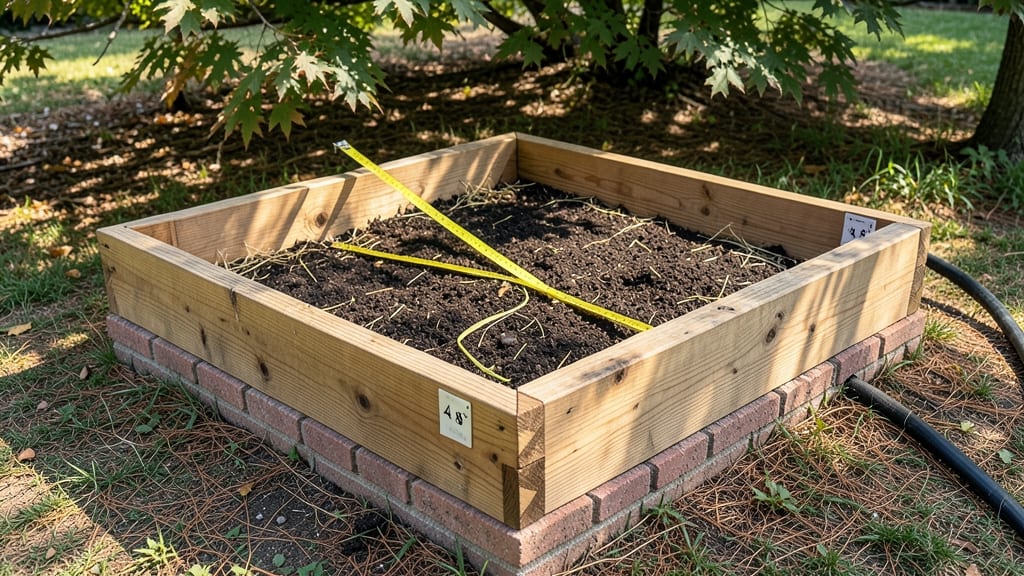
Your raised garden bed size matters more than you think—4 feet wide is the magic number for plant health and easy access. 🌱 I learned this the hard way after wrestling with narrow beds that made weeding a nightmare and wide ones that left soil too far from the edges.
The ideal depth is 12-18 inches, giving roots room to grow without overheating in summer. Height? 2-4 feet off the ground makes tending easier on your back while keeping weeds at bay. My 4x8-foot beds now produce more in less space than my old sprawling rows ever did.
You’ll harvest more efficiently with less wasted soil and fewer pests creeping in from the edges. The right dimensions also mean better air circulation, which keeps plants thriving from spring to fall. For small spaces, try 2x4-foot beds—they’re perfect for herbs and salad greens while still making weeding manageable.
Just avoid anything narrower than 3 feet to prevent the "middle shadow" where plants get neglected.
📚 In This Guide
- What you need
- Instructions
- Tips and common mistakes
- Wrapping up and next steps
What you need
- ● Lumber: Untreated cedar, redwood, or pine (rot-resistant) – recommended
- ● Standard dimensions: 2x6, 2x8, or 2x12 boards (length depends on your bed size)
- ● Quantity: 4–8 boards (e.g., 4 boards for a 4’x8’ bed, 8 for a 4’x4’ bed with double layers)
- ● Corner brackets or screws: Galvanized or stainless steel (to prevent rust) – 4–8 brackets or 2–3” deck screws (2 per corner)
- ● Landscape fabric or hardware cloth: 1 piece (slightly larger than bed footprint to block weeds/rodents)
- ● Compost or soil mix: 20–30 cubic feet (varies by bed depth; e.g., 12” deep bed needs ~1.5 cubic feet per sq. ft.)
- ● Measuring tape, pencil, and level: Essential for precision cuts and even edges
- ● Drill/driver and staple gun: For assembling brackets and securing fabric
- ○ Post-hole digger or shovel: If anchoring beds to the ground (optional but recommended for windy areas)
- ● Garden bed liner: Heavy-duty plastic or pond liner to extend bed life (cut to size)
- ● Drainage rocks: 1–2” layer of gravel or pebbles at the bottom for water flow
- ● Pathway materials: Gravel, pavers, or mulch for walkways between beds
- ● Timber screws or hidden fasteners: For a cleaner look (vs. visible brackets)
- ● Wheelbarrow or tarp: For hauling soil and compost with ease
Precision dimensions for raised garden bed size
Here's how to size your bed for both plant health and easy access—no guesswork involved.
🪴 Step 1: Determine Bed Width for Accessibility
Standard raised beds should be no wider than 4 feet across. This ensures you can reach the center without stepping inside or crowding plants. I build mine at 3 feet wide for easier maintenance and better airflow between rows. If you're working alone, keep it narrower—2-3 feet prevents straining to reach the middle.
Measure your reach from shoulder to fingertips while standing upright. If it's less than 24 inches, opt for a 2-foot-wide bed to avoid overreaching. Wide beds also dry out unevenly, so narrower beds maintain consistent moisture levels throughout.
📏 Step 2: Calculate Length Based on Plant Spacing
Length depends on what you're growing. For vegetables, aim for 8-12 feet long to maximize growing space while keeping the bed manageable. I use 10-foot beds because they fit my patio perfectly and allow for multiple rows of tall plants like tomatoes alongside shorter ones like lettuce.
Sketch a rough layout first. Place tall plants at the north end (to avoid shading shorter plants) and leave 18-24 inches between rows for easy weeding and harvesting. If your space is limited, a 4x4-foot square bed works well for herbs and salad greens.
☀️ Step 3: Set Height for Soil Depth and Comfort
Standard raised beds sit 6-12 inches above ground level. The extra height prevents soil compaction, improves drainage, and makes gardening easier on your back. I build mine at 10 inches tall—enough to accommodate deep-rooted plants like carrots while still being manageable to fill.
Check your soil depth by measuring from the bottom of the bed frame to the top. For most vegetables, 6-12 inches of soil is ideal. If you're planting potatoes or asparagus, go deeper—12-18 inches gives their roots the space they need to thrive.
✂️ Step 4: Plan for Pathways and Layout
Leave at least 2 feet of clear space around the bed for easy access and to prevent soil erosion. I create a simple grid layout with 4-foot-wide beds separated by 2-foot pathways. This makes it easy to move between rows without stepping on plants.
For small spaces, consider a "keyhole" design—a circular bed with a central pathway. This maximizes growing area while keeping everything within reach. Just ensure the diameter doesn’t exceed 6 feet—any wider and you’ll struggle to tend the center.
🌱 Step 5: Adjust for Climate and Soil Type
In cooler climates, slightly taller beds (12-18 inches) retain heat better and extend the growing season. I add extra compost to the bottom layer to boost warmth. For sandy soils, wider beds help retain moisture, while clay-heavy areas benefit from shallower, longer beds to prevent waterlogging.
Test your bed’s drainage by filling it with water and checking how quickly it drains. If water pools after 30 minutes, add more organic matter like leaves or straw to improve drainage. In windy areas, keep beds low (6 inches**) to prevent tipping.
Tips & tricks for perfect raised garden bed dimensions
Here's what I've learned after building (and adjusting) dozens of raised beds—these tricks make all the difference for healthy plants and happy gardeners.
Reach Test: Before finalizing your bed width, stand with arms extended and measure how far you can comfortably reach. If you're under 24 inches, a 2-foot-wide bed is ideal—this prevents overreaching and keeps your garden accessible. I always test this first because nothing's worse than building a bed you can't actually use comfortably.
Soil Depth Strategy: For most vegetables, the 6-12 inches of soil depth mentioned in Step 3 is perfect, but here's my pro move: I add a 2-inch layer of coarse sand or gravel at the bottom before filling with soil. This improves drainage dramatically, especially in clay-heavy areas, while keeping the total height manageable for filling.
Pathway Planning: When creating your 2-foot pathways (as mentioned in Step 4), consider using stepping stones or mulch instead of bare soil. This prevents erosion and makes your garden look more polished. I also add a slight downward slope to pathways to direct water toward plants, not away from them.
Climate Adjustments: In cooler climates where you might build taller beds (12-18 inches), I recommend adding a clear plastic dome or cold frame during early spring and fall. This extends your growing season by trapping heat while still allowing sunlight through. Just make sure to remove it during hot days to prevent overheating.
Pro Tips for Raised Garden Bed Size
- Here's what I've learned after building (and adjusting) dozens of raised beds—these tricks make all the difference fo...
- Reach Test: Before finalizing your bed width, stand with arms extended and measure how far you can comfortably reach....
- Soil Depth Strategy: For most vegetables, the 6-12 inches of soil depth mentioned in Step 3 is perfect, but here's my...
Frequently asked questions
about raised garden bed sizes—because every inch matters! Here are answers to the most common questions to help you plan like a pro.What’s the ideal raised garden bed size for beginners?
Aim for 4’ x 8’ (or smaller, like 3’ x 6’) to balance productivity and accessibility. This size fits most wheelbarrows, makes weeding easier, and lets you grow a variety of crops without overcommitting. Pro tip: If space is tight, try a 2’ x 4’ bed—it’s perfect for herbs, greens, or small veggies!
How deep should a raised bed be for root crops like potatoes or carrots?
For root vegetables, 12–18 inches deep is ideal. Shallower beds (6–12”) work for leafy greens, herbs, and shallow-rooted plants. Troubleshooting: If your bed isn’t deep enough, grow carrots or potatoes in containers or extend the bed’s depth with extra lumber or cinder blocks.
Can I build a raised bed in winter? What’s the best time to start?
Yes! Build your bed in late fall or early winter to let the soil settle and warm up by spring. Avoid planting until the soil reaches at least 50°F (test with a soil thermometer). Bonus: Winter prep gives you time to fill the bed with nutrient-rich soil and compost.
What if my yard isn’t big enough for a traditional raised bed?
No yard? No problem! Try vertical gardens (wall-mounted planters), window-box beds, or stackable containers. Even a 4’ x 2’ bed can yield surprisingly well with smart crop selection (e.g., bush beans, lettuce, or radishes). Space hack: Use corner spots or trellises to maximize growing area!
How do I keep pests out of a raised bed without chemicals?
Start with healthy soil and companion planting (e.g., marigolds to deter nematodes). Use row covers or chicken wire for slugs/snails. Prevention tip: Avoid overcrowding plants, which invites pests. Rotate crops yearly and add diatomaceous earth (food-grade) as a natural barrier.
Wrapping up and next steps
Choosing the right raised garden bed size is all about balancing plant health, accessibility, and your gardening goals—whether you’re a beginner or a seasoned green thumb! 🌱 From compact 4’x4’ beds for herbs to sprawling 8’x4’ plots for vegetables, the perfect dimensions depend on your space and vision.
Now that you’re armed with the ideal measurements, it’s time to roll up your sleeves and build—or upgrade your existing setup for a thriving, low-maintenance garden.
Start small if you’re new, experiment with shapes, and don’t forget to prioritize accessibility. Happy gardening—your future harvest (and back!) will thank you! 🌿✨