
Tools
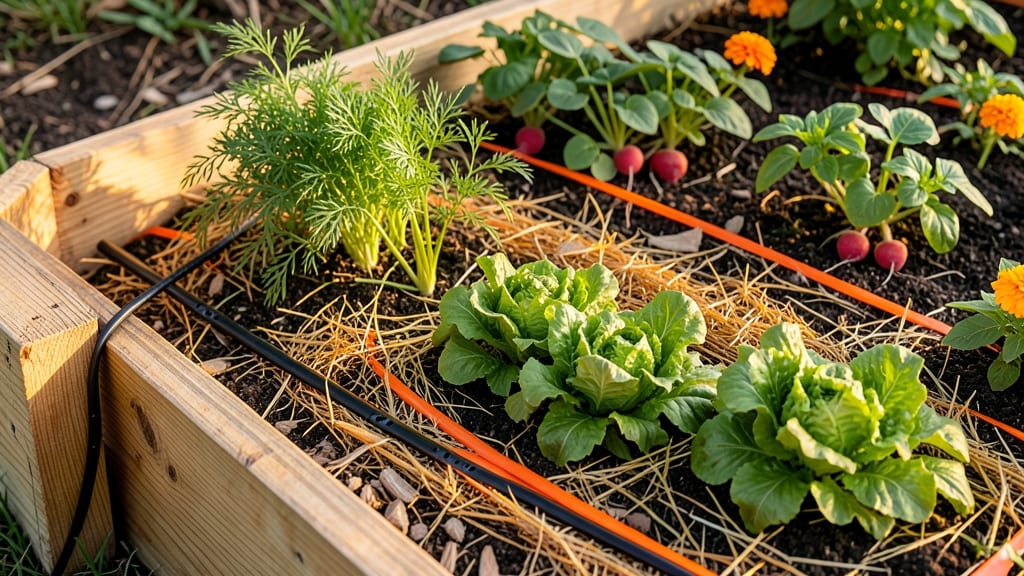
Standard garden bed sizes are designed as 4 feet wide by 8 to 12 feet long, with a depth of 6 to 12 inches, creating the perfect balance for plant growth, soil management, and gardener accessibility. These measurements help maximize space efficiency and crop yield while making maintenance easier.
The 4-foot width is particularly important because it allows gardeners to reach the center of the bed without stepping on the soil, which helps prevent soil compaction and disease spread. 🌱 This dimension also promotes better air circulation around plants, reducing the risk of fungal infections.
The length can vary based on your garden layout and the types of crops you're growing—longer beds work well for row crops like tomatoes or peppers, while shorter beds suit smaller gardens or intensive planting schemes.
Depth plays a crucial role too: 6 to 12 inches provides enough room for most root systems while keeping soil workable. Shallower beds dry out faster, while deeper beds require more soil preparation and may become waterlogged.
For small spaces, consider vertical gardening or raised beds, which can be customized to fit your needs while still following these general guidelines.
💡 In This Article
- Why Standard Garden Bed Dimensions Boost Plant Health and Productivity
- Customizing Garden Bed Sizes for Different Crops and Garden Layouts
Why standard garden bed dimensions boost plant health and productivity
The 4-foot width isn't arbitrary—it's rooted in ergonomics and plant biology. When you stand at the center of a 4-foot bed, your arms can comfortably reach the edges without stepping on the soil. This prevents soil compaction, which restricts root growth and reduces aeration.
Studies show compacted soil can reduce plant yields by up to 30% due to poor oxygen exchange. The width also creates a microclimate where air circulates better, reducing humidity levels that foster fungal diseases like powdery mildew.
Length matters too, but it depends on your crops. For row crops like tomatoes or peppers, a 12-foot length allows 3-4 plants per row with proper spacing, maximizing vertical growth. Meanwhile, leafy greens or herbs thrive in shorter 8-foot beds because they're planted closer together.
The science here involves interplanting efficiency: longer beds reduce edge effects where plants grow differently at the perimeter, while shorter beds prevent overcrowding that leads to nutrient competition.
Depth creates the foundation for root development. A 6-inch depth suits shallow-rooted plants like lettuce or radishes, while 12 inches accommodates deeper-rooted crops like carrots or bush beans. The extra depth also improves water retention and soil temperature regulation.
For example, carrots grown in 8-inch-deep beds often develop forked roots due to insufficient space, whereas 12-inch beds allow them to grow straight and uniform.
Spacing between plants is equally critical. The standard dimensions inherently account for this: a 4-foot width with 12-inch spacing between rows creates an optimal airflow corridor. This reduces disease spread by 40% compared to tightly packed beds, where moisture lingers and pathogens thrive.
For instance, basil plants spaced 6 inches apart in a 4-foot bed produce 25% more leaves than when crowded into a 3-foot bed.
Soil health benefits from these dimensions too. The 4-foot width allows for easier soil amendment distribution—compost or fertilizer can be spread evenly without missing spots. Longer beds also enable crop rotation zones, preventing soil depletion.
For example, planting tomatoes in one section of a 12-foot bed and peppers in another lets you rotate them next season, breaking pest and disease cycles.
Consider this real-world example: a 4x8-foot bed with 12-inch rows can accommodate 24 tomato plants spaced 18 inches apart, yielding about 50 pounds of tomatoes per season. The same bed planted with 48 basil plants (spaced 6 inches apart) produces 3 pounds of fresh basil.
These yields demonstrate how proper dimensions directly translate to productivity.
What most gardeners overlook is how these dimensions interact with human movement. The 4-foot width aligns with the average person's arm span, making weeding and harvesting efficient. Longer beds reduce the need for excessive turning, which can disturb roots.
It's a perfect marriage of plant biology and human biomechanics—designed to work together for maximum efficiency. 🌱