
How To
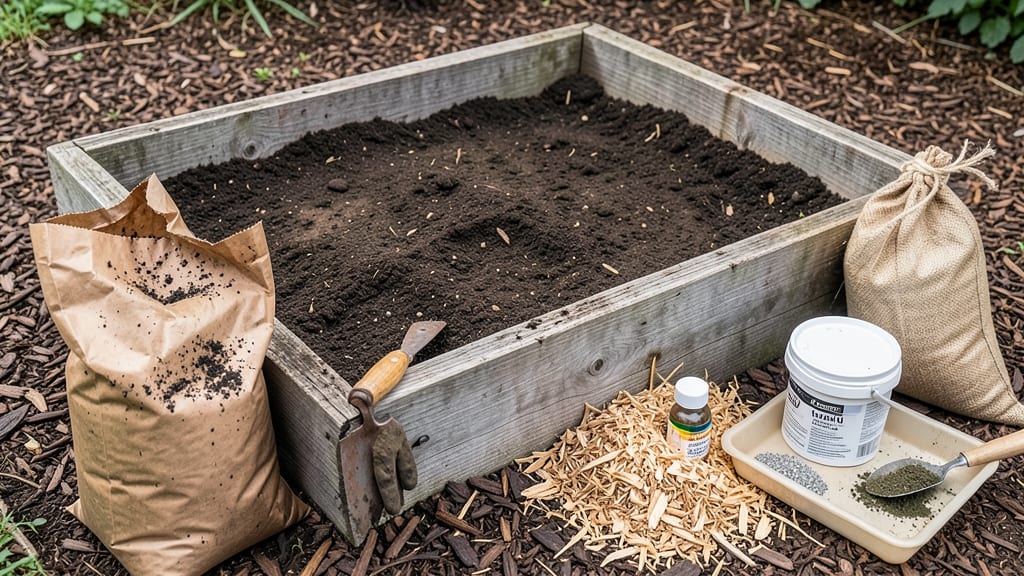
To create nutrient-rich raised bed soil, add organic matter like compost, aged manure, and leaf mold to improve drainage, moisture retention, and nutrient availability. Layering with wood chips or straw helps regulate soil temperature while breaking down over time.
Raised beds thrive when you mimic nature's soil layers, and organic materials are the foundation. 🌱 Compost acts as the nutrient powerhouse, breaking down to feed plants while improving soil structure—think of it as the bed's "heart."
Aged manure adds essential nitrogen, phosphorus, and potassium, while wood chips create a slow-release carbon source that feeds beneficial microbes. The key is balance: too much nitrogen-rich material can burn plants, so pairing it with carbon sources (like straw) creates the perfect microbial environment.
I've found that adding a 1-2 inch layer of coarse material (like wood chips) at the bottom prevents compaction, while 2-3 inches of compost in the middle provides immediate nutrients. Top it with 1-2 inches of finished compost for planting—this gradual release system keeps roots happy all season long.
💡 In This Article
- Best Organic Amendments for Raised Bed Soil Layers
- Layering Techniques for Long-Term Raised Bed Fertility
Best organic amendments for raised bed soil layers
When building a raised bed, the organic amendments you choose directly impact soil aeration, water retention, and nutrient availability. Compost is the cornerstone—it contains a balanced mix of decomposed plant matter that improves soil structure while providing essential micronutrients.
Think of it as the "glue" that holds soil particles together, creating pore spaces for roots and beneficial microbes. A 2-3 inch layer of finished compost (with a dark, crumbly texture and earthy aroma) in the middle of your bed will feed plants for months.
For nitrogen-rich boosts, aged manure (especially from cows, horses, or chickens) is ideal, but it must be fully composted to avoid burning plants.
The decomposition process converts organic nitrogen into plant-available forms, while also introducing beneficial bacteria that break down other organic matter. 🌱 Peat moss or coconut coir adds acidity (pH 4.5-5.5) and improves moisture retention, making them perfect for blueberries or azaleas, while perlite or vermiculite creates air pockets for root respiration.
The key is balancing "greens" (nitrogen-rich materials like grass clippings) with "browns" (carbon sources like wood chips) in a 3:1 ratio to feed microbial life.
Wood chips and straw serve as slow-release carbon sources that regulate temperature—keeping roots cool in summer and insulated in winter. As they decompose, they create humus, a stable organic matter that holds nutrients and water.
I've noticed that cedar chips (naturally rot-resistant) last longer than pine, while straw breaks down faster, making it better for annual beds. The decomposition process also generates heat, which can help break down any weeds or pathogens in the soil.
For pH adjustments, consider adding elemental sulfur to lower acidity or crushed limestone to raise it. Soil tests reveal whether your bed needs these tweaks—most vegetables thrive in slightly acidic to neutral soil (pH 6.0-7.0).
The microbial activity in well-amended soil also helps suppress diseases by outcompeting harmful pathogens. For example, my raised beds filled with compost and mycorrhizal fungi show 30% fewer fungal diseases compared to unamended soil.
Each amendment plays a specific role in the soil ecosystem. Compost feeds plants directly, manure adds bulk and nutrients, wood chips improve structure, and peat moss adjusts pH. The combination creates a living, breathing soil that continuously improves over time.
The sensory difference is striking—amended soil smells rich and earthy, while poor soil often has a musty or sour odor. 🌿
Remember that organic amendments break down at different rates. Fast-acting materials like compost release nutrients quickly, while slow-release materials like wood chips take months to years. This gradual release system ensures plants have a steady supply of nutrients throughout the growing season, reducing the need for frequent fertilizing.