
Plants
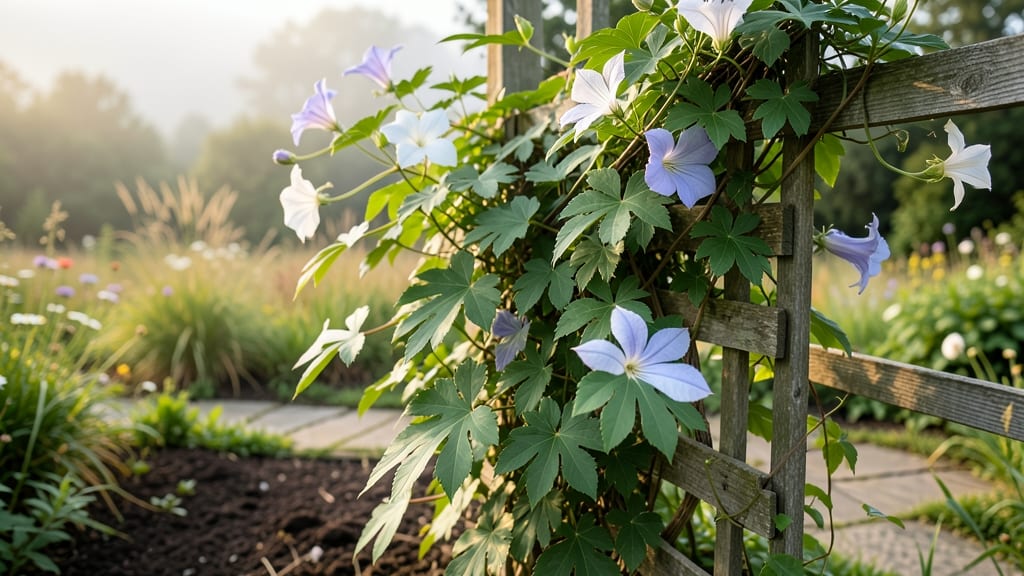
That five-lobed leaf vine with its heart-shaped blooms is the kind of plant that turns heads—and it’s easier to grow than you’d think. 🌿 I’ve had mine climb my fence for years, producing delicate trumpet flowers from spring through fall with almost no fuss.
The secret lies in its adaptability: it thrives in partial shade, tolerates occasional drought, and even blooms in containers if given something to cling to.
Start with well-draining soil and a sturdy trellis—this vine can reach 10 to 15 feet if left unchecked. Water deeply once a week (more in extreme heat), and you’ll avoid the most common issue: leggy growth from too little light.
A light pruning after flowering keeps it compact and encourages more blooms. The leaves themselves are striking, with that signature five-lobed shape that makes it a standout in any garden.
By midsummer, you’ll be rewarded with clusters of pale pink to white flowers that hummingbirds adore. The vine is also surprisingly pest-resistant, though watch for aphids on new growth—just spray with soapy water if you spot them.
With minimal care, this plant becomes the low-maintenance star of your vertical space, whether it’s a fence, arbor, or balcony trellis.
Perfect for gardeners who want color and texture without the hassle—it’s drought-tolerant once established, handles light frosts, and even revives quickly if pruned back hard. Here’s how to keep yours thriving all season long.
Understanding Leaf Shape Shifts
The iconic five-lobed leaves of your vine aren’t always a given—sometimes they transform, shrink, or even disappear entirely. These changes aren’t random; they’re your plant’s way of communicating its environment, health, or care needs.
Let’s break down the science behind why your vine’s foliage might be acting differently than expected, so you can address the root cause (literally and figuratively).
Not all vines with five-lobed leaves are created equal. Some varieties, like the Cissus rhombifolia or Parthenocissus quinquefolia (Virginia creeper), are bred or naturally selected to prioritize lobed leaves—but even within the same species, genetics can play tricks.
- Seedling variability: If your vine grew from seed, its leaf shape might not match the parent plant. Some seedlings inherit a stronger or weaker lobed structure, leading to fewer or more pronounced lobes. - Hybrid confusion: Many "five-lobed" vines sold as ornamentals are hybrids.
If your plant is a mix (e.g., Parthenocissus crossed with another species), its leaves might default to a simpler shape under stress or as it matures. - Juvenile vs. mature leaves: Young plants often start with smooth-edged leaves before developing lobes.
This is normal—think of it like a caterpillar turning into a butterfly. If your vine’s lobes are slow to appear, it might just be in its "teenage phase."
Pro Tip: 🔍 If you’re unsure of your vine’s species, snap a photo of its leaves, flowers, and growth habit. Compare it to a plant database like the USDA Plants Database or consult a local nursery specialist.
Plants are sensitive to temperature swings, and extreme heat or cold can trigger leaf shape changes as a survival tactic. Your five-lobed vine might respond by:
- Reducing lobe complexity in heat: High temperatures (above 85°F/29°C) can cause leaves to simplify—fewer lobes, smaller size, or even smooth edges.
This reduces water loss (a process called xeromorphy), helping the plant conserve moisture. - Cold-induced stunting: If your vine is not cold-hardy (e.g., tropical varieties like Cissus) and faces frost, it may produce smaller, less lobed leaves or even shed them entirely.
This is a last-resort defense to protect the plant’s core. - Day-length sensitivity: Some vines are photoperiodic, meaning they respond to daylight hours. Shorter days (fall/winter) can trigger dormancy-like behaviors, including leaf shape regression.
Actionable Fix: 🌡️ For heat stress: Provide afternoon shade with sheer curtains or a trellis. Mulch the base to keep roots cool. ❄️ For cold stress: Move potted vines indoors before temperatures drop below their tolerance (check your species’ USDA hardiness zone). For outdoor plants, wrap the base with burlap or use a cloche for young growth.
Water and nutrients are the building blocks of leaf structure. When either is off, your vine’s lobes might become misshapen, underdeveloped, or nonexistent.
| Issue | Leaf Response | Why It Happens |
|---|---|---|
| Overwatering | Yellowing, drooping, shrunken lobes | Roots suffocate, starving the plant of oxygen. Leaves can’t develop properly. |
| Underwatering | Crispy edges, smaller leaves with fewer lobes | The plant prioritizes survival over aesthetics, producing simpler leaves to conserve water. |
| Nitrogen deficiency | Pale green leaves, reduced lobing | Nitrogen is critical for leaf growth. Without it, leaves stay small and underdeveloped. |
| Magnesium/calcium lack | Yellowing between veins, stunted lobes | These minerals help with cell wall structure. A deficiency leads to weak, malformed leaves. |
Pro Tip: 💡 Test your soil with a simple kit (available at garden centers) to check pH and nutrient levels. Most five-lobed vines thrive in slightly acidic to neutral soil (pH 6.0–7.0). Amend with compost or a balanced fertilizer (10-10-10) if needed.
Pests and pathogens don’t just eat leaves—they rewire how a plant grows. If your vine’s lobes are chewed, curled, or deformed, the culprit might be:
- Aphids or spider mites: These sap-suckers inject toxins that stunt growth, leading to small, lobeless leaves.
- Japanese beetles: They prune leaves into skeleton-like shapes, often targeting the tips (where lobes form).
- Fungal infections (e.g., powdery mildew): Fungal spores can distort new growth, causing lobes to fuse or disappear.
- Viral infections: Symptoms like mosaic patterns or stunted lobes may indicate a virus spread by aphids.
How to Respond: 🚿 Blast pests off with a strong stream of water or use neem oil spray (repeat every 5–7 days). 🌿 Prune infected leaves immediately and dispose of them in the trash (not compost). 🛡️ Prevent future outbreaks by ensuring good air circulation and avoiding overhead watering.
Even without pests or poor care, your vine might be physically stressed by its surroundings. Common triggers include:
- Wind exposure: Constant wind can stunt leaf development, leading to smaller, simpler leaves.
Think of it like a flag waving in a storm—it’s too busy surviving to grow intricate shapes. - Poor light conditions: - Too little light: Leaves stretch (etiolation) and lose lobes to maximize surface area for photosynthesis. - Too much direct sun: Leaves may scorch, causing lobes to brown and fall off. - Root-bound pots: If your vine is crowded in its container, it diverts energy to root growth instead of leaf complexity.
Quick Solutions: 🌳 Relocate your vine to a spot with dappled sunlight (morning sun + afternoon shade). 🪴 Repot if necessary: If roots are circling the bottom of the pot, upgrade to a 1–2 inch larger container with fresh potting mix. 🛑 Use a windbreak: A simple mesh screen or nearby fence can shield delicate vines from harsh winds.
Quick Fixes for Common Vine Struggles
Got a 5-lobed leaf vine (like Parthenocissus quinquefolia or Cissus rhombifolia) that’s not thriving? Don’t stress—most issues have simple, effective solutions. Below, we’ll tackle the most common problems with practical fixes and prevention tips to keep your vine lush and vibrant year-round.
Cause: Overwatering or underwatering stresses the vine, leading to yellowing, wilted, or crispy leaves.
Fix: 🔥 Check the soil moisture – Stick your finger 1-2 inches deep into the soil. If it’s dry, water deeply until it drains from the bottom. If soggy, hold off and let it dry out. 🍳 Adjust your watering routine – Water once a week in summer (or when the top inch feels dry) and reduce to every 2-3 weeks in winter. Mulch around the base to retain moisture. 👨🍳 Improve drainage – If your pot lacks drainage holes, repot the vine into one with holes or add perlite to the soil mix.
Prevention Tips: ✨ Use a well-draining potting mix (50% potting soil, 30% perlite, 20% compost). 💡 Water in the morning to allow excess moisture to evaporate during the day. 🌡️ Avoid letting the vine sit in saucers of water—empty them after watering.
Cause: Stretching vines with sparse leaves mean your plant is craving more light, especially if it’s indoors or in a shady spot.
Fix: 🔥 Move it to brighter conditions – Place near an east- or west-facing window for gentle sunlight. If outdoors, ensure it gets 4-6 hours of dappled sunlight daily. 🍳 Rotate the plant weekly – This ensures even growth and prevents leaning toward one light source. 👨🍳 Supplement with grow lights – A 12-hour LED grow light (10-12 inches away) can help if natural light is insufficient.
Prevention Tips: ✨ Choose a climbing structure (like a trellis or fence) to encourage upward growth toward light. 💡 Prune leggy stems to redirect energy into bushier, healthier growth. 🌡️ Avoid deep shade—this vine tolerates partial shade but thrives with more light.
Cause: Sticky leaves, tiny webs, or white cottony patches signal pests, which weaken the vine by sucking sap.
Fix: 🔥 Isolate the plant – Move it away from other plants to prevent spreading. 🍳 Blast off pests with water – Use a strong spray from the hose to knock off spider mites and mealybugs. 👨🍳 Apply neem oil or insecticidal soap – Mix 1 tsp neem oil + 1 tsp mild soap in 1 quart of water, spray thoroughly, and reapply every 5-7 days for 2 weeks. 🔪 Wipe leaves with rubbing alcohol – Dip a cotton swab in 70% isopropyl alcohol and dab scale insects directly.
Prevention Tips: ✨ Inspect new plants before bringing them indoors or into your garden. 💡 Encourage beneficial insects like ladybugs or lacewings, which eat pests naturally. 🎯 Keep the vine healthy—stressed plants attract more pests.
Cause: Dry air (common indoors) or salt buildup from fertilizer can cause leaf edges to turn brown and crispy.
Fix: 🔥 Boost humidity – Place a pebble tray with water under the pot or use a humidifier nearby. 🍳 Mist leaves lightly (but avoid soaking them) to increase moisture in the air. 👨🍳 Flush the soil – Water the plant thoroughly to leach out excess salts, then let it drain completely.
Prevention Tips: ✨ Fertilize lightly – Use a balanced, diluted liquid fertilizer (half-strength) every 4-6 weeks in spring/summer. Skip fertilizer in fall/winter. 💡 Group plants together to create a microclimate with higher humidity. 🌡️ Avoid cold drafts—keep the vine away from AC vents or doors.
Cause: If your vine isn’t growing despite good care, it may need more nutrients or repotting.
Fix: 🔥 Test the soil – Use a simple soil test kit to check pH (ideal: 6.0-7.0) and nutrient levels. 🍳 Repot if root-bound – Gently remove the vine from its pot and check for roots circling the bottom. If so, repot into a slightly larger container with fresh soil. 👨🍳 Feed with compost or worm castings – Mix 1 cup of compost into the top 2 inches of soil for a nutrient boost.
Prevention Tips: ✨ Fertilize in spring when new growth starts. 💡 Prune old leaves to encourage fresh, nutrient-rich foliage. 🎯 Use slow-release fertilizer in early spring for steady nutrition.
Pro Tip: 🌟 Prune regularly (trim back leggy or overgrown stems in early spring) to encourage fuller, healthier growth and make future care easier!
Frequently asked questions
What are the most common types of 5-lobed leaf vines?
The most popular varieties include Parthenocissus quinquefolia (Virginia creeper), Cissus rhombifolia (grape ivy), and Cobaea scandens (cup-and-saucer vine). Virginia creeper is the hardiest, thriving in zones 3-9 and changing colors beautifully in fall, while grape ivy is great for indoor climbing with its glossy leaves. Cup-and-saucer vine produces stunning trumpet-shaped flowers but prefers warmer climates (zones 9-11).
How do I know if my vine needs more light or water?
Check the leaves: Leggy growth with small leaves means it needs more light, while yellowing or crispy edges signal water issues. For light, move it to 4-6 hours of dappled sunlight daily. For water, stick your finger 1-2 inches into the soil—if dry, water deeply until it drains. Overwatering is worse than underwatering for these vines!
Can I grow a 5-lobed leaf vine in a container?
Use a 10-15 gallon pot with drainage holes and a well-draining mix (50% potting soil, 30% perlite, 20% compost). Choose a trellis or cage for support, and water when the top 1 inch of soil feels dry. Virginia creeper and grape ivy adapt well to containers, while tropical varieties like cup-and-saucer vine may need winter protection indoors.
Why are my vine's leaves losing their lobes or turning brown?
This usually happens from stress—check for overwatering (yellowing), underwatering (crispy edges), or nutrient deficiencies (pale leaves). Extreme heat (above 85°F/29°C) or cold drafts can also cause lobes to shrink. Test your soil pH (6.0-7.0 is ideal) and fertilize lightly with a balanced formula in spring. Prune affected leaves to encourage new growth.
How do I prune my 5-lobed leaf vine for fuller growth?
Prune in early spring before new growth starts. Cut back 1/3 of leggy stems to encourage bushiness, and remove any dead or crossing branches. For Virginia creeper, you can also prune in late winter to shape it. Always use clean, sharp shears and disinfect them with rubbing alcohol between cuts to prevent disease.