
Pests
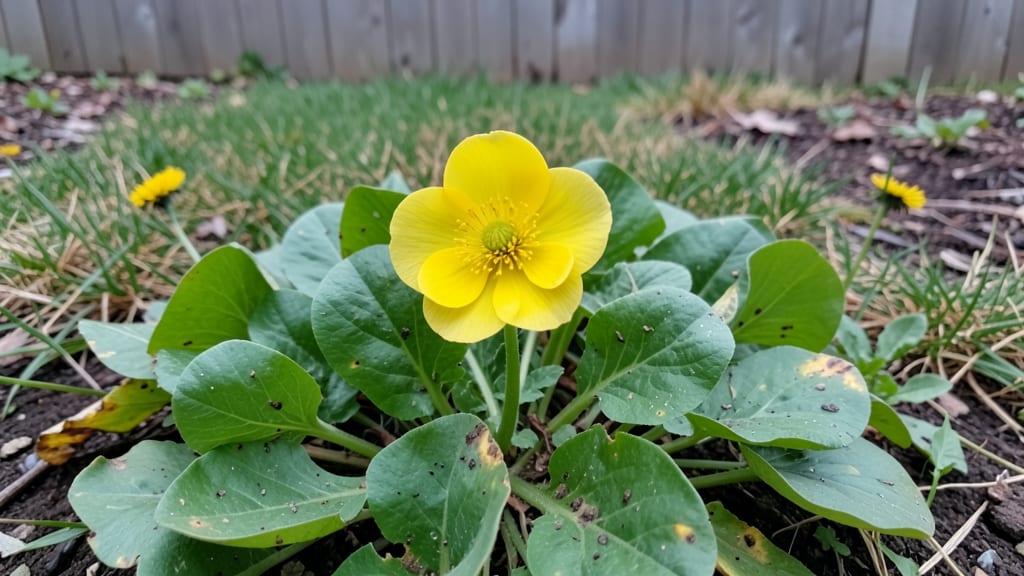
Buttercups aren't classified as weeds botanically, but their aggressive growth and rapid spread can make them act like invasive plants in gardens. Their cheerful yellow blooms and tenacious roots often clash with cultivated spaces, even though they thrive beautifully in wild meadows.
Botanically, buttercups belong to the Ranunculaceae family, which includes many ornamental plants rather than true weeds like dandelions or crabgrass. 🌱 Their misclassification stems from how quickly they multiply—self-seeding prolifically and forming dense patches that crowd out desired plants.
While they don’t have the same ecological drawbacks as aggressive weeds, their persistence in gardens often earns them the unwanted "weed" label.
The key difference lies in their intentional cultivation elsewhere: buttercups are prized in wildflower mixes for pollinators, yet their same traits become problematic when they take over garden beds.
💡 In This Article
- Botanical Classification of Buttercups vs. Weeds
- Managing Buttercups in Your Garden
Botanical classification of buttercups vs. weeds
Buttercups (Ranunculus spp.) belong to the Ranunculaceae family, a diverse group that includes over 2,000 species—many of which are prized ornamentals. This family differs fundamentally from true weeds like dandelions (Taraxacum) or crabgrass (Digitaria), which belong to the Asteraceae and Poaceae families respectively.
The confusion arises because buttercups share weed-like traits: self-seeding aggressively, forming dense colonies, and thriving in disturbed soils. However, their perennial growth habit (returning yearly) and showy flowers distinguish them from annual weeds that complete their lifecycle in a single season.
The key botanical difference lies in their reproductive strategy. Buttercups produce 100-200 seeds per plant, which disperse via wind or animals, but these seeds require light exposure to germinate—unlike true weeds that often sprout from buried seed banks.
Their fibrous root system (spreading horizontally up to 12 inches) allows them to outcompete garden plants, but it also makes them valuable in erosion control on slopes. 🌿 In contrast, crabgrass spreads via rhizomes (underground stems) and dandelions rely on deep taproots, giving them a more aggressive invasive edge in lawns.
Ecologically, buttercups play a positive role in wild landscapes by supporting pollinators with their nectar-rich flowers and providing food for caterpillars (like the buttercup borer moth). Their presence in meadows indicates healthy, undisturbed soil, while their absence suggests nutrient-poor or compacted ground.
This dual nature—beneficial in nature but disruptive in gardens—explains why they’re often mislabeled as weeds. The Ranunculaceae family’s ornamental members (like crown imperial or pasque flower) further blur the line, as buttercups are essentially the "wild cousins" of these cultivated plants.
What most gardeners overlook is the timing of their lifecycle. Buttercups germinate in early spring (March-April in temperate zones) and flower by May-June, making them early-season competitors.
Their sap contains protoanemonin, a compound that causes skin irritation in some people—a trait shared with true weeds like stinging nettles. This chemical defense mechanism helps them survive herbivory, much like weeds that produce toxins to deter grazing.
However, unlike weeds, buttercups don’t produce allergic compounds that harm livestock or humans upon ingestion.
Consider these growth comparisons to true weeds:
- Spread rate: Buttercups expand 6-12 inches per year via roots, while crabgrass spreads 2-3 feet annually via stolons.
- Depth of roots: Buttercups have shallow roots (6 inches deep), whereas dandelions tap 12-15 inches deep.
- Flowering time: Buttercups bloom 4-6 weeks annually, while weeds like chickweed flower continuously from spring to fall.
The confusion persists because gardeners judge plants by their impact on cultivation, not botanical definitions. A true weed is any plant growing where it’s unwanted, but buttercups’ ecological value in wild areas makes them more of a "garden nuisance" than a true ecological menace.
Their bright yellow 5-petaled flowers (though technically many small petals) and hairy leaves make them stand out—both as a garden pest and as a wildflower asset. 🌼