
Advice
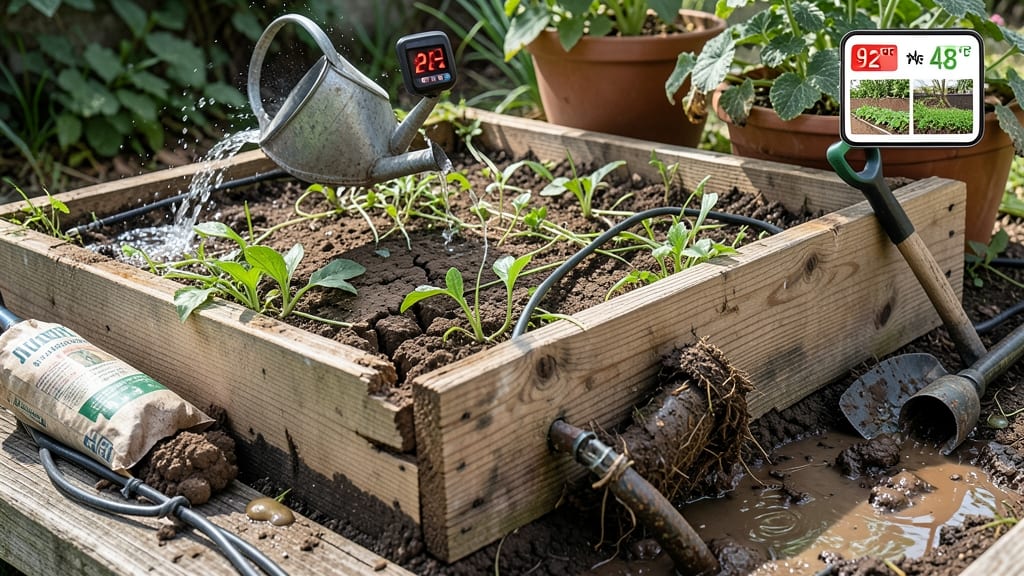
The disadvantages of raised bed gardening include higher initial costs for materials and quality soil, drainage problems if not properly constructed, and accelerated soil drying in warm weather. Deep-rooted plants may struggle, and weeding becomes more labor-intensive due to the confined space.
While raised beds offer many benefits, these trade-offs often catch gardeners off guard.
The initial investment for lumber, hardware cloth, and premium soil can add up quickly—especially when factoring in ongoing amendments like compost or fertilizer. 🌱 Drainage becomes a particular issue if the bed lacks proper layering or slopes incorrectly, leading to waterlogged roots or erosion.
Even with careful planning, the contained space forces gardeners to prioritize which plants get room, often sidelining deep-rooted varieties like asparagus or artichokes.
Beyond construction challenges, maintenance demands shift in unexpected ways. Weeding becomes more tedious in narrow beds, and harvesting can strain your back if the bed isn't at an ergonomic height.
In hot climates, the soil dries out faster than in-ground plots, requiring frequent watering—something many gardeners don't anticipate when choosing raised beds for their supposed "low-maintenance" reputation.
💡 In This Article
- Common Raised Bed Soil and Drainage Problems
- Hidden Costs and Maintenance Trade-Offs in Raised Beds
Common raised bed soil and drainage problems
Raised beds often suffer from soil compaction over time because the contained space limits root expansion, creating a dense layer just below the surface. Unlike in-ground gardens where roots can spread freely, the confined vertical space forces roots to grow in a narrower column.
This compaction reduces oxygen availability to roots, which can stunt growth—especially for plants like tomatoes or peppers that need deep, loose soil to thrive. 🌱
The drainage challenges stem from construction details most gardeners overlook. Without proper layering (like landscape fabric and gravel at the bottom), water pools at the base, suffocating roots. Even with good drainage, the elevated edges cause water to run off faster during heavy rains, leading to uneven moisture distribution.
In clay-heavy soils, this becomes worse—water either pools or drains too quickly, creating a Goldilocks problem for plant health.
Soil nutrient depletion happens faster in raised beds because the contained volume means amendments like compost or fertilizer get used up quicker. Unlike in-ground beds where nutrients cycle naturally from surrounding soil, raised beds rely entirely on what you add.
For example, a 4x8-foot bed filled with 12 inches of soil may require 2-3 cubic yards of quality topsoil—enough to deplete faster than you'd expect without regular testing and replenishment.
Erosion becomes a silent issue in raised beds, particularly on slopes or with heavy rainfall. The lack of ground cover means wind and water strip away topsoil over time.
I've seen 1-2 inches of soil erode from a poorly constructed bed in just one growing season, reducing plant root depth and exposing shallow roots to extreme temperatures. This is why many expert gardeners recommend adding a 2-inch layer of straw mulch to protect the soil surface.
Another hidden problem is the "thermal shock" effect. Raised beds heat up and cool down 10-15°F faster than in-ground soil due to exposure to air and sun.
While this can extend growing seasons in cool climates, it also means soil dries out quicker in hot weather—sometimes requiring 20-30% more water than traditional gardens. This rapid moisture loss forces gardeners into a cycle of frequent watering or investing in expensive irrigation systems.
For deep-rooted plants like asparagus or artichokes, the height limitation becomes a dealbreaker. While most raised beds max out at 12-18 inches deep, these plants need 2-3 feet of soil to establish properly. The result?
Stunted growth, lower yields, and frustrated gardeners who assumed raised beds could handle everything. This is why many experts recommend reserving raised beds for shallow-rooted crops and using in-ground plots for deeper varieties.