
Flowers
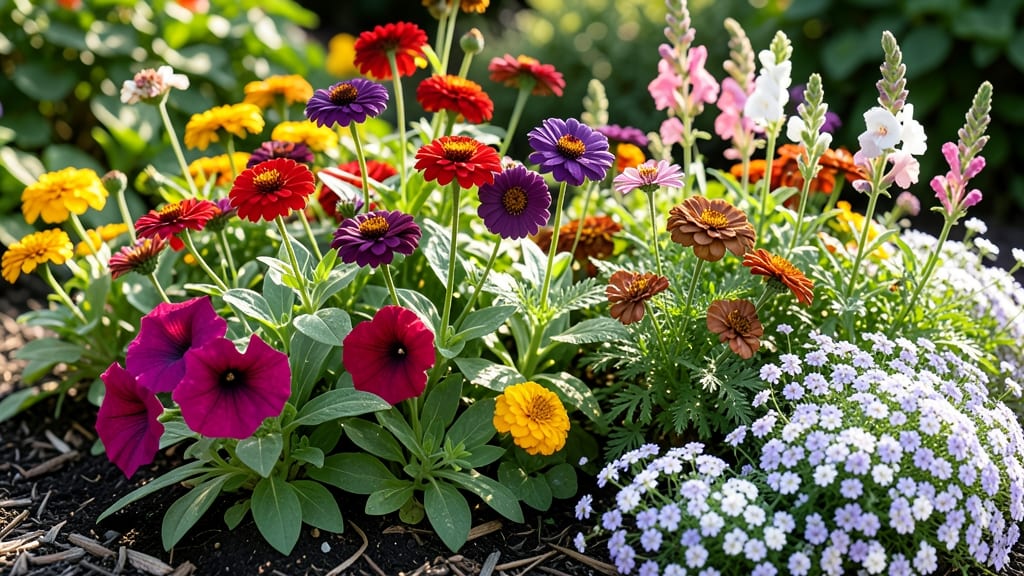
Your flower bed annuals can transform a blank space into a nonstop color show—if you pick the right mix. 🌸 I’ve learned that the secret isn’t just choosing pretty flowers, but pairing them so they bloom in waves, filling gaps and keeping your bed vibrant from spring to frost.
My first attempt was a disaster (too many sun-lovers in the shade!), but now I design beds that look like a pro’s work—with zero guesswork.
Start with a color palette—not just random plants. Cool blues and purples pair perfectly with warm reds and oranges, while whites and yellows brighten shady spots. For long blooms, mix early starters like pansies with mid-season petunias and late-blooming salvias.
Spacing is key too: give taller plants like snapdragons 12-18 inches of room, while trailing nasturtiums only need 6 inches to sprawl beautifully.
By the time summer hits, your bed will be a lush, layered masterpiece—no bare patches, no sad wilting. The trick is deadheading spent blooms (snip them off at the base) and feeding with balanced fertilizer every 4-6 weeks.
Even my black thumb can’t kill these combinations, and the best part? You’ll never buy bedding plants again.
Works for sun-drenched borders, shady corners, or even container gardens. Let’s make your flower bed the envy of the neighborhood—season after season.
📚 In This Guide
- What you need
- Instructions
- Tips and common mistakes
- Wrapping up and next steps
What you need
- ● Annual flower seeds or seedlings: Choose 6–12 varieties (e.g., petunias, marigolds, zinnias, impatiens) for continuous blooms. Aim for at least 10–15 plants per square foot for a lush look.
- ● Well-draining potting soil: 2–3 cubic yards (for a 4’x4’ bed) or a high-quality garden soil blend mixed with compost (ratio: 2 parts soil, 1 part compost).
- ● Organic fertilizer: Slow-release granules (e.g., 10-10-10 or 12-12-12) or liquid bloom booster (follow package rates for 1–2 applications per month).
- ● Mulch: 1–2 inches of shredded bark, straw, or pine needles to retain moisture and suppress weeds.
- ● Watering can or hose with a gentle spray nozzle: Annuals need 1–1.5 inches of water per week (adjust for heat/drought).
- ● Garden trowel or hand shovel: For digging small holes (4–6” deep) for seedlings.
- ● Garden gloves: Protect your hands from thorns (e.g., roses) or prickly stems.
- ● Pruners or scissors: For deadheading spent blooms and shaping plants.
- ● Measuring tape or ruler: To space plants 12–24” apart (check plant tags for specifics).
- ○ Stakes or plant markers (optional but helpful): Label varieties if mixing colors/heights.
- ● A sunlight assessment: Most annuals thrive in full sun (6+ hours/day) or partial shade (4–6 hours). Adjust choices based on your bed’s light.
- ● Drainage check: Ensure your bed isn’t soggy—amend clay soil with perlite or sand if needed.
- ● Last frost date: Plant after the average last frost in your zone (use a frost calendar for guidance).
How to design a stunning annual flower bed that reblooms all season
Here's my go-to approach for creating a vibrant, low-maintenance annual display that keeps blooming from spring to frost.
🌱 Step 1: Choose a Sun Exposure and Soil Foundation
First, assess your flower bed's sun exposure—most annuals thrive in 6+ hours of sun, but some like impatiens prefer partial shade. Test your spot by observing how much direct sunlight it gets between 10 AM and 4 PM. If the area gets morning sun but afternoon shade, that's perfect for shade-loving annuals.
Amend your soil with 2-3 inches of compost to improve drainage and fertility. I like to work it into the top 6 inches of soil using a garden fork. For heavy clay soil, mix in 1 part sand to 3 parts soil to prevent root rot. The ideal soil should crumble easily when damp but not stick to your hands.
☀️ Step 2: Select a Colorful, Reblooming Annual Mix
Pick a combination of 3-5 annual varieties that complement each other in height, bloom time, and color. I recommend starting with tall back-row plants like sunflowers or snapdragons, then mid-height plants like petunias or zinnias, and finally low-growing annuals like vinca or marigolds for the front. This creates a natural tiered effect.
For continuous blooms, choose varieties with staggered bloom times—like early-blooming cosmos paired with late-season salvias. I always include at least one pollinator-friendly variety (like zinnias or cosmos) to attract bees and butterflies. Group plants with similar water needs together to simplify maintenance.
🪴 Step 3: Plant at the Right Spacing and Depth
Read the spacing recommendations on each plant tag—this ensures good airflow and prevents disease. Dig holes slightly deeper than the root ball but never deeper than the plant's growth line. Gently remove the plant from its container and loosen any circling roots with your fingers. This prevents root girdling as the plant grows.
Place each plant in its hole and fill around the roots with soil, pressing lightly to remove air pockets. Water deeply right after planting to settle the soil and eliminate air gaps. I like to water until the soil is 2-3 inches deep and damp throughout. Avoid planting when the weather is forecasted to be hot—new plants need time to establish roots.
💧 Step 4: Water Consistently and Mulch to Retain Moisture
Water your annuals deeply 2-3 times per week during the first month to encourage deep root growth. Check moisture by sticking your finger 1 inch into the soil—if it feels dry, it's time to water. Early morning is the best time to water, as it reduces evaporation and fungal diseases.
Spread 2-3 inches of mulch around each plant, keeping it 2 inches away from the stems to prevent rot. I prefer organic mulch like shredded bark or straw, which also improves soil health as it breaks down. Mulch helps retain moisture, regulate soil temperature, and suppress weeds—saving you time and effort.
✂️ Step 5: Deadhead and Fertilize for Continuous Blooms
Deadhead spent blooms regularly to encourage more flowers and prevent seed formation. I like to do this every 7-10 days or whenever I notice faded blooms. Simply pinch or snip off the flower head just above the next set of leaves. This redirects the plant's energy into producing new blooms instead of seeds.
Feed your annuals with a balanced, water-soluble fertilizer every 2-3 weeks during the growing season. I use a 10-10-10 or 20-20-20 formula, following the package instructions for dilution. Avoid over-fertilizing, as this can lead to lush foliage but fewer blooms. Always water the plants before and after fertilizing to prevent root burn.
Tips & tricks for perfect flower bed annuals
A few simple tricks that'll transform your annual flower bed from ordinary to showstopping.
Sun Exposure Insight: I always check sun exposure between 10 AM and 4 PM to determine the best plant placement. If your bed gets morning sun but afternoon shade, opt for shade-tolerant varieties like impatiens or begonias. These plants thrive in partial shade conditions, while sun-loving annuals like zinnias or petunias will wilt in these spots. Trust me, this small adjustment makes all the difference in plant health and bloom abundance.
Soil Preparation Secret: The 2-3 inches of compost and 6 inches of soil amendment in Step 1 isn't just about nutrients—it's about creating the perfect crumbly texture. When testing your soil, it should hold together when damp but break apart easily when dry. If your soil feels sticky or compacted, mix in that 1 part sand to 3 parts soil ratio immediately. This prevents root rot and gives your annuals the airy environment they need to thrive.
Planting Depth Technique: When planting, dig holes slightly deeper than the root ball but never deeper than the plant's growth line mentioned in Step 3. This prevents the stem from being buried too deeply, which can cause rot. I also recommend loosening circling roots with your fingers—this simple step prevents root girdling as the plant matures and gives it room to spread naturally. It's a small action with big results!
Watering Wisdom: The 2-3 times per week watering schedule in Step 4 works best when done in the early morning. This timing reduces evaporation and fungal diseases that can plague your annuals. I check moisture by sticking my finger 1 inch into the soil—if it feels dry at that depth, it's time to water. This method ensures you're watering deeply enough to encourage strong root growth without overwatering.
Pro Tips for Flower Bed Annuals
- A few simple tricks that'll transform your annual flower bed from ordinary to showstopping.
- Sun Exposure Insight: I always check sun exposure between 10 AM and 4 PM to determine the best plant placement.
- Soil Preparation Secret: The 2-3 inches of compost and 6 inches of soil amendment in Step 1 isn't just about nutrients—it's about creating the perfect crumbly texture.
Frequently asked questions
Got questions about keeping your flower beds vibrant all season? We’ve got answers!
Whether you're a first-time planter or a seasoned gardener, these FAQs will help you avoid common pitfalls and maximize your annuals' potential. Let’s dive in!
What’s the best time to plant annuals in my flower bed?
For most annuals, plant after the last frost in spring (when soil is warm) or in early fall (6–8 weeks before your first frost). Pro tip: Check your USDA hardiness zone for exact timing! Cool-season annuals (like pansies) can even handle light frosts—just avoid extreme cold.
How often should I water flower bed annuals?
Water deeply 1–2 times per week (more in extreme heat or sandy soil). Aim for 1–1.5 inches of water per week, either from rain or irrigation. Morning watering is best—it reduces evaporation and fungal risks. Mulch around plants to retain moisture!
Can I mix perennials and annuals in the same flower bed?
Annuals add seasonal color, while perennials provide structure. Place fast-growing annuals (like zinnias) in front of slower perennials (like coneflowers) to avoid shading issues. Just ensure both get similar light/water needs. Win-win!
Why aren’t my annuals blooming as much as they should?
Overcrowding, lack of sunlight, or nutrient deficiencies (like low phosphorus) can stunt blooms. Deadhead spent flowers regularly, fertilize with a balanced bloom booster, and ensure 6+ hours of sun daily. Stress = fewer flowers!
What are the most heat- and drought-tolerant annuals for flower beds?
Try these tough beauties:
- Lantana – Thrives in heat, attracts butterflies
- Zinnias – Drought-resistant, long-lasting blooms
- Portulaca (Moss Rose) – Succulent-like, loves sun
- Verbena – Drought-tolerant, colorful clusters
Mulch heavily to retain moisture!
Wrapping up and next steps
Transforming your flower beds into vibrant, year-round displays is easier than you think! By choosing the right flower bed annuals, you’ll enjoy bold colors, effortless care, and blooms that keep coming back—season after season.
Whether you’re a seasoned gardener or just starting out, these plants bring joy and life to any outdoor space.
Ready to dive in? Start small! Pick 2-3 annuals that thrive in your climate, prep your bed, and watch your garden burst into color. You’ve got this—happy planting! 🌸✨