
Flowers
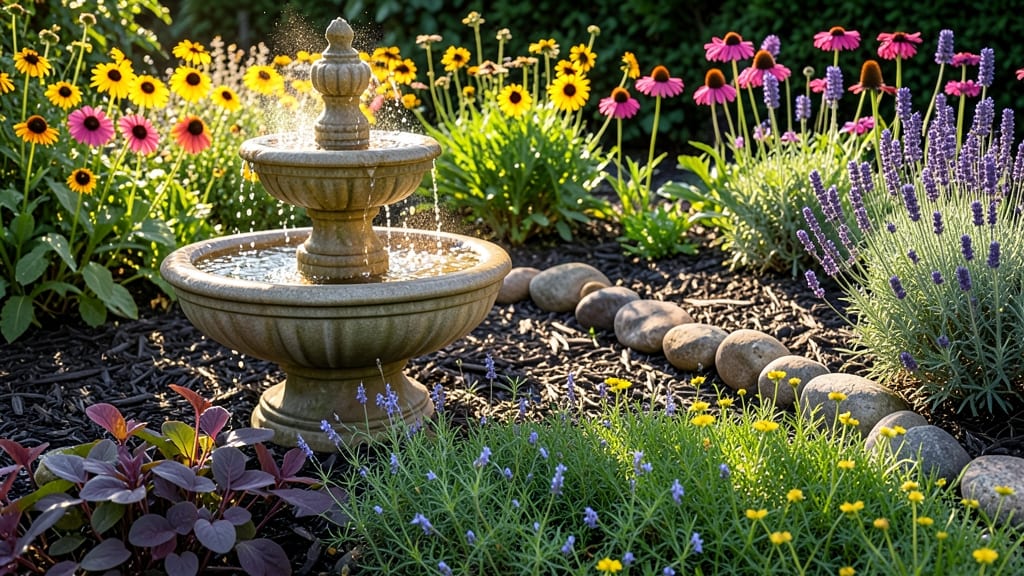
A flower bed with fountain transforms your garden into a tranquil retreat. 💦 The gentle sound of water creates an instant oasis, while the right plant choices make maintenance effortless. I designed mine around a small tiered fountain, surrounded by drought-tolerant perennials that thrive with occasional misting.
The key is balancing water-loving plants near the fountain with drought-resistant varieties at the edges. My go-to combos include moss phlox and black-eyed Susans for color, plus heuchera for texture—all of which stay lush with minimal care.
The fountain's spray keeps the immediate area moist, while the outer plants handle drier conditions. What you end up with is a garden that feels like a spa—cool breezes, soothing sounds, and flowers that bloom all season.
The fountain becomes the centerpiece, drawing the eye while the plants frame it beautifully. Even in hot weather, this combo stays vibrant and inviting. Works for any garden size, from small courtyard spots to sprawling backyard retreats.
The design principles scale easily, so you can start small or go big with the same approach.
📚 In This Guide
- What you need
- Instructions
- Tips and common mistakes
- Wrapping up and next steps
What you need
- ● Flower bed base: Topsoil (1–2 cubic yards, depending on bed size)
- ● Compost or organic mulch (1–2 bags, 40 lbs each)
- ● Landscape fabric (to prevent weeds; size matches bed dimensions)
- ● Fountain setup: Pre-formed pond liner (PVC or EPDM, 30–60 mil thickness)
- ● Pump (submersible or external, 1,000–3,000 GPH for small/medium beds)
- ● PVC pipes or flexible tubing (½" diameter, 10–20 ft length)
- ● Waterproof fountain base or pre-cast fountain bowl (diameter: 12"–36")
- ○ Underwater LED lights (optional but magical!)
- ● Plants & decor: Perennial flowers (e.g., hostas, daylilies, or hydrangeas; 10–20 plants)
- ● Moss or aquatic plants (for natural edges; 1–2 small bags)
- ● Decorative rocks or pebbles (for bed edging; 5–10 lbs)
- ● Tools: Shovel & garden spade
- ● Wheelbarrow (for soil transport)
- ● Measuring tape & level
- ● Utility knife (for cutting pond liner)
- ● Pliers (for pipe connections)
- ● Solar-powered pump (eco-friendly & low-maintenance)
- ● Custom fountain statue or tiered basin (for elegance)
- ● Drip irrigation kit (for automated watering)
- ● Floating plants (like water lilies, if adding a deeper pond section)
- ● Timed LED lights (for nighttime ambiance)
Step-by-step guide for creating a flower bed with a fountain
Transform your garden into a tranquil retreat with this elegant combination of water and blooms.
🪴 Step 1: Plan and Prepare the Foundation
Start by selecting a level, sunlit spot for your flower bed and fountain. Measure the area—aim for at least 4 feet in diameter to accommodate both features harmoniously. I like to sketch a rough layout first, marking where the fountain will sit (usually centered) and where flowers will surround it. Use a string line and stakes to outline the bed shape before digging.
Dig out the soil to a depth of 8-12 inches, removing rocks and roots. For drainage, add a 2-inch layer of crushed gravel at the bottom of the bed. This prevents waterlogging and keeps roots healthy. If your soil is heavy clay, mix in 20% compost to improve aeration and moisture retention.
☀️ Step 2: Install the Fountain System
Position your fountain pump and basin according to your layout, ensuring the pump sits at the lowest point for proper water circulation. Connect the tubing securely, testing the flow before final placement. I always run the pump for 10-15 minutes to check for leaks or weak water pressure—fixing issues now saves headaches later.
Surround the fountain with a 3-inch layer of pebbles or decorative stones to create a natural border and prevent soil erosion. This also adds visual contrast to the blooms. For a seamless look, choose stones that complement your garden’s color palette. Water the fountain system one final time to ensure everything operates smoothly before adding plants.
🌿 Step 3: Plant Moisture-Loving Flowers
Select flowers that thrive in consistently moist soil, such as impatiens, astilbes, or daylilies. Space plants 12-18 inches apart, depending on their mature size, to allow for airflow and growth. I dig holes slightly larger than the root balls and gently loosen the roots before planting to encourage establishment.
Fill the holes with soil, pressing lightly to remove air pockets. Water deeply immediately after planting to settle the roots and eliminate gaps. Mulch the bed with 2-3 inches of organic mulch to retain moisture and suppress weeds. Avoid piling mulch directly against stems to prevent rot.
💧 Step 4: Balance Water and Maintenance
Monitor the fountain’s water level weekly, topping it off as needed to maintain a steady flow. Most fountains require 1-2 gallons of water per day, depending on size. I schedule this task during early morning or evening to reduce evaporation and keep the water fresh for longer.
Fertilize the flower bed every 4-6 weeks with a slow-release, water-soluble fertilizer to support vibrant blooms. Avoid over-fertilizing near the fountain—excess nutrients can clog the pump or harm aquatic plants. Trim spent blooms regularly to encourage continuous flowering and maintain a tidy appearance.
⏰ Step 5: Seasonal Care and Adjustments
In fall, reduce watering gradually as temperatures drop, but keep the fountain running to prevent freezing damage. Drain and store the pump indoors if winter temperatures fall below 32°F, or use a submersible pump designed for cold weather. Protect tender plants with a light layer of mulch or frost cloth.
Spring is the perfect time to refresh the bed. Prune back any dead foliage, divide overcrowded perennials, and add new plants to fill gaps. Adjust the fountain’s flow rate if needed—slower water movement creates a more serene atmosphere, while faster flows add energy to the space. With consistent care, your flower bed and fountain will become the garden’s centerpiece for years to come.
Tips & tricks for perfect flower bed with fountain
Here's what nobody tells you about creating a flawless garden sanctuary that combines both beauty and tranquility.
Foundation Precision: When digging your 8-12 inch deep bed, use a level to ensure perfect flatness before adding gravel. Uneven beds can cause water pooling around the fountain, which creates soggy soil and root rot. I've seen this happen when people rush this step—take the extra 10 minutes to get it right. The 2-inch gravel layer should be evenly distributed to prevent settling over time, especially if you're working with heavier clay soils.
Fountain Flow Testing: That 10-15 minute test run of your fountain system isn't just about checking for leaks—it's your chance to evaluate the water's sound quality and spray pattern. Run it at different flow rates to determine what creates the most soothing ambiance for your space. I like to test it at both morning and evening to hear how the sound carries through different times of day. This helps you decide whether to use a gentle stream or a more vigorous cascade for your garden's atmosphere.
Plant Placement Strategy: For that 12-18 inch spacing between moisture-loving flowers, consider creating concentric circles around your fountain with slightly smaller plants near the center. This creates visual depth while ensuring all plants receive adequate moisture. The outer ring can feature taller varieties that won't compete with the fountain's basin, while shorter plants near the center add delicate details. Remember that the 2-3 inches of mulch should be spread evenly but kept 2 inches away from plant stems to prevent moisture-related diseases.
Seasonal Transition Tip: When temperatures drop below 32°F, don't just drain your fountain—consider adding a floating solar-powered LED light to the basin. This creates a magical nighttime display while keeping the water moving gently. The light helps prevent complete freezing and adds visual interest during winter months when your garden might otherwise look dormant. I've found this simple addition extends the enjoyment of my fountain feature by several months each year.
Pro Tips for Flower Bed With Fountain
- Here's what nobody tells you about creating a flawless garden sanctuary that combines both beauty and tranquility.
- Foundation Precision: When digging your 8-12 inch deep bed, use a level to ensure perfect flatness before adding gravel.
- Fountain Flow Testing: That 10-15 minute test run of your fountain system isn't just about checking for leaks—it's your chance to evaluate the water's sound quality and spray pattern.
Frequently asked questions
Got questions about creating your dream flower bed with fountain? You’re not alone! Here are some of the most common queries—and their practical answers—to help you plan with confidence.
What’s the best type of fountain for a flower bed?
A bubble or tiered fountain works beautifully in a flower bed, blending seamlessly with plants while adding movement. For smaller spaces, a wall-mounted or tabletop fountain can be just as stunning. Avoid overly large fountains—they can overwhelm delicate flowers.
When is the best time to install a fountain in a flower bed?
The ideal time is spring or early fall, when temperatures are mild and plants are actively growing. Avoid winter (freezing risks) and peak summer (heat stress). If you’re adding flowers later, plant them around the fountain after it’s installed to minimize disruption.
Can I add a fountain to an existing flower bed without digging?
Yes! Opt for a pre-formed or lightweight fountain (like a solar-powered model) that sits on top of the soil. For a more permanent setup, use a shallow basin fountain that doesn’t require deep excavation. Just ensure proper drainage to protect your plants.
How do I keep flowers and fountain water clean?
Use aquatic-safe plants (like water lilies or ferns) near the fountain to filter debris. Add a small pump filter or change water weekly to prevent algae. Avoid fertilizers near the fountain—they can contaminate the water.
Do I need electricity for a flower bed fountain?
Not necessarily! Many fountains run on battery or solar power, making them low-maintenance and eco-friendly. For larger setups, a water-powered pump (using recirculated water) can work too. Just check the fountain’s specs before buying.
Wrapping up and next steps
A flower bed with fountain isn’t just a stunning garden feature—it’s a tranquil retreat that blends nature’s beauty with soothing water sounds. Whether you’re a seasoned gardener or just starting, this project brings relaxation and charm to your outdoor space with thoughtful planning and a little creativity.
Ready to transform your garden? Start by sketching your design, gathering supplies, and taking it step by step. Your serene oasis awaits—dive in and make it happen! 🌸💦