
Landscaping
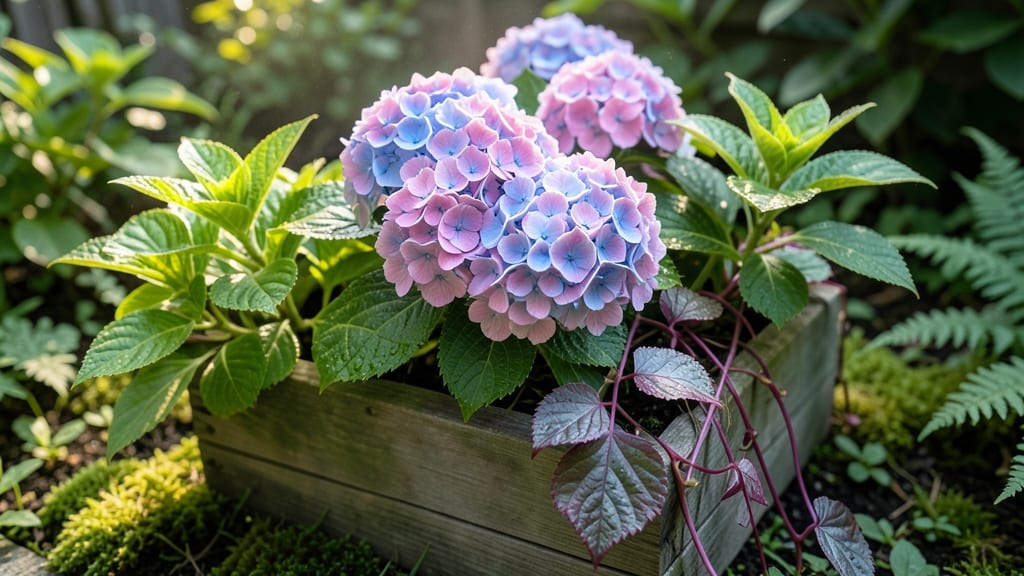
Hydrangeas bring lush, vibrant blooms to shady gardens—but pairing them right can transform your flower bed from ordinary to extraordinary. These 10 bold color combinations leverage hydrangea’s natural versatility while thriving in low-light conditions, ensuring year-round visual impact.
Classic Blue Hydrangeas with Silver Foliage
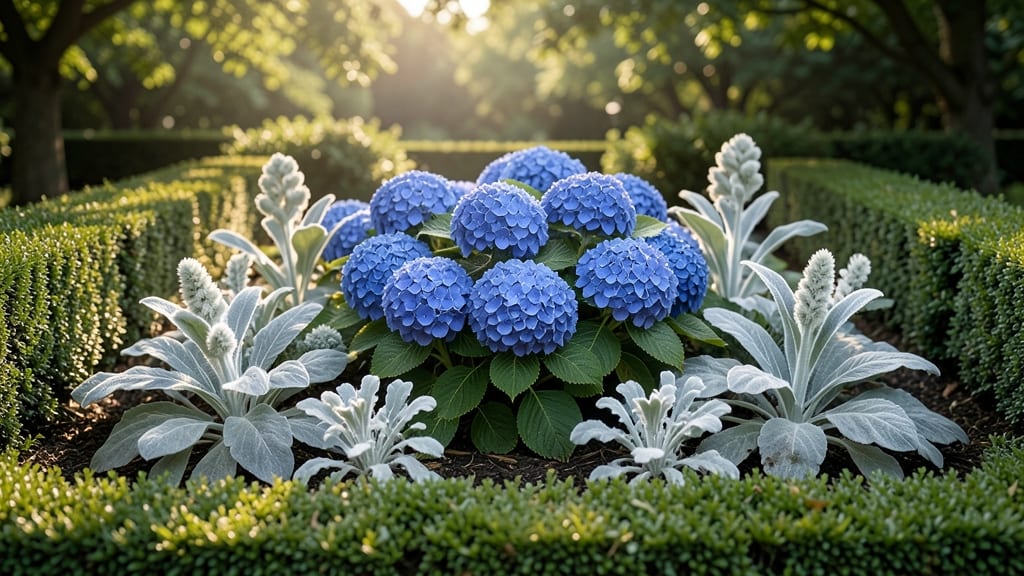
Want a cool-toned garden that feels both elegant and effortless? Plant blue hydrangeas alongside silver foliage like heuchera or lamb’s ear for a striking, high-impact focal point that thrives in shade. This classic combo creates a serene, timeless look perfect for formal gardens or structured borders.
Start with hydrangea macrophylla varieties like ‘Nikko Blue’ for deep, velvety blooms, then layer in heuchera (cornerstone plant) or lamb’s ear (Stachys byzantina) for soft, velvety texture. Place taller hydrangeas at the back and let the silver foliage spill forward for a cascading effect. Mulch with shredded bark to keep roots cool and retain moisture—critical for both plants in hot afternoons.
This pairing is ideal for gardeners who love low-maintenance yet sophisticated designs. The contrast between blue blooms and silver leaves adds depth without overwhelming smaller spaces, making it perfect for urban courtyards or traditional landscapes. 💚
Blush Pink Hydrangeas with Lavender and Ferns
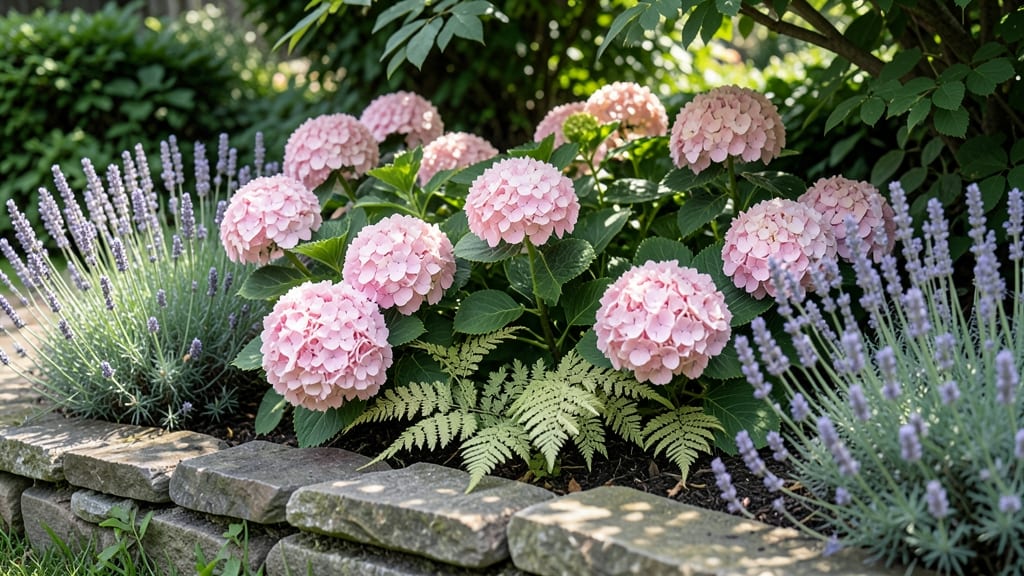
Craving a garden that feels like stepping into a storybook? Blush pink hydrangeas paired with fragrant lavender and delicate ferns create a dreamy, romantic cottage garden vibe that’s as easy to grow as it is to admire. This trio thrives in partial shade, where hydrangeas’ soft blooms take center stage while lavender’s silvery foliage and ferns’ lacy texture add layers of movement and scent.
Plant lavender at the front for its drought tolerance and aromatic punch, followed by fern varieties like maidenhair or ostrich to fill gaps with feathery greenery. Hydrangeas should go in the back, where their late-summer blooms (July through September) will spill over planters or borders, extending your garden’s show long after spring bulbs fade. Mulch with straw to retain moisture—lavender hates soggy roots!
This combination is perfect for gardeners who love low-maintenance charm with high visual payoff. The fragrance alone makes it ideal for seating areas or pathways where you’ll linger. 🌷
Deep Purple Hydrangeas with Coral Bells
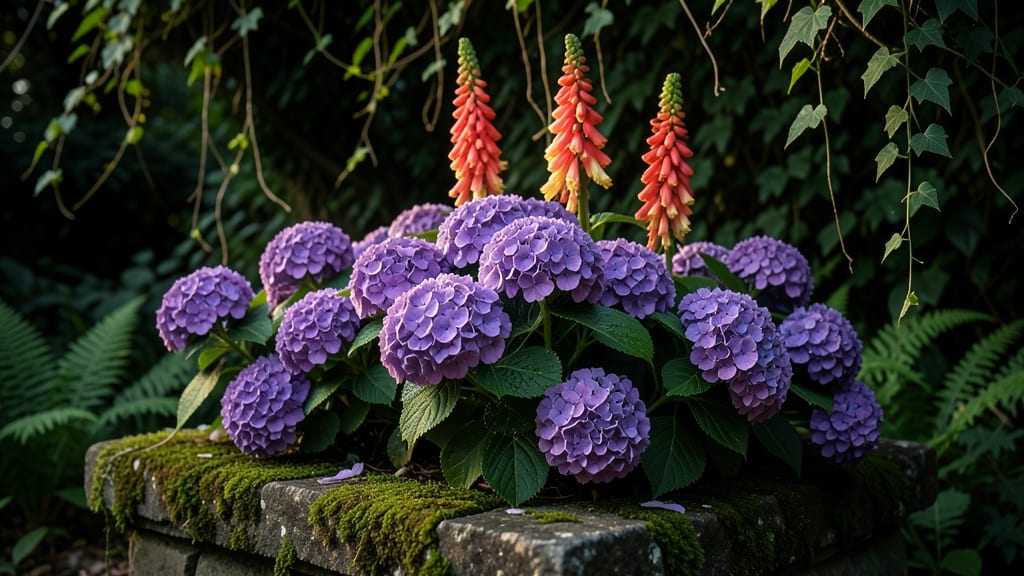
Turn your shady garden into a dramatic focal point with deep purple hydrangeas paired with coral bells like ‘Fireworks.’ This combo transforms dull corners into a vibrant, textured masterpiece that thrives in partial to full shade.
The upright, architectural growth of coral bells balances hydrangea’s rounded blooms, while their fiery foliage (in shades of red, purple, and chartreuse) creates striking contrast. Plant coral bells in front to frame the hydrangeas, or intersperse them for a layered effect. Both plants share similar care needs—well-draining soil, consistent moisture, and moderate fertility—making this pairing low-maintenance yet high-impact.
Perfect for modern shade gardens, this duo adds depth and color where other plants struggle. Urban gardeners with limited sunlight will love how this combination brightens dark spaces without sacrificing elegance. 🌻
White Hydrangeas with Black Mondo Grass
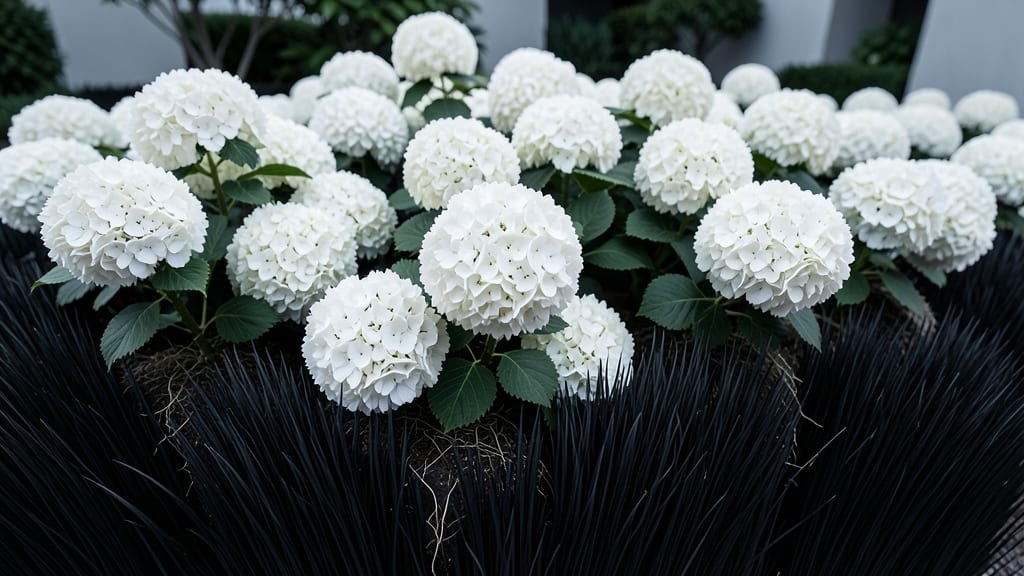
Want a garden that feels like a modern art gallery without the fuss? White hydrangeas paired with black mondo grass create a bold, high-contrast statement that’s perfect for sleek, contemporary spaces or Zen-inspired retreats.
Start by planting white hydrangeas (like ‘Annabelle’ or ‘Limelight’) in well-draining soil with partial shade—they’ll thrive with 4-6 hours of sunlight daily. Tuck black mondo grass (‘Ophiopogon planiscapus’) at the base or edges, where its glossy, deep-black foliage will ground the hydrangea’s purity. Mulch with gravel or smooth river rocks to enhance the minimalist aesthetic while suppressing weeds.
This combo is ideal for gardeners who love low-maintenance, high-impact designs—it’s drought-tolerant once established and requires minimal pruning. Perfect for urban courtyards, modern patios, or even as a striking container arrangement. ✨
Lime Green Hydrangeas with Dusty Miller
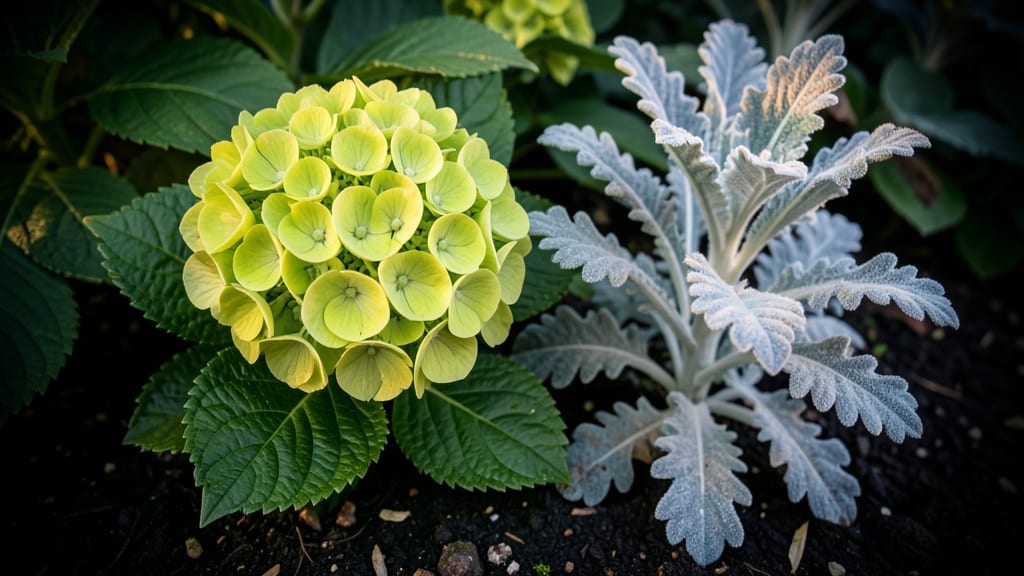
Tired of seeing the same old hydrangea pairings? Lime green ‘Limelight’ hydrangeas paired with silver-gray dusty miller (‘Jacobaeifolia’) create a retro-modern vibe that instantly brightens dark corners while working as a natural pest deterrent. This unexpected duo thrives in partial shade and adds a playful pop of color that’s perfect for modern or eclectic gardens.
Start by planting ‘Limelight’ hydrangeas—their vibrant lime blooms will draw the eye—then tuck dusty miller around the base, where its fuzzy silver foliage will contrast beautifully. Both plants love well-draining soil and benefit from occasional pruning to encourage bushier growth. The dusty miller’s silvery hue also reflects light, making shady areas feel brighter while its strong scent naturally repels pests like aphids and spider mites.
This combo is ideal for gardeners who want low-maintenance, high-impact designs with a retro twist. Whether you’re revamping a corner of your yard or adding a container arrangement, this pairing delivers bold color and texture without the fuss. 🌱
Rust-Red Hydrangeas with Hostas and Astilbes
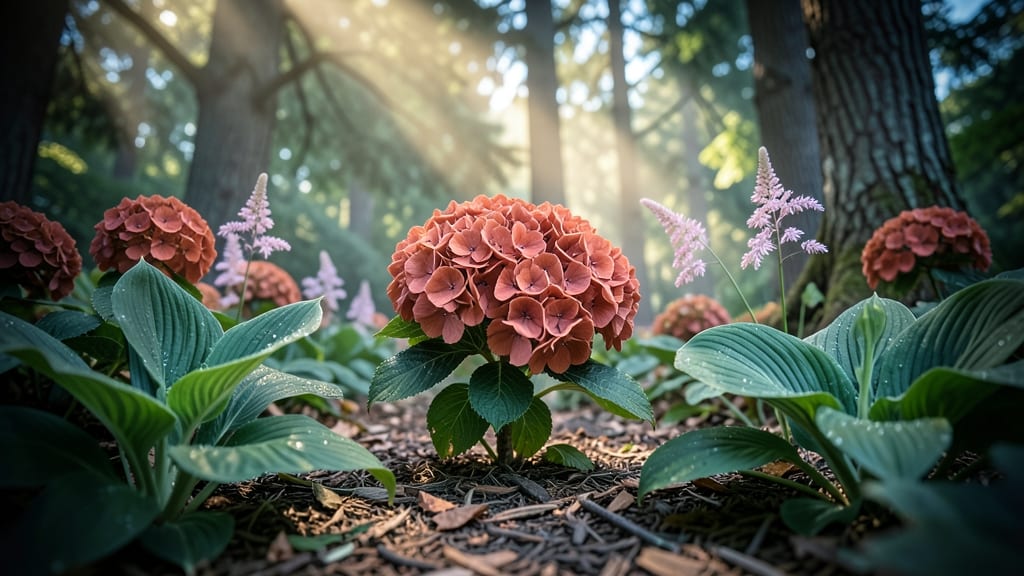
Create a serene woodland retreat with rust-red hydrangeas as your star, surrounded by the velvety leaves of hostas and the delicate plumes of astilbes. This trio thrives in dappled shade, where hydrangeas’ bold blooms (like ‘Limelight’ or ‘Endless Summer’) contrast beautifully against hostas’ deep green or variegated foliage, while astilbes add seasonal interest from early summer through fall.
Plant hostas in the front for their lush, broad leaves, then layer in astilbes (choose varieties like ‘Fanal’ or ‘Bridal Veil’) behind them to create movement with their feathery spikes. Hydrangeas should go at the back, where their rusty-red blooms will dominate. Mulch with wood chips to retain moisture and suppress weeds—critical for hostas, which love consistently damp soil. This combo is perfect for gardeners who want low-maintenance elegance with year-round texture.
Ideal for woodland gardens, shaded borders, or even containers, this palette brings warmth and depth to dim corners. The astilbes’ late-summer blooms ensure your garden stays vibrant long after spring bulbs fade, making it a must-try for shade lovers. 🌿
Ombré Hydrangeas with Variegated Grass
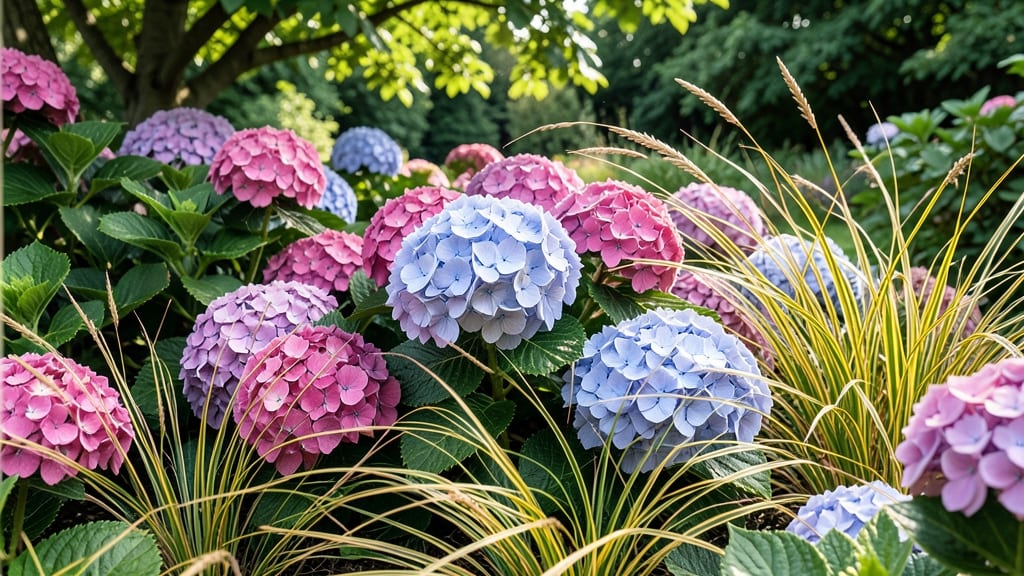
Crave a garden that feels like a living watercolor painting? Ombré hydrangeas—like the beloved ‘Endless Summer’ variety—create dreamy color transitions from pink to blue, while variegated grass (‘Carex morrowii’) adds golden stripes that dance in the breeze. This duo transforms ordinary beds into serene, textured landscapes perfect for modern or Japanese-inspired spaces.
Plant ‘Endless Summer’ hydrangeas in partial shade (4-6 hours of sunlight) with well-draining, acidic soil (pH 5.5-6.2) to encourage those stunning color shifts. Tuck Carex morrowii at the edges or woven between hydrangea stems—its arching, striped blades (yellow-green with cream) create movement that softens the blooms’ boldness. Mulch with smooth river rocks to enhance the Zen aesthetic while retaining moisture.
This pairing is ideal for gardeners who love low-fuss elegance with high visual impact. The grass’s year-round interest and hydrangea’s long bloom season (June-September) ensure your bed stays captivating without constant upkeep. 🌷
Dried Hydrangea Arrangement with Ornamental Grasses
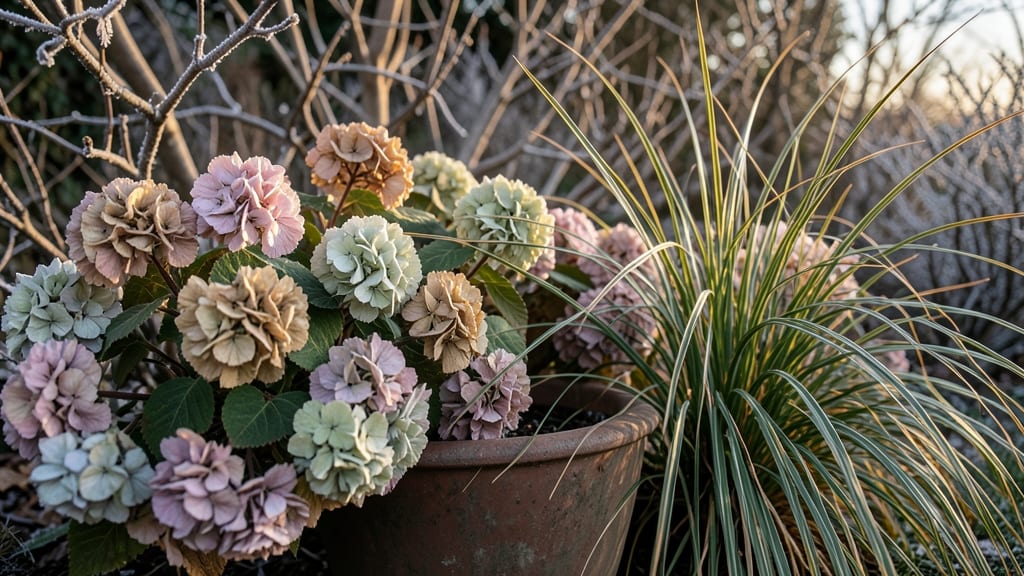
Extend your garden’s beauty beyond summer with dried hydrangeas paired with ornamental grasses like ‘Karl Foerster’, creating a textured, winter-friendly display that adds rustic charm to containers, borders, or even dried arrangements. This unexpected combo transforms fading blooms into long-lasting art while adding movement and structure to dormant landscapes.
Start by harvesting hydrangeas in late summer or early fall when blooms are fully open but still slightly firm. Bundle stems and hang them upside down in a dry, well-ventilated space for 4-6 weeks until completely dry. Pair them with ‘Karl Foerster’ grasses—their upright, arching forms provide the perfect vertical contrast. Place dried hydrangeas in the center of containers or woven baskets, then tuck grasses around the edges for a balanced, organic look. For a naturalistic border, alternate dried hydrangea clusters with clumps of ornamental grasses along a fence or pathway.
This design is perfect for gardeners who love low-maintenance, seasonal interest—it’s ideal for rustic farmhouse gardens, cottage-style borders, or even indoor winter decor. The combination of dried blooms and grasses creates a winter-friendly focal point that feels intentional, not neglected. 🌻
Tropical Hydrangeas with Calathea and Bromeliads
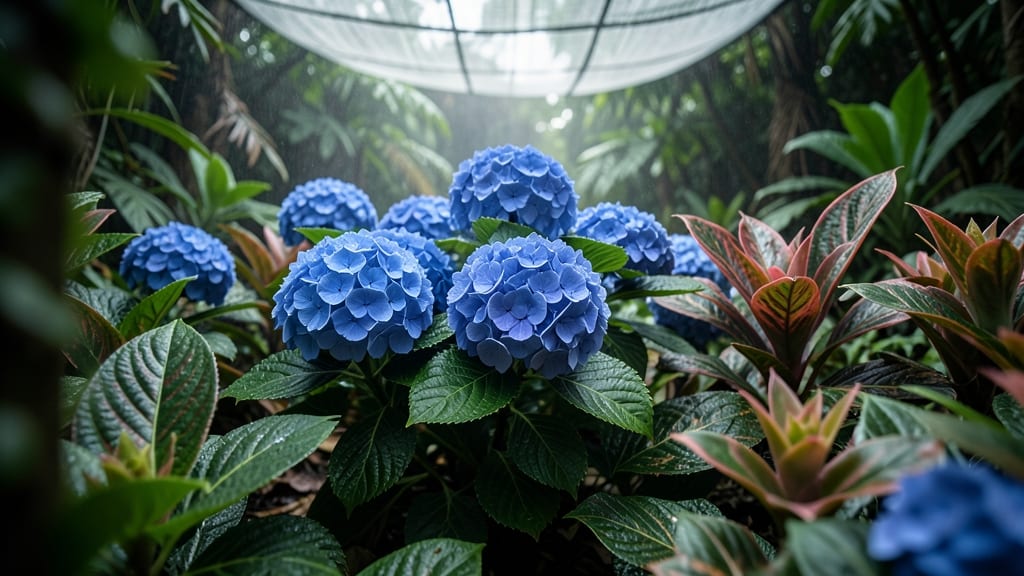
Bring a slice of the tropics to your garden with a mini rainforest oasis featuring ‘Nikko Blue’ hydrangeas alongside calathea and bromeliads. This lush trio thrives in humid, shaded spots, creating a vibrant, exotic focal point that feels like a vacation in your own backyard. The velvety blue hydrangea blooms provide structure, while calathea’s striking, patterned leaves (in shades of pink, green, and burgundy) and bromeliad’s bold, spiky foliage add layers of texture and tropical flair.
Plant ‘Nikko Blue’ hydrangeas in well-draining, moisture-retentive soil enriched with compost, then tuck calathea varieties like ‘Rattlesnake’ or ‘Ornata’ around the base for their dramatic foliage. Bromeliads, such as ‘Aechmea fasciata’ (silver vase bromeliad), should be placed near the edges or in containers to catch rainwater in their rosettes. Keep the soil consistently damp (but not soggy) and mist foliage occasionally to mimic tropical humidity—this trio loves high humidity levels and indirect light.
This combination is perfect for gardeners in humid climates (Zones 9-11) or those with shaded patios and conservatories. Even in cooler regions, a container arrangement on a covered porch can recreate this jungle vibe year-round. 🌿
Two-Tone Hydrangeas with Contrasting Foliage Plants

Ready to make a bold statement in small spaces? The ‘Tuff Stuff’ hydrangea—with its stunning two-tone pink-and-blue blooms—pairs perfectly with chartreuse coleus or purple sweet potato vine (‘Margarita’) to create a high-contrast, eye-catching display. This combo thrives in partial sun (4-6 hours daily) and requires minimal maintenance, making it ideal for urban gardens, balconies, or tight corners.
Plant the ‘Tuff Stuff’ hydrangea as your centerpiece, then tuck coleus or sweet potato vine around the edges for a vibrant pop of color. Both foliage plants love warmth and moisture, so they’ll complement the hydrangea’s blooming season (summer to early fall). Use black plastic edging to define the bed and keep the colors popping against the dark background.
This pairing is perfect for gardeners who want big impact with small space—whether you’re revamping a patio container or a narrow garden bed. The bold contrast ensures your hydrangeas steal the show while keeping care simple. 💚