
Trees
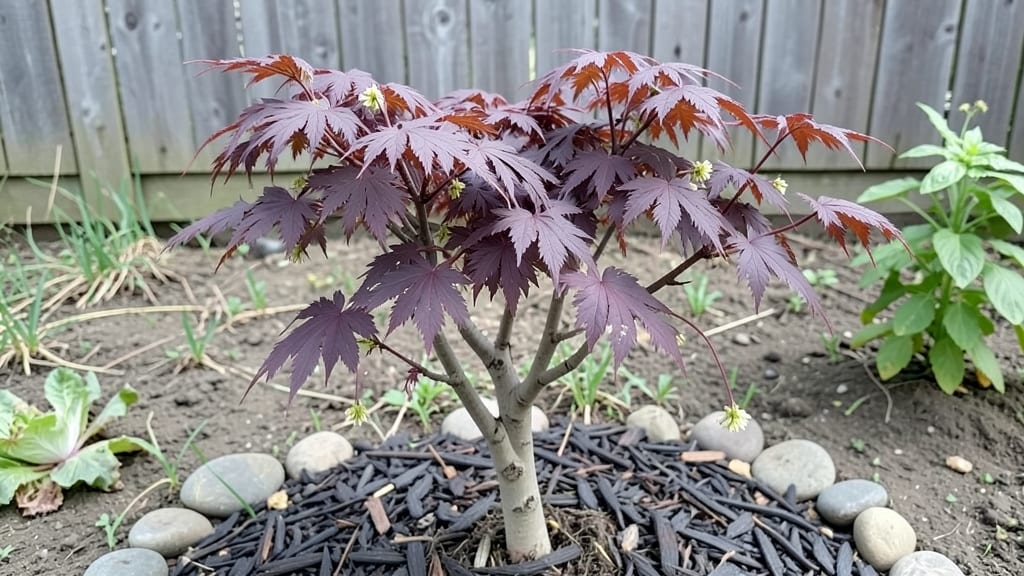
A Japanese maple flower bed 🌿 can turn a blank corner of your yard into a living painting—where every season brings new colors, textures, and surprises.
Picture this: your spring Japanese maple bursts into delicate blossoms, while shade-loving perennials peek through its branches, and by autumn, fiery foliage steals the show. The trick? Layering plants that play well together, so your bed never looks empty or boring.
You don’t need a green thumb or a huge budget to pull this off. With the right companions—think heuchera, hostas, or ferns—you’ll create a low-maintenance garden that thrives in partial shade and keeps neighbors stopping to admire it.
Below, I’ll walk you through the exact plant pairings, spacing tricks, and seasonal swaps that make a Japanese maple flower bed feel like a year-round masterpiece—without the overwhelm.
How to layer plants around Japanese maples for year-round visual impact
Japanese maples are the stars of any shade garden, but their delicate foliage and seasonal color changes deserve a supporting cast to create a year-round visual masterpiece.
The key lies in strategic layering—combining plants that complement your maple's height, texture, and bloom timing while filling gaps during its dormant winter months.
Think of it like a living tapestry where each plant plays its part: tall vertical accents to frame the tree, mid-height seasonal bloomers to bridge color shifts, and low ground covers to soften the base.
When designing your Japanese maple flower bed, prioritize plants that thrive in partial shade (4-6 hours of sun) and acidic, well-draining soil—the same conditions your maple prefers. This ensures harmony in care while maximizing seasonal interest.
Start by grouping plants by their peak bloom seasons: early spring for hepaticas and bleeding hearts, summer for hostas and astilbes, and fall for Japanese anemones and sedums. This creates a continuous color flow that masks any lulls in your maple's foliage.
| Layer | Plant Examples | Seasonal Role | Height Range | Care Notes |
|---|---|---|---|---|
| Tall Vertical | Dwarf ferns, Astilbe, Cimicifuga (Bugbane) | Summer foliage/texture | 2-4 ft | Water moderately; divide every 3-4 years |
| Mid-Height Bloomers | Hepatica, Bleeding Heart, Japanese Anemone | Spring/fall color bursts | 1-2 ft | Deadhead spent blooms; mulch heavily |
| Low Ground Covers | Ajuga, Lungwort, Sweet Woodruff | Winter interest; erosion control | 3-6 in | Shear annually; drought-tolerant once established |
| Winter Structure | Ornamental Grasses (e.g., Hakonechloa), Wintergreen | Texture when maple is dormant | 6-18 in | Minimal care; prune in late winter |
Begin with the tallest layer (2-4 feet) to create a natural backdrop for your Japanese maple. Plants like Astilbe or Cimicifuga (Bugbane) add arching plumes and lush foliage that contrast beautifully with your maple's delicate leaves.
Place these 1-2 feet behind your maple's dripline—the edge of its outward branches—to avoid competing for sunlight while maintaining visual balance. For a dwarf Japanese maple (under 10 feet), this layer can be as short as 18 inches to prevent overwhelming the tree.
Next, introduce the mid-height layer (1-2 feet) where seasonal bloomers take center stage. Early spring's Hepatica and Bleeding Heart will emerge just as your maple's buds swell, creating a soft color transition from winter to spring.
In late summer, Japanese Anemones will bloom as your maple's foliage turns fiery, extending the season. Space these 8-12 inches apart to ensure they fill in quickly while leaving room for your maple's roots to spread.
The lowest layer (3-6 inches) is where ground covers shine, preventing weeds and adding year-round texture. Ajuga with its purple foliage or Sweet Woodruff with its fragrant white blooms will soften the base of your design while thriving in the dappled shade.
For a winter interest boost, incorporate evergreen plants like Wintergreen or creeping thyme, which stay vibrant even when your maple's leaves fall. These should be planted 6-12 inches from your maple's trunk to avoid root competition.
Don't overlook the winter structure layer—this is where ornamental grasses and broadleaf evergreens save the day when your maple is dormant.
Best companion flowers and ground covers for Japanese maple flower beds
Japanese maples 🌿 deserve companions that mirror their elegance while thriving in the same partial shade conditions. The key is selecting shade-tolerant perennials, delicate annuals, and lush ground covers that complement—not compete with—their delicate foliage and seasonal color shifts.
I’ve tested these pairings in my own garden, and they consistently deliver year-round interest with minimal fuss. Whether you want soft textures, bold foliage, or seasonal blooms, these plants will keep your Japanese maple flower bed looking intentional and vibrant.
Here’s my curated list of the best companions, organized by function and color harmony:
Perennials for Structure & Texture
Heuchera (Coral Bells) – Deep purple, silver, or lime foliage that contrasts beautifully with maple leaves. Plant in clusters near the base for a low-maintenance pop of color.
Hostas (Hosta spp.)
Choose varieties like 'Blue Angel' or 'Halcyon' for bold, variegated leaves. Their height (12-36 inches) fills gaps while staying under the maple’s canopy.
Astilbe (Astilbe spp.)
Feathery plumes in pink, white, or red bloom from summer to fall. Perfect for adding vertical interest without stealing the maple’s spotlight.
Ferns (e.g., 'Japanese Painted Fern')
Silvery and burgundy fronds create soft contrast with maple foliage. Ideal for moist, shaded spots under the tree’s dappled light.
Annuals for Seasonal Pops
Impatiens (Busy Lizzie) – Bright blooms in pink, red, or white that thrive in deep shade. Plant in containers or borders for easy seasonal swaps.
Begonias (e.g., 'Dragon Wing')
Glossy leaves and pink or white flowers add tropical flair. Perfect for hanging baskets or spilling over edges near the maple.
Ground Covers for Weed Control
Sweet Woodruff (Galium odoratum) – Fragrant, low-growing cover that stays under 6 inches tall. Spreads gently to suppress weeds without competing with the maple.
Lungwort (Pulmonaria)
Spotted foliage in silver and purple with early spring blooms. Drought-tolerant once established, making it a low-effort choice.
Color Coordination Tips
Pair purple foliage (heuchera) with red maple varieties for drama. Use silver or white plants (hostas, ferns) to brighten dark maple leaves. For spring blooms, white or pastel pink annuals (impatiens, begonias) complement maple flowers.
When planting, group companions by height and color—taller perennials (astilbe, hostas) behind the maple’s base, shorter ground covers (sweet woodruff) in front, and annuals in containers for flexibility. This creates a natural layered effect that feels intentional.
Pro tip: Mulch with shredded bark to retain moisture and suppress weeds, which is especially helpful under the maple’s dense canopy where light struggles to reach the ground.