
Pruning
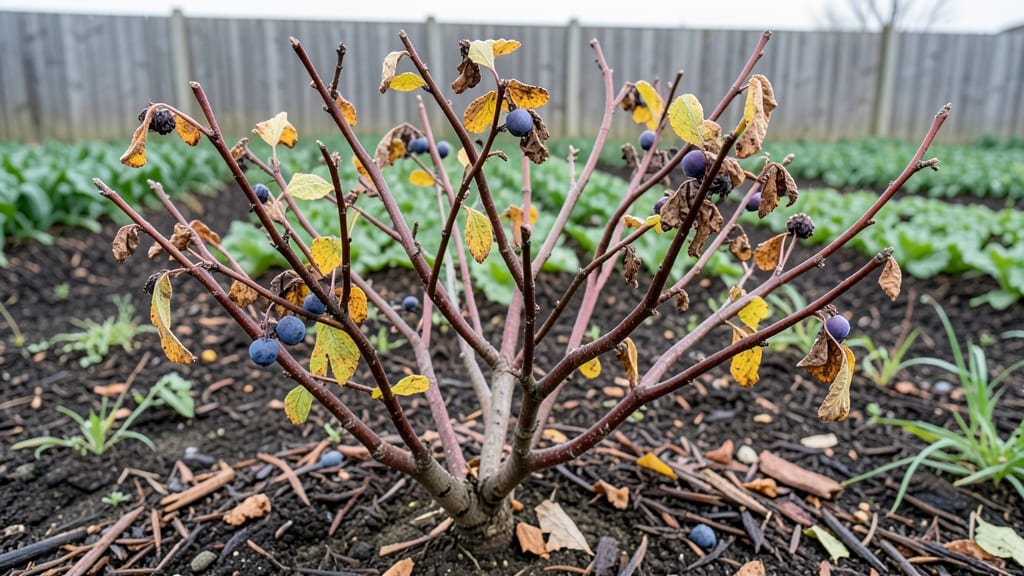
Pruning blueberries for winter isn’t just about shaping bushes—it’s the secret to bigger harvests next summer. 🌿 I’ve watched my bushes go from sparse berries to overflowing buckets just by timing cuts right, and the key is working while they’re dormant but before buds swell.
This isn’t guesswork; it’s a precise dance with your plants’ natural rhythm.
The right tools make all the difference: sharp bypass pruners for clean cuts, thick gloves to handle thorns, and a bottle of rubbing alcohol to sanitize between bushes.
You’ll focus on three things—removing dead wood first, then thinning crowded canes for airflow, and finally shaping the bush to let sunlight reach the center. Over-pruning here is a common trap, so aim to remove no more than a third of the plant’s growth.
After you’re done, feed the soil with a balanced fertilizer and top with 2–3 inches of mulch to protect roots from late frosts. The result? Bushes that burst with new growth in spring, stronger canes that support heavier fruit, and berries that ripen earlier and more abundantly.
This is how you turn winter prep into summer payoff.
Works for all blueberry varieties—rabida, Jersey, or top-producing hybrids—and adapts to zones 3–8. Just remember: the earlier you prune in late winter, the more time the bush has to heal before spring’s rush. Ready to transform next year’s harvest?
📚 In This Guide
- What you need
- Instructions
- Tips and common mistakes
- Wrapping up and next steps
What you need
- ● Pruning shears or secateurs: Sharp, bypass-style shears (4-6 inches) for clean cuts—sterilize with rubbing alcohol before and after use to prevent disease spread.
- ● Loppers: Heavy-duty (8-10 inches) for thicker branches (½ inch or larger). Look for ratcheting or bypass models for precision.
- ● Pruning saw: A curved-tooth saw (10-12 inches) for branches over 1.5 inches thick—avoid cheap, dull blades!
- ● Gloves: Heavy-duty, cut-resistant gloves (gardening or pruning-specific) to protect your hands from thorns and sharp tools.
- ○ Disposable pruning bags or bucket: To collect debris (5+ gallon capacity). Optional: A shredder if you prefer mulch over disposal.
- ● Handheld leaf blower or broom: For clearing away fallen leaves/debris post-pruning.
- ● Tree pruning spray (copper-based): To disinfect cuts if your bushes show signs of disease.
- ● Measuring tape or ruler: For precise branch removal (aim to remove ⅓ of the oldest wood per year).
- ● Marking spray (paint): To tag branches for removal if you’re unsure—wait 1-2 weeks to prune marked areas.
- ● Dormant season timing: Prune after harvest (late summer/early fall) or before bud break (late winter/early spring). Never prune during active growth!
- ● Weather check: Choose a dry, calm day (no rain forecasted for 24+ hours) to avoid spreading disease.
- ● Blueberry bush age: Wait until bushes are 3+ years old before heavy pruning.
Step-by-Step instructions for pruning blueberries in late winter
Here’s how I prepare my bushes for spring—timing and technique make all the difference.
✂️ Step 1: Time Your Pruning for Dormancy
Prune 4-6 weeks before your last frost date, when bushes are fully dormant but buds are swollen. This timing prevents late-season growth that won’t harden off before cold snaps. I always check my local frost calendar first—pruning too early leaves vulnerable branches, while waiting too long risks spring pests.
Look for brown, leafless canes with no green shoots. If you see fresh growth, wait another week. Cold weather dulls tools and makes cuts cleaner, but avoid icy conditions—frozen branches snap unpredictably.
✂️ Step 2: Remove Dead, Diseased, or Crossing Branches
Start by cutting out any dead wood (gray, brittle canes) and diseased branches (mushroom growth, blackened spots). Use clean, sharp pruners to make 45-degree cuts just above a healthy bud or lateral branch. I disinfect my tools with rubbing alcohol between cuts to prevent spreading disease.
Next, remove branches rubbing against others—these create wounds that invite infection. Watch for thin, spindly growth (water sprouts) and suckers at the base—both steal energy from fruit production. Cut these back to the ground immediately.
✂️ Step 3: Thin the Canopy for Airflow and Light
Blueberries need good air circulation to prevent fungal diseases like mummy berry. Step back and visualize the bush as a pyramid shape—remove older canes (5+ years) from the center to open the middle. Keep 6-8 of the strongest, youngest canes per bush.
Focus on outward-facing branches—these receive the most sunlight. If you see crowded clusters, thin to 6-8 inches apart between canes. This ensures every berry gets sunlight and ripens evenly. I mark my cuts with a piece of twine to visualize the ideal shape before cutting.
⏰ Step 4: Clean Up and Protect for Spring
Rake up all debris and dispose of diseased branches in the trash (not compost)—this stops overwintering pests. I spread 2-3 inches of mulch around the base (but not touching the trunk) to retain moisture and suppress weeds. Use pine needles or wood chips—they acidify the soil slightly, which blueberries love.
Finally, apply a balanced fertilizer (10-10-10) in early spring once new growth appears. Avoid fertilizing now—dormant bushes can’t use nutrients, and it wastes money. Water deeply after fertilizing to help granules break down.
Tips & tricks for pruning blueberries in late winter
Mastering the art of blueberry pruning transforms your bushes from chaotic to productive—here's what I've learned after years of trial and error.
Timing is Everything: The 4-6 week window before your last frost is non-negotiable. I check my local frost calendar and mark the date—this ensures your bushes have time to harden off before spring growth begins. Pro tip: If you're in a region with unpredictable winters, err on the earlier side of that window. Cold weather helps prevent disease spread during pruning, but don't wait until branches are frozen solid—they'll snap unpredictably.
The 45-Degree Cut Technique: When removing branches in Step 2, that 45-degree angle isn't just aesthetic—it's essential. Cutting just above a healthy bud at this angle prevents water from pooling on the cut, which would invite rot. I like to make a small notch on the underside of the cut to further prevent water accumulation. This simple technique can extend the life of your pruning cuts by years.
Visualizing the Pyramid Shape: Step back and really look at your bush before making cuts. That pyramid shape isn't arbitrary—it's about maximizing sunlight exposure to the center. I use a piece of twine to outline the ideal shape before making any cuts. This helps me visualize how the branches will fill out in spring. Remember, you're not just pruning for this year's harvest, but for the bush's long-term health and productivity.
Disease Prevention Starts Now: The clean-up in Step 4 is where many gardeners cut corners, but this is where you prevent next year's problems. I double-bag diseased branches in plastic before putting them in the trash—this prevents spores from escaping. For mulch, pine needles are my go-to because they slowly acidify the soil, which blueberries crave. And that 2-3 inch layer? It's not just about moisture—it's about creating a barrier that keeps fungal spores from splashing up onto your branches.
Pro Tips for Pruning Blueberries For Winter
- Mastering the art of blueberry pruning transforms your bushes from chaotic to productive—here's what I've learned after years of trial and error.
- Timing is Everything: The 4-6 week window before your last frost is non-negotiable.
- The 45-Degree Cut Technique: When removing branches in Step 2, that 45-degree angle isn't just aesthetic—it's essential.
Frequently asked questions
Got questions about winter pruning? You’re not alone!
Here are answers to the most common concerns—so you can prune with confidence and keep your blueberry bushes thriving year after year.
When is the exact best time to prune blueberries for winter?
Prune after the first hard frost but before new growth starts in early spring—typically between late fall (November) and early winter (January). This timing helps prevent disease spread while the plant is dormant. Avoid pruning in late winter or early spring, as new buds may be vulnerable to frost damage.
What if I miss the winter pruning window? Can I still prune later?
Yes, but with caution! If you miss winter, prune in early spring (before buds swell) or summer (after harvest). Summer pruning is less ideal but can help remove dead wood. Just avoid heavy pruning in late spring or summer, as it stresses the plant and reduces fruit production.
My blueberry bushes look sad after pruning. Did I cut too much?
Over-pruning is a common mistake! Never remove more than one-third of the plant’s canopy in a single session. Focus on dead, diseased, or crossing branches first, then thin out older wood (over 3–4 years old). Healthy bushes should still have plenty of green stems and buds after pruning.
Should I prune new blueberry bushes the same way?
New bushes (under 2 years old) need minimal pruning—just remove dead or damaged wood. Wait until they’re established (3+ years) before full winter pruning. Over-pruning young plants can stunt growth and delay fruiting. Think of it as shaping a toddler’s haircut: light touches only!
What should I do with the pruned branches? Can I compost them?
Dispose of pruned branches immediately—don’t leave them near the bush, as they can harbor pests or disease. Bag and toss them in yard waste (or chip them for mulch if disease-free). Never compost branches from diseased plants; burn or trash them instead to prevent reinfection.
Wrapping up and next steps
Pruning your blueberries for winter isn’t just about tidying up—it’s a powerful investment in next year’s harvest! By removing dead wood, thinning crowded branches, and shaping your bushes, you’re setting the stage for healthier growth, bigger berries, and years of effortless yields. 🌱✨
Ready to take the next step? Grab your pruners, roll up your sleeves, and give your blueberry bushes the care they deserve. Your future self (and your taste buds!) will thank you. For even more tips, check out our guide on seasonal blueberry care—happy pruning!