
Planting
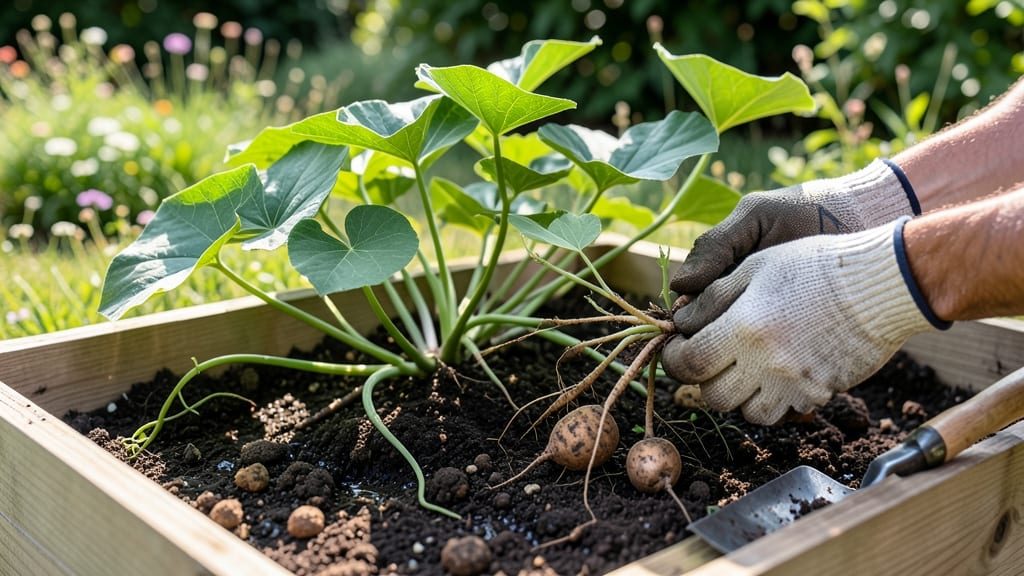
Sweet potatoes thrive in raised beds because the deep, loose soil gives their vines room to spread and their tubers space to grow—no more puny harvests. 🌱 I learned the hard way that shallow soil means stunted roots, so I dug 18 inches deep and filled it with compost-rich mix.
The result? Tubers the size of my fist, not the golf balls I used to pull up. This method solves the biggest sweet potato problems: poor drainage, soil compaction, and pests.
You’ll skip the backbreaking work of tilling clay soil, and the raised bed warms up faster in spring, giving you a jump on the growing season. Just add sweet potato slips, water consistently, and let nature do the rest. By midsummer, you’ll be harvesting jewel-toned tubers that store beautifully.
The secret is keeping the soil loose and well-draining—no soggy roots here. Even in small spaces, a 4x8-foot bed produces enough for family meals and sharing. Avoid overcrowding (space slips 12 inches apart), and watch for wireworms.
But once you master the deep soil trick, you’ll never go back to in-ground planting again.
📚 In This Guide
- What you need
- Instructions
- Tips and common mistakes
- Wrapping up and next steps
What you need
- ● Raised bed frame: Untreated wood (cedar or redwood recommended) – 4x 8-foot boards (2x12 inches) or pre-cut raised bed kit.
- ○ Optional: Galvanized screws or corner brackets for assembly.
- ● Soil & amendments: High-quality garden soil (2–3 cubic yards for an 8x4-foot bed, 12–18 inches deep).
- ● Compost (1–2 cubic yards) for fertility.
- ● Sandy loam or perlite (1–2 bags) to improve drainage.
- ● Balanced fertilizer (10-10-10, 1–2 lbs per bed) or organic options like worm castings.
- ● Tools: Shovel or spade
- ● Garden trowel
- ● Wheelbarrow (for mixing soil)
- ● Measuring tape
- ● Gloves & knee pads (trust us, they’re a lifesaver!)
- ● Drip irrigation kit – Keeps soil consistently moist without overwatering.
- ● Mulch (straw or black plastic) – Retains moisture and suppresses weeds.
- ● Sweet potato slips (vs. seeds) – Faster growth! (Check local nurseries for disease-resistant varieties like Beauregard or Georgia Jet.)
- ● Soil pH test kit – Sweet potatoes thrive in slightly acidic soil (pH 5.8–6.5).
Step-by-Step instructions for building a raised bed for sweet potatoes
Here's how to create the perfect growing space for sweet potatoes.
🪴 Step 1: Choose and Prepare the Location
Sweet potatoes need 6-8 hours of direct sun daily, so pick a spot that gets full sun without afternoon shade. Avoid previous potato or tomato beds—these crops share diseases that can linger in the soil. I like to place my raised beds on bare ground or a thick layer of cardboard to prevent weeds from competing for nutrients.
Measure your space carefully. For 4 plants, a 4×8-foot bed gives roots plenty of room to spread. If your bed is longer than 4 feet, build a path down the middle so you can reach the center without stepping on plants. Mark the area with stakes and string to keep your cuts clean and straight.
🌱 Step 2: Build the Raised Bed Frame
Use untreated lumber like cedar or redwood for the frame—these resist rot better than pine. For a 4×8-foot bed, cut four 4-foot side panels and two 8-foot end panels, each 12 inches high. Sweet potatoes need deep soil, so taller beds (up to 18 inches) give roots more room to grow.
Assemble the frame with galvanized screws or corner brackets. Leave a 1-inch gap between panels to prevent warping. Line the bottom with landscape fabric to block weeds but allow drainage. This keeps your sweet potatoes focused on growing instead of battling invasive roots.
💧 Step 3: Fill the Bed with the Right Soil Mix
Sweet potatoes thrive in loose, well-draining soil. Fill the bed with a mix of 60% topsoil, 30% compost, and 10% coarse sand or perlite. This combination prevents soil compaction and encourages those long, knobby roots to develop. Avoid garden soil—it’s too dense and can rot tender sweet potato tubers.
Fill the bed in layers, tamping down each 4-inch layer lightly to remove air pockets. Water the soil as you go to help it settle evenly. The final soil level should be 1 inch below the bed’s top edge to prevent spillage during watering. A soil test before planting ensures your mix has the right nutrients—sweet potatoes are heavy feeders.
☀️ Step 4: Plant Sweet Potato Slips
Sweet potatoes grow from slips, not seeds. Plant them when soil reaches 65°F and all danger of frost has passed. Dig holes 12 inches apart in rows 3 feet apart to give plants room to sprawl. Place each slip in the hole, leaving the top 2 inches of the stem above soil—this encourages stronger root growth.
Cover the roots lightly with soil and water deeply to settle everything. Mulch with 2-3 inches of straw or shredded leaves to retain moisture and suppress weeds. Sweet potatoes are sensitive to cold, so avoid planting too early—wait until the soil is consistently warm, or you’ll end up with small, underdeveloped tubers.
🌿 Step 5: Maintain and Harvest for Maximum Yield
Water sweet potatoes 1-2 inches per week, keeping the soil consistently moist but never soggy. These plants love heat and humidity, so monitor the bed closely during dry spells. You’ll know they’re thriving when vines spread 6-12 feet long and leaves stay deep green.
Harvest when vines yellow and die back, usually 90-120 days after planting. Gently dig around the base with a fork, being careful not to puncture the tubers. Cure them in a 80-85°F space for 10 days to develop sweetness and improve storage life. The deeper the soil, the bigger the harvest—so don’t skimp on bed height!
Tips & tricks for perfect raised bed sweet potatoes
A few simple tweaks can transform your harvest from decent to spectacular. Here's what I've learned after years of trial and error.
Location Matters More Than You Think: In Step 1, don't just look for sun—check for afternoon shade patterns. I've seen beds in full morning sun but shaded in the afternoon produce tiny tubers. Move your bed if it gets less than 6 hours of direct sun after 2 PM. The afternoon heat is when sweet potatoes really bulk up their roots.
Frame Stability is Non-Negotiable: When building your 4×8-foot frame in Step 2, use at least 2×6 lumber for the bottom panels to prevent sagging. I've seen beds collapse under wet soil weight, and that's a nightmare to fix. Also, pre-drill screw holes to prevent wood splitting—this is especially important for redwood which can be brittle when dry.
Soil Layering Secret: In Step 3, when you're tamping down those 4-inch layers, don't press too hard. The goal is to eliminate air pockets, not compress the soil. I use my hands to gently press and then run a board across the top to level it without compacting. This creates that perfect loose, airy environment sweet potatoes love.
Planting Depth Visual Trick: For Step 4, here's a foolproof way to get that 2-inch stem above soil: Hold the slip alongside your thumb. When the stem reaches the top of your thumbnail, you've got the perfect depth. This ensures strong root development while keeping the plant stable. I've planted hundreds this way and never had a single slip flop over.
Pro Tips for Raised Bed For Sweet Potatoes
- A few simple tweaks can transform your harvest from decent to spectacular.
- Location Matters More Than You Think: In Step 1, don't just look for sun—check for afternoon shade patterns.
- Frame Stability is Non-Negotiable: When building your 4×8-foot frame in Step 2, use at least 2×6 lumber for the bottom panels to prevent sagging.
Frequently asked questions
Got questions about growing sweet potatoes in raised beds?
Here are answers to the most common ones to help you grow like a pro!
How deep should a raised bed be for sweet potatoes?
Sweet potatoes need at least 12–18 inches of loose, well-draining soil to spread their vines and store their tubers. If your bed is shallower, mix in compost or straw to increase depth. Pro tip: Deeper beds (24+ inches) let you grow larger, healthier tubers!
When is the best time to plant sweet potatoes in a raised bed?
Plant after the last frost when soil temperatures hit 60–65°F (15–18°C)—usually late spring to early summer. Sweet potatoes thrive in warmth, so avoid planting too early. Use black plastic mulch to warm the soil faster!
Can I grow sweet potatoes in a raised bed without tilling?
Yes! Sweet potatoes love loose, aerated soil—just mix in compost, coconut coir, or straw to mimic tilling. Avoid heavy clay or compacted soil, as it restricts root growth. No-till beds work great with raised gardening!
Why aren’t my sweet potatoes growing in a raised bed?
Common issues include:
- Poor soil: Amend with compost or aged manure for nutrients.
- Inconsistent watering: Keep soil evenly moist (not soggy).
- Too much shade: Sweet potatoes need 6+ hours of sun daily.
- Pests/disease: Use row covers or neem oil if bugs appear.
What’s a good alternative if I don’t have a deep raised bed?
Try container growing! Use a 5-gallon bucket or fabric grow bag with drainage holes, filled with a mix of soil and compost. Just expect smaller tubers—harvest early for best results!
Wrapping up and next steps
Growing sweet potatoes in a raised bed is a game-changer—it’s easier, more productive, and far less messy than traditional methods! With the right loose, deep soil and a few smart techniques, you’ll be harvesting monster tubers in no time. 🌱✨
Now that you’re armed with the secrets to success, it’s time to roll up your sleeves and get planting! Start small if you’re new, experiment with varieties, and don’t forget to share your progress—your future harvest will be worth every shovel-full. Happy growing!
Next step: Mark your calendar for planting season and gather your supplies. Review the checklist to ensure you’re fully prepped for sweet potato stardom!