
Tools
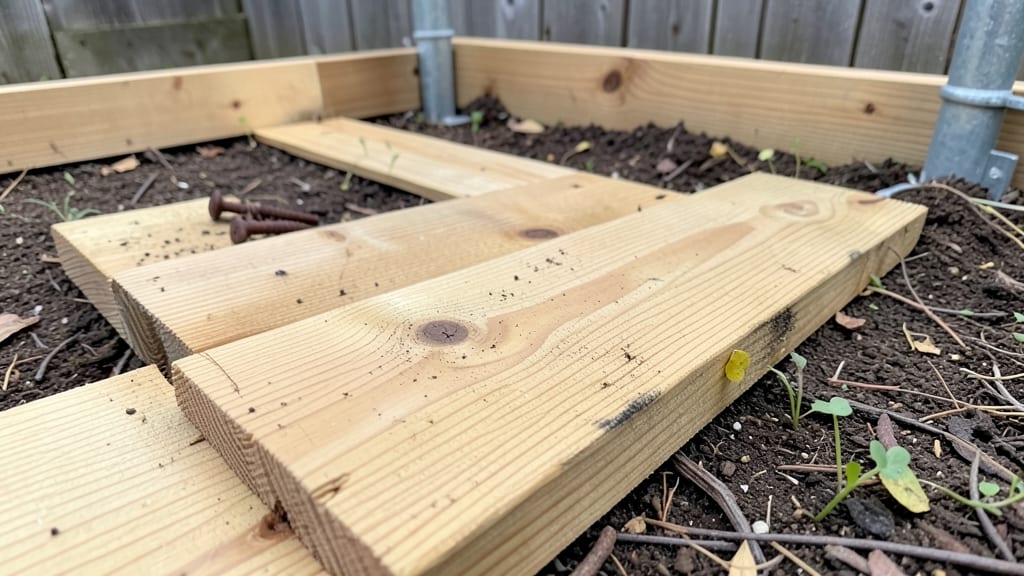
Cedar and redwood stand out because their natural oils act as built-in preservatives, warding off fungi and insects that thrive in damp soil. 🌲 These woods can last 10-15 years or more with proper care, while pressure-treated lumber (especially modern ACQ or copper-based varieties) offers a budget-friendly alternative that lasts 7-10 years when sealed correctly.
The key difference is that cedar and redwood require minimal maintenance beyond occasional sealing, whereas pressure-treated wood needs regular inspections for cracks or splits where moisture could seep in.
If you're prioritizing sustainability, locally sourced cedar or reclaimed redwood are excellent choices—they're eco-friendly and often more affordable than you'd expect. Just avoid older pressure-treated lumber containing arsenic, as it poses health risks when in direct contact with soil.
For extra protection, I recommend adding a waterproof barrier between the wood and soil, especially in wet climates.
💡 In This Article
- Rot-Resistant Wood Species for Raised Garden Beds
- Pressure-Treated Wood Safety and Longevity Tips
Rot-resistant wood species for raised garden beds
Cedar, redwood, and cypress earn their reputation for raised beds thanks to natural compounds that act like built-in preservatives. Cedar contains thujaplicin, a fungicidal oil that repels insects and inhibits mold growth, while redwood's tannins create a dense, water-resistant barrier.
These woods have 30-50% higher density than pine, making them naturally resistant to warping and cracking when exposed to moisture fluctuations. 🌲 The key advantage is their ability to maintain structural integrity even when saturated—unlike pine, which can lose up to 25% of its strength within 2-3 years of ground contact.
Here's how they compare in real-world conditions: cedar lasts 10-15 years with minimal maintenance, redwood 12-20 years due to its higher tannin content, and cypress 8-12 years (though it's more budget-friendly).
The difference comes down to their cellular structure—cedar's tight grain pattern repels water like a natural sealant, while redwood's porous nature actually absorbs moisture temporarily before releasing it, preventing rot.
What most gardeners don't realize is that these woods develop a silver-gray patina over time, which actually enhances their water resistance rather than indicating decay.
For sustainability-conscious gardeners, locally sourced cedar or reclaimed redwood offer the best balance. Cedar grows quickly (reaching harvestable size in 20-30 years) and requires fewer pesticides than most commercial lumber. Redwood's long lifespan means less frequent replacement, reducing overall environmental impact.
The trade-off is cost—cedar typically runs $4-$7 per board foot, while redwood can exceed $8-$12 per board foot, though prices vary by region. Cypress provides a middle ground at $3-$5 per board foot while still outperforming pine in moisture resistance.
What makes these woods truly exceptional is their ability to regulate temperature in raised beds. Cedar's natural oils create a slight insulating effect, keeping soil 5-10°F warmer in spring and cooler in summer compared to metal or concrete beds.
This thermal stability extends growing seasons by 2-4 weeks in cooler climates. The downside? Their aromatic oils can sometimes deter certain beneficial insects, so companion planting with herbs like rosemary or thyme helps maintain ecosystem balance.
When selecting between these options, consider your climate and garden layout. In humid regions, redwood's tannin-rich structure excels, while cedar's natural oils make it ideal for dry climates where moisture resistance is less critical.
For urban gardens with limited space, cypress offers the best value—its 12-inch width allows for efficient bed construction while still providing excellent rot resistance. Always source kiln-dried lumber to prevent any initial warping during assembly.
Pro tip: If you're mixing wood types, use cedar for the bottom layer (direct soil contact) and redwood for the sides where moisture exposure is highest. This two-tiered approach can extend your bed's lifespan by 30-40% while keeping costs reasonable.
The visual contrast between the warm red tones of cedar and redwood's rich brown hues also creates an appealing aesthetic that many gardeners appreciate. 💫