
Flowers
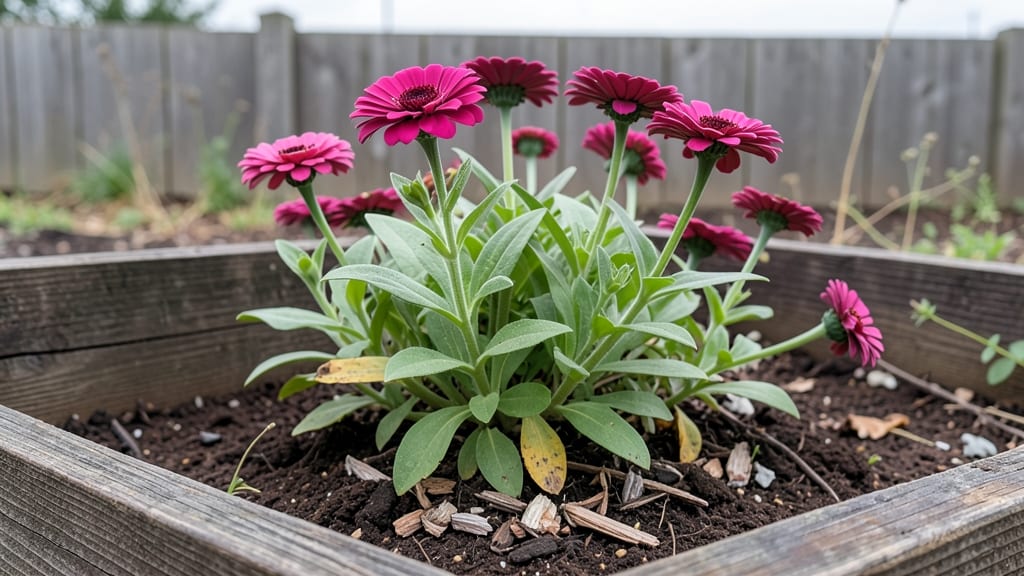
Growing zinnias in raised beds 🌼 delivers bold color and low-maintenance blooms—but only if you nail the spacing.
Picture this: your raised bed packed tight with zinnias, stems leaning like drunkards, flowers flopping before they even open. That’s the difference between a crowded mess and a showstopping display. The secret? Science-backed spacing that keeps roots happy, airflow flowing, and blooms coming nonstop.
Raised beds give zinnias a head start with drainage and pest control, but without the right layout, you’ll end up with leggy plants and sparse flowers. I’ve tested the spacing that works—from dwarf varieties to towering giants—and here’s how to turn your bed into a summer-long parade of petals.
In this guide, you’ll learn the exact spacing for your zinnias’ size, how to pair them with companions for longer blooms, and the one fix that saves flopping stems. No more guessing—just proven results for a bed that looks like a pro designed it.
Optimal zinnia spacing in raised beds for maximum blooms
Zinnias thrive in raised beds because of improved drainage and fewer soil-borne diseases, but their spacing makes or breaks your bloom game. Too close, and you’ll get leggy stems and powdery mildew.
Too far apart, and you waste precious bed space. The secret? Variety-specific spacing combined with strategic bed dimensions to maximize airflow and sunlight access.
Raised beds offer better control over zinnia spacing than in-ground planting. Since you’re working with defined borders, you can plan rows with precision. For example, a 4-foot-wide bed can comfortably fit 4 rows of medium zinnias with proper spacing, while a 2-foot-wide bed might only accommodate 2 rows.
Always leave at least 12 inches between rows to prevent competition for nutrients.
Here’s the science-backed breakdown: Zinnias need 6-12 inches of space between plants, but this varies by variety.
Dwarf zinnias can handle 6 inches apart, while giant varieties like 'Benary’s Giant' need 12-18 inches to avoid flopping. Airflow is critical—crowded plants trap humidity, creating the perfect conditions for powdery mildew, a fungal disease that turns vibrant blooms into sad, white dust.
Succession planting is your ticket to non-stop color. Instead of planting all your zinnias at once, stagger them every 2-3 weeks from early summer to mid-fall. This ensures you always have fresh blooms while giving each plant enough room to thrive.
For a 4x8-foot bed, you could plant 36 dwarf zinnias in a grid pattern, leaving 6 inches between plants and 12 inches between rows.
Let’s talk sunlight—zinnias are sun worshippers and need 6-8 hours of direct light daily. In raised beds, this means avoiding tall plants that could cast shade. Place zinnias near the center or south side of your bed to maximize exposure.
If your bed runs east-west, position zinnias on the south-facing edge to catch morning sun.
Root competition is another silent bloom killer. Zinnias have moderate root systems, but they still need space to spread. In a 3-foot-wide bed, you can fit 3 rows of medium zinnias with 8 inches between plants and 10 inches between rows.
This setup balances root growth and airflow while keeping the bed manageable for weeding and maintenance.
Here’s a quick rule of thumb: Divide your bed width by 2 to determine the number of rows. For example, a 5-foot-wide bed can fit 2-3 rows, depending on the zinnia variety.
Always leave at least 1 foot of space around the perimeter for easy access and to prevent soil compaction from foot traffic.
Powdery mildew is the nemesis of crowded zinnias. To prevent it, space plants for airflow and avoid overhead watering. Instead, use a soaker hose or drip irrigation to keep foliage dry.
If mildew appears, remove affected leaves immediately and apply neem oil as a preventative spray. Proper spacing reduces humidity buildup, making your zinnias less susceptible to this pesky fungus.
For succession planting, divide your bed into sections. Plant one section in early June, another in early July, and the final section in early August. This staggered approach ensures you have blooms from July through October, extending your season and keeping your garden vibrant.
For example, a 4x4-foot bed could be split into 4 quadrants, each planted 2 weeks apart.
Finally, don’t forget to deadhead regularly to encourage more blooms. With proper spacing, each zinnia plant will have room to rebloom vigorously, giving you a continuous display of color.
Pair this with mulching to retain moisture and suppress weeds, and you’ll have zinnias that look like they’re from a botanical garden—without the fuss.
🌼