
Light Requirements
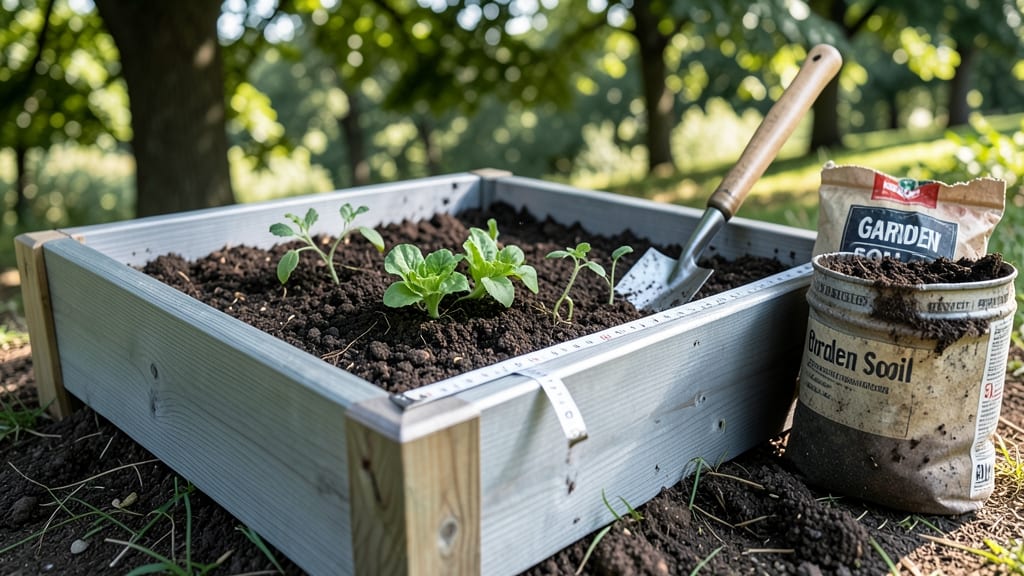
For a 4 x 8 raised garden bed, soil volume depends on depth: each inch requires 1.33 cubic feet, meaning a 6-inch bed needs 8 cubic feet (~0.23 cubic yards) while a 12-inch bed needs 16 cubic feet (~0.46 cubic yards). Always factor in soil compaction and root space for healthy plant growth.
Calculating soil needs starts with your bed's dimensions and depth—this 4 x 8 raised garden setup gives you a fixed footprint, but the depth is where the numbers change dramatically. 🌱 For example, a 6-inch bed (common for herbs and greens) uses half the soil of a 12-inch bed (ideal for root crops like carrots).
I always recommend adding 10-20% extra soil to account for settling, especially if you're mixing in compost or amendments that will break down over time. The key is balancing drainage with root space—too shallow, and your plants struggle; too deep, and you waste soil and resources.
Pro tip: Use a soil calculator (many are free online) to double-check your measurements, especially if you're ordering bags of soil. Most suppliers sell by cubic yards, so knowing your exact needs saves money and prevents overbuying.
For instance, that 12-inch bed's 16 cubic feet converts to about 0.46 cubic yards—just enough for two 0.5-cubic-yard bags with a little left over for future adjustments.
💡 In This Article
- Calculating Soil Volume for Raised Beds: Depth vs. Cubic Feet Formula
- Optimal Soil Depth for Raised Garden Beds: Plant-Specific Recommendations
Calculating soil volume for raised beds: depth vs. cubic feet formula
The volume of soil needed for your 4 x 8 raised bed comes down to simple geometry: multiply length × width × depth. For this bed, that's 4 feet × 8 feet × depth in feet.
Since depth is usually measured in inches, convert it first—6 inches = 0.5 feet and 12 inches = 1 foot.
This gives you 16 square feet of base area, and multiplying by depth determines your cubic feet. 🌿 For every inch of depth, you need 1.33 cubic feet of soil because 16 sq ft × 1/12 ft (1 inch) = 1.33 cubic feet.
This formula works for any raised bed size.
Converting to cubic yards is where things get practical. Since most soil is sold by the cubic yard, divide your cubic feet by 27 (the number of cubic feet in a cubic yard).
A 6-inch bed's 8 cubic feet becomes 0.296 cubic yards, while a 12-inch bed's 16 cubic feet is 0.593 cubic yards. Round up to 0.23 cubic yards and 0.46 cubic yards respectively to account for soil settling—about 10-20% more volume than your initial calculation.
This adjustment is critical because soil compresses over time, especially under plant roots and watering.
Depth directly impacts drainage and root development. Shallow beds (6 inches) work well for shallow-rooted plants like lettuce or herbs, but deeper beds (12+ inches) are essential for root crops like carrots or potatoes. The extra depth improves moisture retention and reduces competition for nutrients.
For example, a tomato plant needs 18-24 inches of soil depth to support its extensive root system, while a strawberry plant thrives in just 6-8 inches. Understanding these needs helps you customize your bed's depth for specific crops.
Soil composition also affects volume calculations. Mixing 60% topsoil, 30% compost, and 10% perlite (for drainage) changes the overall bulk density. Organic matter like compost breaks down, reducing volume over time, while perlite adds air pockets that increase total space.
This means your 16 cubic feet of mixed soil might settle to 14 cubic feet after a season. Always buy slightly more soil than your calculation suggests to avoid running short mid-project.
Visualizing the math helps prevent mistakes. Imagine stacking 12-inch cubes of soil in your bed—each cube represents 1.33 cubic feet. For a 6-inch bed, you'd need 4 cubes (8 cubic feet), while a 12-inch bed needs 8 cubes (16 cubic feet).
This mental model makes it easier to gauge how much soil you're handling, especially when hauling bags from the store. 💫
Pro tip: Use a shovel or measuring tape to verify depth before filling. Many beds lose 1-2 inches to frame thickness, so measure the actual planting depth, not the frame height.
For example, a frame labeled 12 inches tall might only give you 10 inches of usable soil—adjust your calculations accordingly. Precision here saves you from overbuying or struggling with insufficient soil later.