
Landscaping
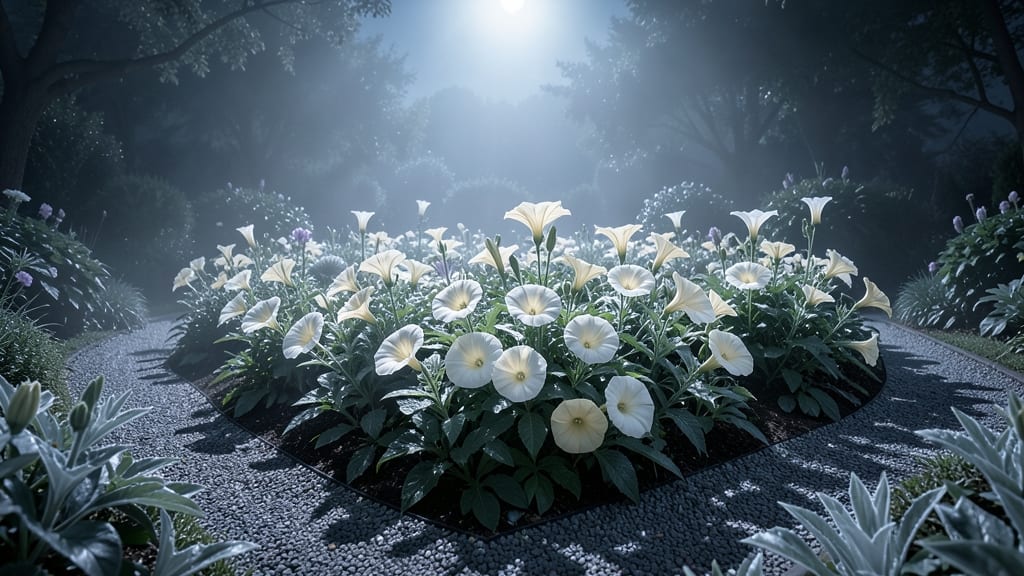
Transform your garden into a vibrant masterpiece with these **10 bold annual flower bed designs** that use color blocking for maximum visual impact. Perfect for beginners and pros alike, these patterns create striking focal points that elevate any outdoor space.
Monochromatic Gradient Flower Bed
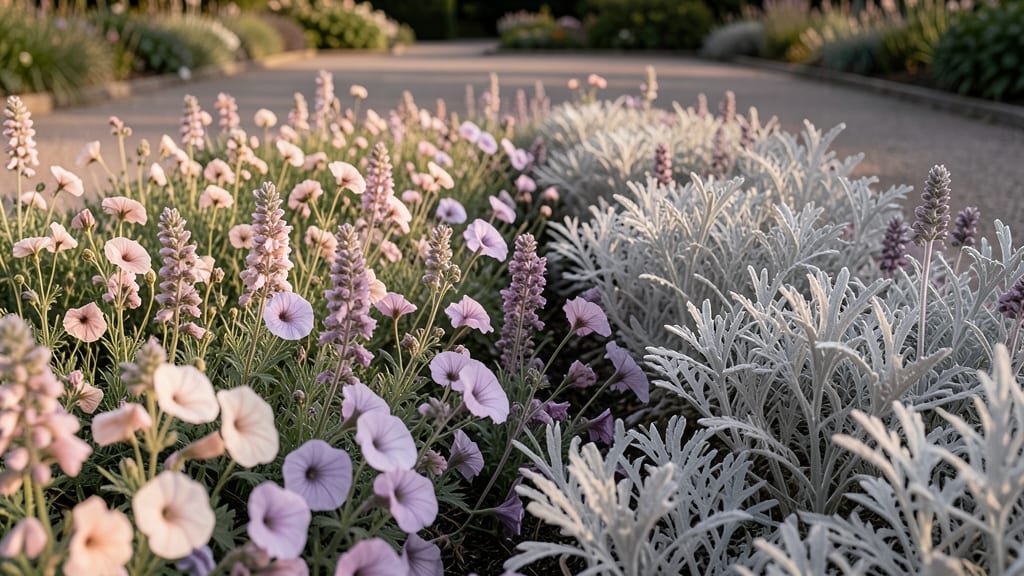
Tired of clashing colors that feel chaotic? A monochromatic gradient flower bed delivers sophisticated elegance with just one hue—think soft pinks fading into deep purples or lavender blending into mauve. This design uses annuals like salvia, petunias, and dusty miller to create seamless transitions that feel intentional yet effortless.
The key is to plant lighter shades at one end and darker tones at the other, with medium tones bridging the gap for a smooth fade. For a modern look, frame the bed with neat boxwood or low box hedges and add silver foliage (like lamb’s ear) to enhance contrast. This design thrives in full sun to partial shade, making it versatile for most gardens.
Perfect for urban gardeners or minimalist spaces, this low-maintenance approach ensures your bed stays visually striking with minimal upkeep. 💚
Geometric Checkerboard Pattern
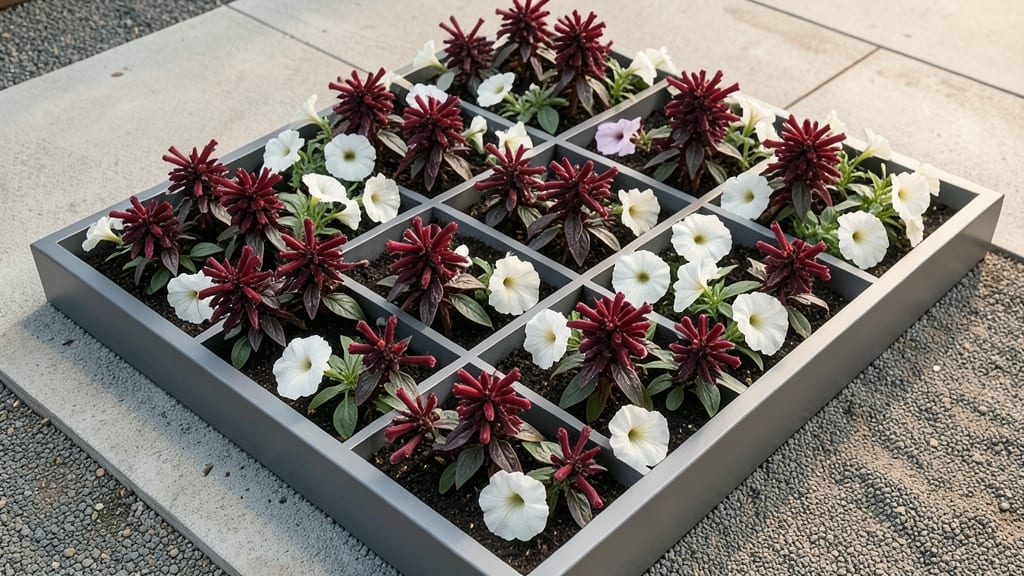
Tired of soft, flowing garden designs? A geometric checkerboard pattern brings sharp, modern energy to even the smallest spaces. This high-contrast layout—think deep red salvias paired with crisp white petunias—creates a striking visual punch that urban gardeners and minimalist lovers will adore.
Start by marking your bed with string or spray paint to create equal squares (aim for 12-18 inches per block). Use annuals with bold foliage like coleus or marigolds for extra definition. For a polished look, border the bed with black gravel or dark mulch to make the colors pop. This design thrives in full sun and requires minimal maintenance—just deadhead spent blooms and refresh plants every 6-8 weeks.
Perfect for contemporary patios, rooftop gardens, or as a bold front-yard statement, this pattern proves you don’t need acres to make an impact. 💚
Sunburst Radiating Pattern
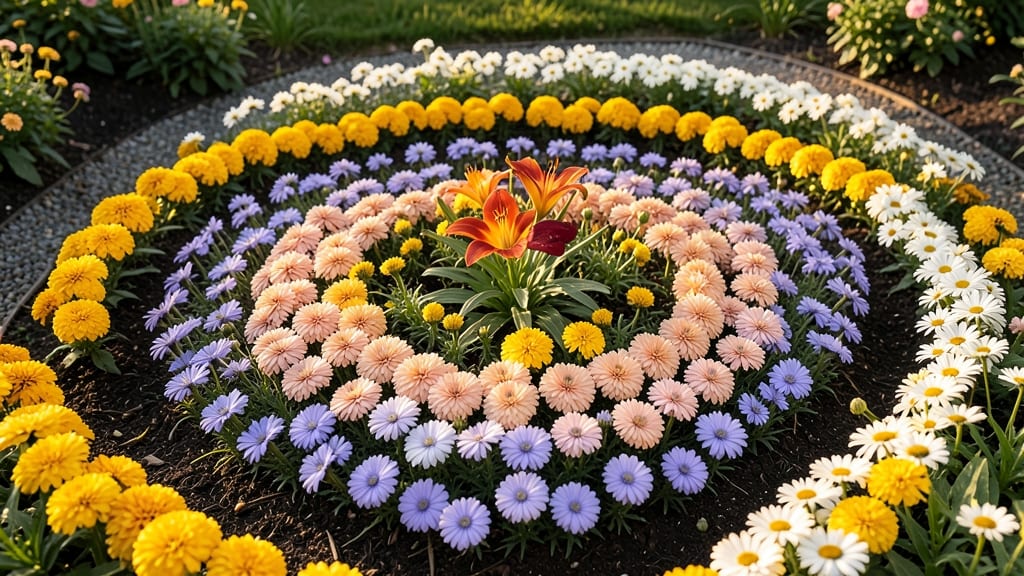
Want to make your garden feel like a warm, inviting hug? The sunburst radiating pattern transforms a simple flower bed into a dynamic focal point that draws the eye—and visitors—deeper into your space. This design plays with concentric rings of color, radiating outward from a central anchor like a tree, statue, or even a striking planter.
Start by selecting a bright, sun-loving annual like zinnia or marigold for the innermost ring, then layer outward with orange cosmos and red salvia for a fiery transition. Keep each ring about 12-18 inches wide for a balanced look, and use low-growing fillers like sweet alyssum to soften the edges. This pattern thrives in full sun and works beautifully in both formal and cottage-style gardens.
Perfect for gardeners who love drama without the fuss, this design is especially effective near pathways or seating areas. The radiating effect creates a natural "pull" that guides visitors through your space effortlessly. 🌻
Vertical Color Block Wall
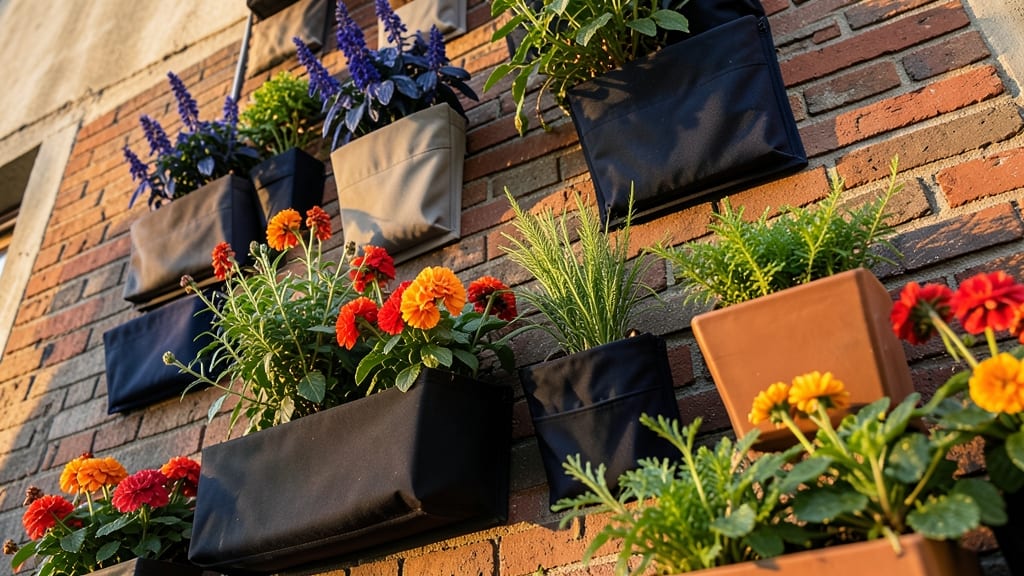
Turn even the most ordinary wall or fence into a living work of art with a vertical color block wall—perfect for urban balconies or small yards where space is at a premium.
Use wall-mounted pockets or tiered planters to create bold, geometric blocks of color, like deep blue salvia paired with fiery orange marigolds. Choose drought-tolerant annuals like lantana or petunias for low-maintenance vibrancy. Mount planters at varying heights (12–24 inches apart) to add dimension and ensure every color block gets noticed.
This design is ideal for city dwellers, renters, or anyone craving instant curb appeal without sacrificing square footage. 🌻
Ombré Wave Design

Skip the rigid lines and sharp angles—this ombré wave design brings the fluid beauty of a sunset to your garden. By blending soft hues like sky blue into lavender along gentle, undulating curves, you’ll create a dreamy, natural look that feels like a secret escape.
Start by sketching your wave shape with a hose or garden twine, then plant salvia ‘May Night’ (deep purple) transitioning to cleome ‘Pinkie’ (blush pink) for a seamless gradient. Add silver foliage edging like dusty miller to frame the curves and reflect light. For extra drama, use moss phlox in the troughs of your waves to soften the transitions.
This design thrives in partial shade, making it perfect for gardeners with east-facing beds or dappled woodland areas. It’s ideal for those who love romantic, whimsical gardens—think cottagecore meets modern minimalism. 🌷
Neon Accent Stripes
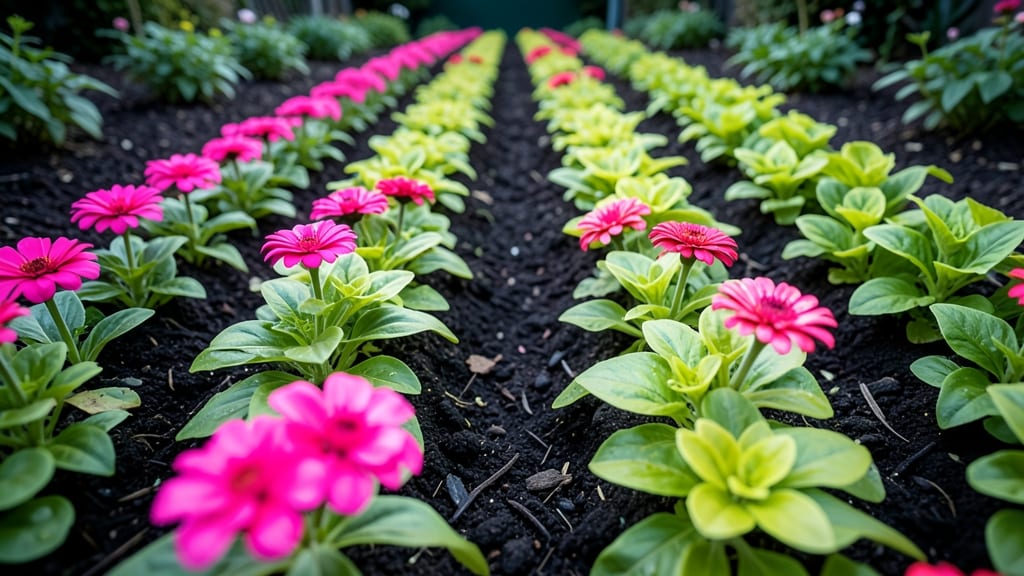
Want to inject instant energy into your garden without the fuss of complex designs? Neon accent stripes are your secret weapon—think electric pink and lime green annuals in crisp, parallel bands that scream "modern fun." This bold technique works like a living neon sign, instantly transforming dull spaces into eye-catching focal points.
Start by outlining your bed with neutral borders (like dark mulch or gravel) to make the colors pop. Use sun-loving annuals like celosia (for fiery pinks) and coleus (for lime greens) in narrow rows, spacing them 6–12 inches apart for a clean, graphic look. For extra drama, add reflective surfaces nearby—like a glass table or metal sculpture—to amplify the neon glow.
Perfect for urban balconies, backyard parties, or even wedding venues, these stripes require minimal upkeep but deliver maximum wow. Swap out plants every 3–4 months to keep the vibrancy fresh and watch your garden become the talk of the neighborhood. ✨
Layered Textured Blocks
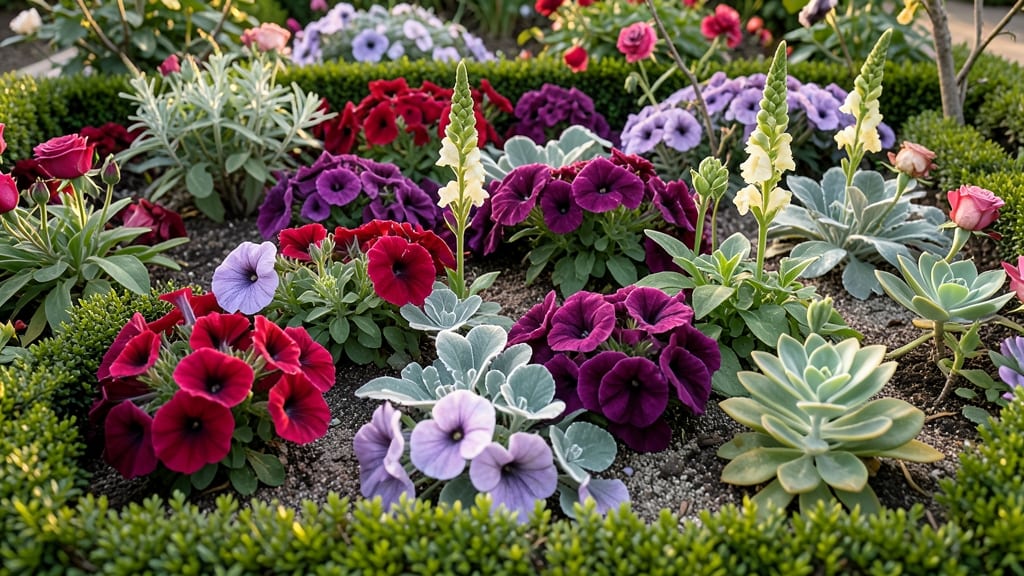
Want a garden that feels as rich as a tapestry? Layered textured blocks create depth by combining plants with contrasting textures—think spiky snapdragons next to velvety petunias—for a sensory experience that flat landscapes miss.
Start by grouping plants with similar water needs in 2-3 foot squares. Pair ruffled zinnias with smooth lamb’s ear or fuzzy dusty miller for a tactile contrast. Use silver-blue foliage like dusty miller as a neutral "glue" between blocks to tie the design together. This approach works especially well in sensory gardens or for adding dimension to boring rectangular beds.
Perfect for gardeners who love to touch and explore, this design thrives in full sun to partial shade and requires minimal maintenance once established. 💚
Seasonal Transition Triangles
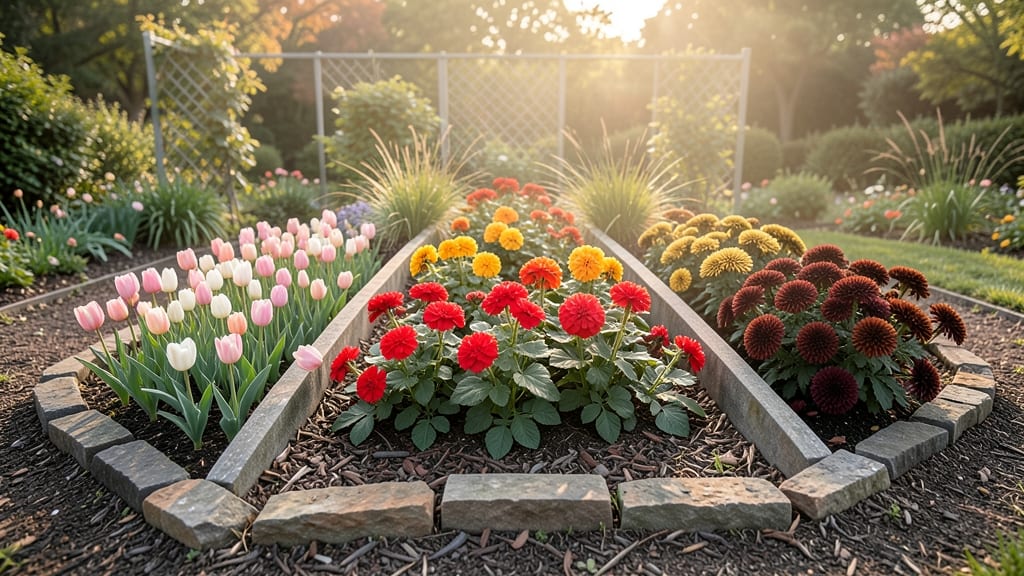
Tired of static flower beds that feel stuck in one season? Seasonal Transition Triangles let your garden evolve effortlessly by dividing one bed into triangular sections that rotate with the year. This design keeps your space fresh and dynamic without requiring a complete overhaul.
Start with three equal triangles in your bed. Plant cool-toned annuals like lobelia or cornflower in spring, then swap for sunny geraniums or zinnias by summer. For fall, introduce deep burgundy salvias or golden marigolds, and finish with silver dusty miller for winter structure. The key is to use stone or mulch borders to define each triangle sharply—this keeps the design clean while allowing flexibility.
This approach is perfect for gardeners who love variety but hate the work of replanting entire beds. It’s especially great for small spaces or urban gardens where you want seasonal interest without sacrificing structure. Plus, the triangular shape adds a modern geometric touch that stands out year-round. 🌻
Mosaic Pattern with Mixed Heights
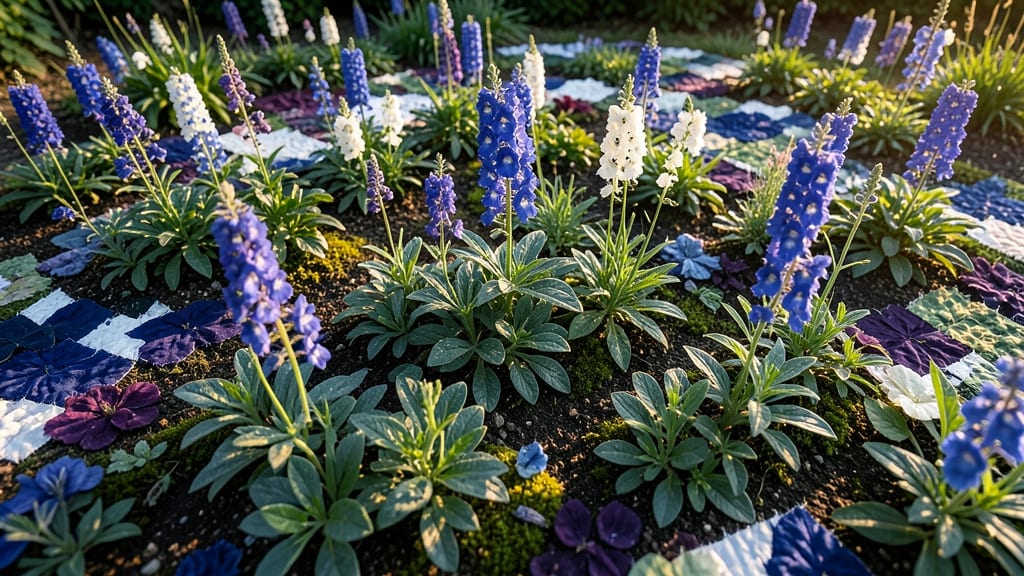
Skip the rigid lines and embrace the unexpected with a mosaic pattern that feels like a living quilt. This design plays with irregular blocks of varying heights—think dwarf lobelia nestled between towering delphiniums—to create a whimsical, ever-changing tapestry that shifts with the seasons.
Start by sketching your bed with 12-18-inch square or rectangular blocks (no need for perfect symmetry!). Pair low-growing annuals like alyssum or sweet alyssum with taller varieties such as snapdragons or cosmos to add dimension. Use gravel or mulch as a neutral "glue" between blocks to keep the design cohesive. For a true mosaic effect, mix in unexpected textures, like feathery fountain grass or velvety calendula.
This pattern is perfect for gardeners who love artistic freedom and want to hide imperfections—no two blocks need to be identical. It’s also ideal for small spaces or urban gardens where you can play with verticality and fill gaps creatively. 🌻
Moonlight Garden Glow

Transform your garden into an enchanting evening retreat with a Moonlight Garden Glow—a design that turns your outdoor space into a luminous sanctuary after dark. By strategically placing night-blooming annuals like moonflowers (Ipomoea alba) and white datura (Datura metel), you’ll create a soft, ethereal glow that illuminates pathways and adds a magical touch to any garden.
Arrange these reflective plants in defined blocks along walkways or near seating areas, where their large, fragrant blooms will open under the moonlight. Pair them with silvery foliage like lamb’s ear (Stachys byzantina) to enhance the luminous effect. For best results, plant in well-draining soil and provide full sun exposure during the day to ensure vibrant blooms that last through the night.
This design is perfect for gardeners who love creating serene, romantic spaces or those with evening entertaining needs. The gentle glow not only enhances safety but also turns your garden into a captivating nighttime escape. ✨