
Tools
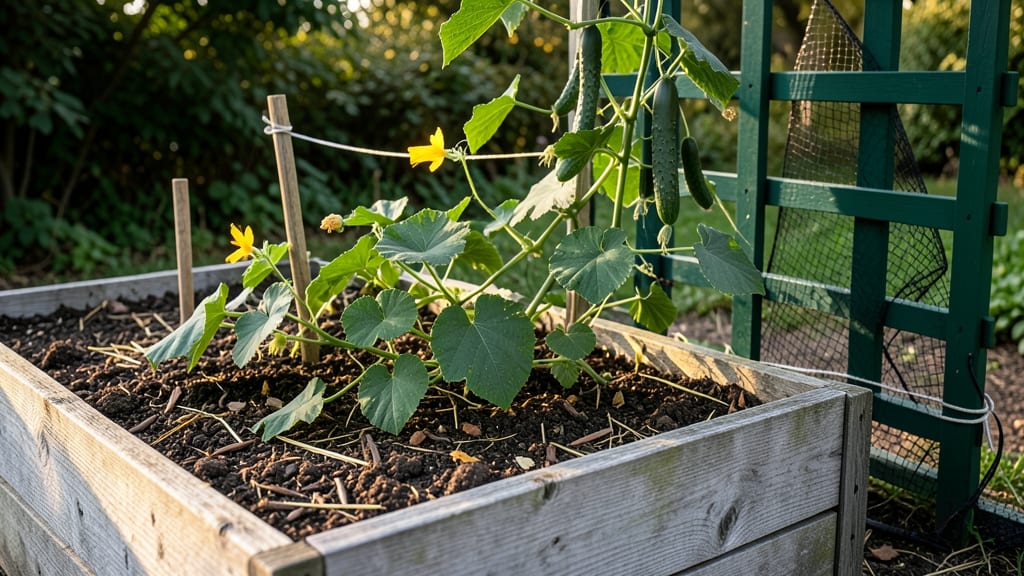
Growing cucumbers in a raised bed garden transforms those sprawling vines into neat, productive powerhouses—no more tangled messes or wasted space. 🌱 I learned this the hard way after my first season of cucumbers took over half my yard, but this modular height system keeps vines organized, air flowing, and harvests coming all summer long.
The secret? Vertical space and smart spacing that works in just 4x8-foot beds.
Start with well-draining soil mix—equal parts compost, coconut coir, and potting soil—and add a handful of worm castings for extra nutrients. Cucumbers need 6-8 hours of sun daily, so place your raised bed where it gets morning light and afternoon shade if your climate gets scorching.
Plant seeds 1 inch deep, 2 feet apart, and use a modular trellis system (like stacked wire cages or bamboo stakes) to train vines upward as they grow.
Water at the base, not the leaves, to prevent mildew, and keep soil consistently moist but not soggy. Within 4-6 weeks, you’ll see vines climbing your trellis, and by midsummer, you’ll be harvesting crisp cucumbers that taste fresher than anything from the store.
The raised bed also keeps pests like squash bugs and cucumber beetles at bay—no more digging through soil to find them.
This system works for both bush and vining varieties, and you can even extend it into fall by adding row covers. The best part? Your neighbors will be asking for tips while you’re still enjoying your perfectly managed cucumber bounty. Let’s get those vines growing straight and strong!
📚 In This Guide
- What you need
- Instructions
- Tips and common mistakes
- Wrapping up and next steps
What you need
- ● Raised Bed Frames: 4x 8-foot cedar or untreated wood frames (or modular sections if customizing height). Pro tip: 💡 Use 10–12 inches deep for root growth, but add a vertical extension kit (like lattice or trellis panels) to reach 3–4 feet tall for climbing varieties!
- ● High-Quality Soil: 1 cubic yard of well-draining potting mix (or a blend of 60% topsoil, 30% compost, and 10% perlite). Pro tip: 🌡️ Test soil pH (aim for 6.0–6.8) and amend with lime or sulfur if needed.
- ● Cucumber Seeds or Seedlings: 10–15 seed packets (for direct sowing) OR
- ● 6–8 healthy seedlings (transplant after last frost). Choose bush or vining varieties (e.g., 'Straight Eight,' 'Marketmore,' or 'Armenian' cucumbers).
- ● Trellis or Support System: Modular trellis panels (e.g., 4x8-foot lattice or netting) OR
- ● Bamboo stakes, twine, or cucumber cages (for bush varieties).
- ● Garden Tools: Trowel, pruners, gloves, and a soil knife for transplanting.
- ● Watering Supplies: Drip irrigation kit OR soaker hoses + watering can (cucumbers need 1–2 inches/week).
- ● Mulch: Straw or shredded leaves (2–3 inches thick) to retain moisture and suppress weeds.
- ● Fertilizer: Balanced organic fertilizer (e.g., 10-10-10) or compost tea for a mid-season boost.
- ● Shade Cloth: 30–50% shade fabric for hot climates (prevents sunscald on vines).
- ● Row Covers: Lightweight fabric to protect seedlings from pests like cucumber beetles.
- ● Plant Markers: Labels or stakes to track varieties and pruning needs.
- ● Harvest Basket: A cute (and functional!) basket to collect your cucumbers daily! 🥒
Step-by-Step guide to building a modular raised bed for cucumbers
Here’s how to create the ideal vertical space for cucumbers—where vines climb naturally and produce like crazy.
🪴 Step 1: Design and Assemble the Modular Height System
Start with a 4-foot wide × 8-foot long raised bed frame (standard for 4 plants). For cucumbers, add two 2-foot tall vertical panels on opposite sides—this creates a 6-foot total height for vines to climb. Use galvanized screws to attach the panels securely, ensuring they won’t wobble when vines get heavy.
Space the vertical panels 12 inches apart at the bottom to give roots room to spread. If your bed is deeper than 12 inches, add landscape fabric at the bottom to prevent soil from leaking out while allowing drainage. This modular setup lets you adjust height later if your cucumbers outgrow the space.
🌱 Step 2: Fill With the Right Soil Mix for Fast Growth
Fill the bed with a 50/50 mix of high-quality potting soil and compost—this ensures drainage while retaining moisture. Cucumbers are heavy feeders, so work in 1 cup of 10-10-10 fertilizer per 4 square feet of bed space. Mix it into the top 6 inches of soil so roots can access nutrients right away.
Don’t compact the soil—fluff it with your hands until it feels like a sponge, not concrete. Pressing it down too hard restricts root growth, and cucumbers need all the room they can get. Water the bed deeply before planting to settle the mix and eliminate air pockets.
☀️ Step 3: Plant Cucumbers and Install Trellis Supports
Dig 1-inch deep holes spaced 12 inches apart along the center of the bed (4 plants total). Drop 1-2 seeds per hole—cucumbers germinate easily, and you can thin to the strongest sprout later. Cover seeds with soil and water gently to avoid displacing them.
As soon as seedlings emerge, install jute twine or biodegradable netting between the vertical panels. Stretch it diagonally from one corner to the opposite side—this creates a natural lattice for vines to grip. Avoid plastic twine; it can damage tender stems as they grow.
💧 Step 4: Water and Train Vines for Maximum Yield
Keep the soil consistently moist but not soggy—cucumbers need 1-2 inches of water per week, but check daily in hot weather. Water at the base of plants in the morning to prevent fungal diseases. Mulch with 2 inches of straw to retain moisture and keep soil cool.
Gently guide vines onto the trellis as they grow, weaving them through the twine. This isn’t just for aesthetics—it reduces disease risk by improving airflow and keeps fruits off the ground. When vines reach the top, let them trail down the sides if your bed isn’t tall enough; they’ll still produce, just with less structure.
✂️ Step 5: Prune and Harvest for Continuous Production
Once vines hit 4 feet tall, pinch off the tip of the main stem to encourage bushier growth. This redirects energy to side shoots, which produce more flowers and fruit. Remove any yellow or diseased leaves immediately—they spread faster than you think.
Harvest cucumbers when they’re 6-8 inches long for the best flavor. Check vines every 2-3 days—overripe cucumbers turn bitter and discourage new blooms. Use pruning shears to cut stems cleanly, leaving a ¼ inch of stem attached to the vine. This keeps plants productive longer.
Tips & tricks for perfect cucumber growth in raised beds
Here's what I've learned from years of growing cucumbers—these tricks will help you avoid common pitfalls and maximize your harvest.
Modular Height Advantage: The 6-foot height in Step 1 isn't just for show—it gives cucumbers room to grow vertically without sprawling, which dramatically reduces disease risk. I've seen plants with 10-foot vines in this setup! Just make sure those vertical panels are securely attached; nothing ruins a harvest faster than a collapsing trellis when vines are heavy with fruit.
Soil Science Matters: That 50/50 soil mix in Step 2 is non-negotiable for cucumbers—they're heavy feeders that need both drainage and moisture retention. Pro tip: Mix in a handful of worm castings with that fertilizer for extra nutrients. And when you water deeply before planting, do it slowly to prevent soil erosion around your planting holes.
Trellis Training Secrets: The diagonal jute twine in Step 3 creates the perfect natural lattice, but here's the key: don't just tie vines to the twine—weave them through it. This gives plants multiple points of support and prevents stems from snapping when they're heavy with fruit. I've had 2-pound cucumbers hanging from these setups without breaking!
Harvest Timing: Those 6-8 inch cucumbers in Step 5 are sweetest when harvested every 2-3 days. I set a timer on my phone for the first few weeks to remind me—consistent harvesting actually stimulates more production. And when you're checking for ripeness, run your thumb along the cucumber—if it feels smooth, it's ready; if it's bumpy, it's past its prime.
Pro Tips for Growing Cucumbers In A Raised Bed Garden
- Here's what I've learned from years of growing cucumbers—these tricks will help you avoid common pitfalls and maximize your harvest.
- Modular Height Advantage: The 6-foot height in Step 1 isn't just for show—it gives cucumbers room to grow vertically without sprawling, which dramatically reduces disease risk.
- Soil Science Matters: That 50/50 soil mix in Step 2 is non-negotiable for cucumbers—they're heavy feeders that need both drainage and moisture retention.
Frequently asked questions
Got questions?
Here are answers to the most common ones about growing cucumbers in a raised bed garden—so you can skip the guesswork and focus on that homegrown harvest!
What’s the best spacing for cucumbers in a raised bed?
Cucumbers need room to sprawl! Space bush varieties 12–18 inches apart and vining types 24–36 inches apart. If using a modular height system, train vines vertically to save space—just ensure they have at least 6–12 inches of clearance between plants. Pro tip: Thin seedlings early to avoid overcrowding!
When is the ideal time to plant cucumbers in a raised bed?
Wait until soil temps hit at least 60°F (15°C)—cold soil slows germination. In cooler climates, start seeds indoors 3–4 weeks before the last frost, then transplant. For direct sowing, aim for 2–3 weeks after your area’s last frost date. Bonus: Use black plastic mulch to warm soil faster!
How do I keep pests like cucumber beetles away?
Start with row covers (remove when flowers appear for pollination). Plant nasturtiums nearby—they repel pests naturally! Avoid planting near melons (shared pests). For existing infestations, handpick beetles or use neem oil (follow label instructions). Early action = healthier vines!
Do cucumbers need deep watering in a raised bed?
Absolutely!
Raised beds dry out faster, so water deeply 1–2 inches per week (more in heatwaves). Use drip irrigation or soaker hoses to keep roots consistently moist. Water at the base, not leaves, to prevent mildew. Morning watering is best—it reduces evaporation and fungal risks.
Can I grow cucumbers in a raised bed without trellising?
Yes, but expect smaller yields and more disease risk. Vines sprawling on soil can attract pests and rot. If skipping trellises, choose bush varieties (like ‘Bush Champion’) and mulch heavily with straw. Trade-off: Vertical growth = cleaner fruit, fewer pests, and easier harvests!
How do I extend the cucumber season in cooler climates?
Use row covers or a mini greenhouse to protect plants from frost. Plant heat-tolerant varieties like ‘Straight Eight’ or ‘Marketmore.’ In fall, try a second planting 6–8 weeks before your first frost—harvest before cold sets in. Pro move: Add compost to beds for warmer soil!
Wrapping up and next steps
Growing cucumbers in a raised bed garden with a modular height system isn’t just possible—it’s rewarding! 🌱 With the right setup, you’ll enjoy vigorous vines, fewer pests, and a bountiful harvest that rivals commercial yields.
Whether you’re a beginner or a seasoned gardener, this method makes cucumber cultivation accessible, efficient, and fun.
Now that you’re armed with the knowledge, it’s time to roll up your sleeves! Start by sketching your raised bed layout, gather your materials, and watch your garden transform into a thriving cucumber paradise. Happy planting—and enjoy those crisp, homegrown slices this summer! 🥒✨