
Flowers
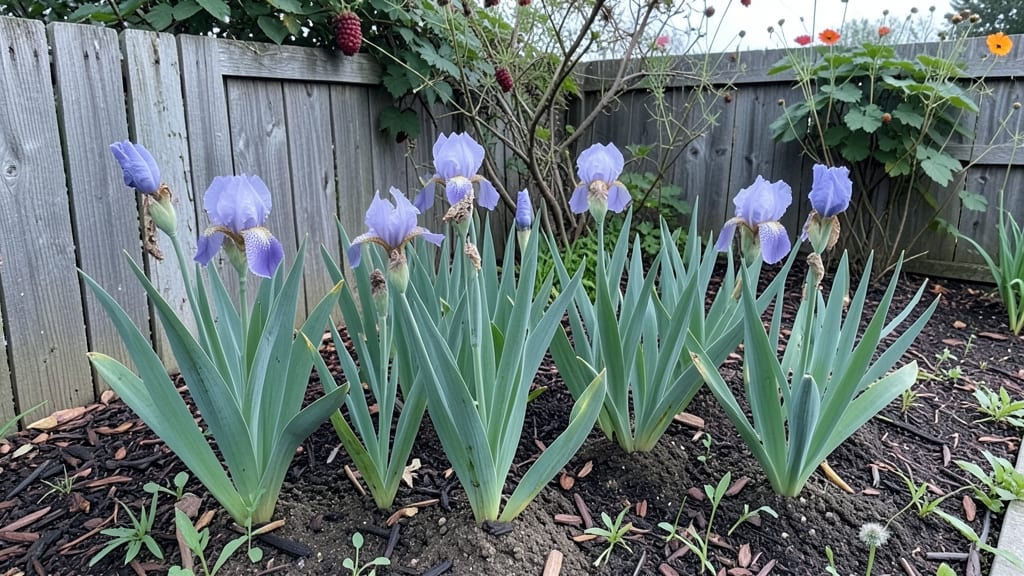
Designing a flower bed with irises 🌸 can turn a simple garden corner into a season-long showstopper that keeps heads turning from spring through summer.
Picture this: bold purple spikes rising above lush green foliage, their striking forms creating a natural focal point that outshines even the busiest borders. The key? Strategic placement where irises take center stage while blending seamlessly with their neighbors.
You don't need a green thumb to make this work—just a few smart layout tricks. We'll cover how to pair irises with complementary plants, create visual layers that pop, and maintain that showcase-worthy look with minimal effort.
Ready to transform your outdoor space? Here’s how to make irises the star of your flower bed without sacrificing simplicity or style.
How to choose iris varieties for maximum season-long color impact
Creating a season-long iris display starts with selecting the right varieties for bloom timing. Irises bloom from early spring through summer, so mixing early, mid, and late-season types ensures continuous color.
My favorite strategy? Pairing tall bearded irises with dwarf varieties to create dynamic height layers. This approach keeps your flower bed visually exciting from April through July.
Color coordination is just as important as timing. While purple irises dominate the market, don't overlook yellow, white, and blue varieties. These colors create stunning contrasts when grouped together.
For example, 'Professor Bluestem' (purple) paired with 'Golden Harvest' (yellow) creates a vibrant two-tone effect. I always aim for 3-5 color families in each bed to maintain visual harmony.
Here's how to layer iris varieties by bloom time and height for maximum impact:
<comparison-table>| Bloom Time | Variety Examples | Height Range | Color Palette | Best For |
|---|---|---|---|---|
| Early Spring | 'Florence Sullivan', 'Blue Flag' | 18-24" | Purple, blue | Front of border |
| Mid-Spring | 'Blue River', 'Immortality' | 24-30" | White, lavender | Mid-height layer |
| Late Spring | 'Professor Bluestem', 'Golden Harvest' | 24-36" | Yellow, purple | Back of bed |
| Dwarf Varieties | 'Little Princess', 'Purple Haze' | 12-18" | Purple, white | Container gardens |
For maximum impact, I recommend planting 3-5 iris varieties per flower bed. This creates visual interest while keeping maintenance manageable. Start with one dominant color (like purple) and add 2-3 accent colors (yellow, white, or blue) to create depth.
My go-to combination includes 'Professor Bluestem' (purple) as the star, with 'Golden Harvest' (yellow) and 'Immortality' (white) as supporting players.
Height variation is key to preventing a flat, monotonous look. Place tall varieties (30"+) at the back of your flower bed, mid-height (24-30") in the middle, and dwarf varieties (12-18") at the front.
This creates a natural waterfall effect that draws the eye through your garden. I once designed a bed where 'Blue River' (28") framed a 'Little Princess' (14") in the foreground—it was stunning!
Don't forget about repeat blooming varieties like reblooming bearded irises. These produce two flowerings per season—once in spring and again in summer. Planting these alongside single-blooming types extends your color season by 4-6 weeks.
My reblooming favorites include 'Florence Sullivan' and 'Blue River', which reliably produce second flushes of blooms.
When selecting colors, consider your garden's existing palette. Cool-toned gardens benefit from purple and blue irises, while warm gardens shine with yellow and orange varieties. For a modern look, try white irises like 'Immortality' paired with deep purple foliage.
The contrast creates a sophisticated, high-end appearance that's surprisingly easy to achieve.
Pro tip: Group 3-5 plants of each variety together for maximum impact. This creates bold color blocks rather than scattered blooms. I once saw a garden where 15 'Golden Harvest' irises were planted in a tight cluster—it looked like a sunburst of yellow against the green foliage.
For smaller spaces, 5-7 plants create a similar effect on a smaller scale.
Finally, consider your garden's sunlight conditions. Most irises thrive in full sun (6+ hours daily), but dwarf varieties can tolerate partial shade. In shadier areas, opt for low-growing types like 'Purple Haze', which handles 3-4 hours of sun better than taller varieties.
Always check the USDA zone hardiness of your selected varieties to ensure they'll thrive in your climate.
With the right
Step-by-step color-blocking layouts using irises as focal points
Creating a stunning iris flower bed starts with understanding how to use these dramatic blooms as visual anchors. Irises thrive in full sun and well-draining soil, making them perfect for color-blocking designs.
The key is balancing their bold heights (1-3 feet) with complementary plants that highlight their season-long structure. Whether you have a small border, large bed, or container garden, these layouts will help you craft a cohesive look.
For small borders (1-2 feet wide), focus on dwarf iris varieties like 'Little Star' or 'Elsie Purnell'. These stay compact but still pack a punch. Pair them with low-growing daylilies or creeping thyme to frame their vibrant blooms.
In larger beds, use tall bearded irises (2-3 feet) as backdrop plants, surrounded by tulips or ornamental grasses for texture contrast. Containers work best with standard irises combined with salvias or heucheras for layered interest.
🌸 Iris Color-Blocking Layouts by Garden Size
-
Small Borders (1-2 ft wide)
- Iris: Dwarf varieties ('Little Star', 'Elsie Purnell')
- Companions: Daylilies ('Stella de Oro'), creeping thyme
- Spacing: 6-12 inches apart
- Design Tip: Plant 3-5 irises in a tight cluster for impact
-
Large Beds (3+ ft wide)
- Iris: Tall bearded ('Blue Flag', 'Purple Haze')
- Companions: Tulips ('Darwin Hybrid'), ornamental grasses ('Miscanthus')
- Spacing: 12-18 inches apart
- Design Tip: Create 3-5 iris clusters with grasses filling gaps
-
Containers (12"+ pots)
- Iris: Standard varieties ('Adamant', 'Blue Denim')
- Companions: Salvias, heucheras, ferns
- Spacing: 1 iris per 12" pot (group 3 pots)
- Design Tip: Use contrasting pot colors (terracotta, black) to enhance blooms
To maintain your color-blocked iris bed, prioritize seasonal maintenance. After blooming, trim spent flower stalks but leave the fan-shaped leaves intact until they yellow naturally. This preserves the plant’s energy for next year. In early spring, divide crowded clumps every 3-4 years to prevent bloom decline.
Use a sharp spade to lift rhizomes and separate sections, replanting immediately in well-amended soil. Mulch lightly with compost to retain moisture without smothering the roots.
For long-lasting color, stagger iris varieties with different bloom times. Plant early bloomers (like 'White Swan') alongside late-season types (such as 'Blue Denim') to extend your visual display.
Add spring bulbs (tulips, daffodils) in front for early-season color, then let the irises take center stage as they mature. This layered approach ensures your bed remains dynamic from April through July.
Don’t forget to rotate companion plants yearly to prevent soil depletion. Swap out annuals like pansies or snapdragons for perennials like catmint or sedum to reduce maintenance. Group irises with similar water needs to simplify care—most thrive on weekly deep watering during dry spells.
With these strategies, your iris-dominated flower bed will stay vibrant and structured for years to come.
🌿