
Landscaping
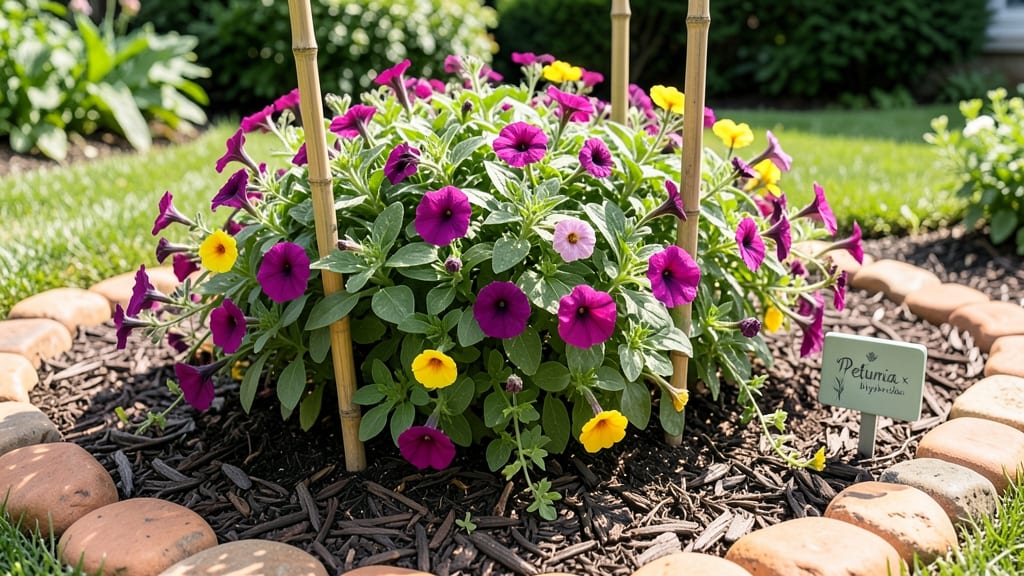
Petunia flower bed ideas transform any yard into a vibrant canvas—bold curves that catch the eye from the sidewalk or vertical privacy screens that soften fences with cascading color. 🌸 I learned the hard way that petunias need more than just dirt: they thrive when planted in well-draining soil, spaced just 12 inches apart, and given at least 6 hours of sun daily.
The payoff? A summer of blooms that rivals any nursery display.
Start with a color story that pops: deep purples paired with white create drama, while sunny yellows and oranges feel cheerful. Mix in trailing varieties like 'Surfinia' for that waterfall effect—perfect for hiding eyesores or framing patios.
My favorite combo? A modern border of black petunias with silver foliage for contrast, or a cottage garden vibe with frilly pinks and lavender.
Once planted, mulch lightly to keep moisture in and weeds out, and deadhead spent blooms weekly to encourage nonstop flowers. Petunias adore being pinched back mid-season too—it forces bushier growth and more blooms.
In hot climates, provide afternoon shade to prevent wilting, while cooler zones can stretch their season with a lightweight row cover in fall.
For vertical privacy, train petunias on trellises or let them spill from hanging baskets—just swap out soil every spring to keep roots fresh. The best part?
These ideas work in containers, raised beds, or in-ground plots, so your vision scales from a small balcony to a full backyard makeover.
📚 In This Guide
- What you need
- Instructions
- Tips and common mistakes
- Wrapping up and next steps
What you need
- ● Petunia plants: Choose 10–20 plants per square foot for a lush look. Opt for a mix of varieties (e.g., Grandiflora, Milliflora, or Trailing types) for texture and color variety. Pro tip: 🌡️ Start with healthy, disease-free plants from a reputable nursery!
- ● Potting soil or garden soil: Use high-quality, well-draining soil (e.g., Miracle-Gro Potting Mix or a blend of 50% garden soil + 50% compost). For vertical gardens, coco coir or hydroponic mats work well.
- ● Mulch: 2–3 inches of organic mulch (e.g., pine bark, straw, or shredded leaves) to retain moisture and suppress weeds.
- ● Fertilizer: A balanced, slow-release fertilizer (10-10-10 or 20-20-20) or a liquid bloom booster (e.g., Miracle-Gro Water Soluble Bloom Booster) for vibrant flowers.
- ● Garden trowel or spade – For digging and planting.
- ● Gloves – To protect your hands from thorns or soil.
- ● Watering can or hose with a gentle spray nozzle – Petunias love consistent moisture!
- ● Measuring tape – To mark out your flower bed or vertical structure.
- ● Pruners or shears – For trimming and shaping plants.
- ○ Stakes or trellis (optional for vertical designs) – Use bamboo stakes, wire mesh, or fabric pockets for climbing varieties.
- ○ Edging tools (optional) – For clean lines in curved or defined beds (e.g., plastic, metal, or stone edging).
- ● Sunlight: Ensure your flower bed gets 6–8 hours of direct sunlight daily—petunias thrive in full sun!
- ● Drainage: Avoid low-lying areas where water pools. Elevate beds if needed.
- ● Space: Plan for 12–18 inches of spacing between plants for air circulation.
- ● Support structure (for vertical designs): Use trellises, fences, or wall-mounted planters if creating a privacy screen.
How to design striking petunia flower beds
Here's my approach to creating petunia displays that pop with color and shape—whether you're framing a patio or adding vertical drama.
🌿 Step 1: Define Your Flower Bed's Purpose and Shape
Start by sketching your bed's outline on paper or directly in the garden using spray paint. Petunias thrive in well-defined curves—think sweeping arcs, crescents, or even asymmetrical teardrops. These shapes prevent soil erosion and create visual flow. For example, a 6-foot-wide crescent around a bench adds depth without overwhelming the space.
Consider the bed's function: Is it a privacy screen (3-4 feet deep), a border (18-24 inches wide), or a focal point (4 feet or wider)? I always measure twice—petunias need 12-18 inches between plants for airflow, so a 4-foot-wide bed fits only 2 rows. Mark stakes at each corner and bend them into your chosen shape before planting.
☀️ Step 2: Choose Petunia Varieties for Height and Color Impact
Mix trailing petunias (like 'Supertunia Silver') for edges and bush varieties (like 'Mitchell') for center mass. Trailing types cascade beautifully over 12-inch-high edges or vertical structures, while bush types create bold, upright blooms. For a vertical privacy screen, combine trailing petunias with 18-inch-tall sunpatiens—they fill gaps while petunias spill over.
Color matters just as much as shape. I recommend 3-5 colors max per bed to avoid visual clutter. For example, pair deep purple ('Black Velvet') with hot pink ('Easy Wave Red') and white ('Snowdrift') for high contrast. Place the darkest colors at the back or center to anchor the design, then layer lighter shades toward the front.
🪴 Step 3: Prepare Soil and Plant for Long-Lasting Color
Petunias demand well-draining, nutrient-rich soil. Amend native soil with 3 inches of compost and a slow-release fertilizer (like 10-10-10) mixed into the top 6 inches. Test soil pH—petunias prefer 6.0-6.5. If your soil is heavy clay, add 1 part perlite to 3 parts soil to prevent root rot.
Plant in late spring after the last frost when soil warms to 60°F. Dig holes twice as wide as the root ball but only as deep—burying stems too deep suffocates new growth. Space plants 12-18 inches apart (closer for trailing types, wider for bush varieties). Water deeply immediately after planting to settle roots, then mulch with 2 inches of shredded bark to retain moisture.
✂️ Step 4: Maintain for Continuous Blooms and Shape
Deadhead spent blooms weekly to encourage nonstop flowering. Pinch back leggy stems by one-third in early summer to promote bushier growth. For trailing varieties, gently weave stems over edges or trellises—never force them—or they’ll snap under their own weight.
Feed every 4-6 weeks with a balanced liquid fertilizer (like 20-20-20) diluted to half strength. Over-fertilizing leads to lush foliage but fewer blooms. Watch for aphids or whiteflies—spray with neem oil at the first sign of sticky residue on leaves. In fall, cut back stems to 6 inches and compost them to prevent disease buildup in next year’s soil.
💧 Step 5: Extend the Season with Smart Watering
Petunias need 1 inch of water weekly, but morning watering prevents fungal diseases. Use drip irrigation or soaker hoses to deliver water at the base—avoid overhead sprinklers, which can stain petals and encourage mildew. In hot climates, water twice weekly and mulch with 3 inches of straw to lock in moisture.
For a fall extension, cover beds with frost cloth when nighttime temps drop to 40°F. Remove it during the day to let plants bask in sunlight. Most petunias survive until first frost, but a little protection keeps them blooming until October or November in many regions. This extra month of color makes the investment worthwhile!
Tips & tricks for stunning petunia flower beds
Here's what I've learned after designing dozens of petunia displays that truly stand out—these are the secrets to making your garden shine.
Design with Flow: When sketching your bed's shape in Step 1, think about how the eye will move through the space. I always create a "visual path" by using wider curves at the front and narrower ones toward the back. For example, a 6-foot-wide crescent around a seating area draws attention naturally while maintaining balance. The key is to avoid sharp angles—petunias thrive in organic, sweeping lines that feel intentional rather than forced.
Layer Heights Strategically: In Step 2, don't just mix trailing and bush varieties—plan their vertical placement. For a privacy screen, place bush petunias at the back (where they'll be 18-24 inches tall) and trailing types at the front. This creates a lush, dense look while preventing leggy stems from overwhelming the design. I've found that adding 12-inch-high edges (like brick or metal) gives trailing varieties something to cascade over beautifully, adding dimension without extra plants.
Soil Science Matters: The soil prep in Step 3 is where most gardeners cut corners—and it shows. After amending with 3 inches of compost and 6 inches of fertilized topsoil, I always test pH with a simple kit. If your soil is too alkaline (above 6.5), add elemental sulfur to lower it gradually. For heavy clay soils, the 1:3 perlite mix is non-negotiable—roots need oxygen, and compacted soil suffocates them. I've seen petunias in poorly amended soil look half as vibrant after just two weeks.
Watering Wisdom: The 1 inch weekly watering guideline in Step 5 is perfect, but timing is everything. I set up a simple drip irrigation system on a timer for morning watering—this prevents fungal diseases that thrive in damp foliage. In hot climates, I increase to twice weekly and add 3 inches of straw mulch to lock in moisture. The difference between wilting petunias and lush ones often comes down to this single habit: watering deeply at the base rather than lightly on the leaves.
Pro Tips for Petunia Flower Bed Ideas
- Here's what I've learned after designing dozens of petunia displays that truly stand out—these are the secrets to making your garden shine.
- Design with Flow: When sketching your bed's shape in Step 1, think about how the eye will move through the space.
- Layer Heights Strategically: In Step 2, don't just mix trailing and bush varieties—plan their vertical placement.
Frequently asked questions
Got questions about creating a stunning petunia flower bed? Here are some of the most common ones—plus quick, practical answers to help you plan with confidence!
When is the best time to plant petunias for a long-lasting flower bed?
Petunias thrive when planted after the last frost in spring (typically May in most U.S. zones). For a fall display, sow seeds or transplant in early summer (June-July). Hardier varieties like Petunia × hybrida can handle light frosts, but most prefer warm soil (60°F+). Pro tip: Use frost cloth if planting early to extend your season!
How do I keep petunias blooming all season without gaps?
Deadhead spent blooms weekly to encourage new flowers, and fertilize every 2-3 weeks with a balanced, water-soluble formula (like 10-10-10). Pinch back leggy stems to promote bushiness. For extra longevity, mulch with straw to retain moisture and cool roots—petunias hate soggy feet!
What pests or diseases should I watch for in petunia flower beds?
Common culprits include aphids, spider mites, and earwigs (they chew leaves and flowers). For prevention, spray neem oil or introduce ladybugs. Fungal issues like powdery mildew thrive in humidity— improve airflow by spacing plants 10-12" apart and watering at the base (not overhead).
Can I mix petunias with other flowers for a layered look?
Pair trailing petunias (like 'Supertunia') with dwarf shrubs (e.g., boxwood) or ornamental grasses for texture. For height, add salvias, snapdragons, or cosmos. Avoid overcrowding—petunias need 6-12" of space. Color tip: Use purples/blues with silver foliage for contrast or hot pinks with white for drama!
Are petunias good for containers or only in-ground flower beds?
Petunias love containers! Choose hanging baskets for trailing varieties or large pots (12"+ diameter) for bush types. Use a well-draining potting mix with perlite and fertilize weekly in containers (they drain faster). For vertical gardens: Try spikestunia or 'Wave' petunias in pocket planters!
Wrapping up and next steps
Transforming your outdoor space with petunia flower bed ideas is a fantastic way to add color, texture, and life to any garden! Whether you’re creating bold curves, lush vertical screens, or whimsical containers, petunias bring effortless charm and versatility.
With the right planning and a dash of creativity, your flower beds can become the star of the show—so grab those gardening gloves and get inspired!
Ready to take the next step? Sketch your design, gather your materials, and start planting! Your future blooming masterpiece is just a few petals away. 🌸✨