
Planting
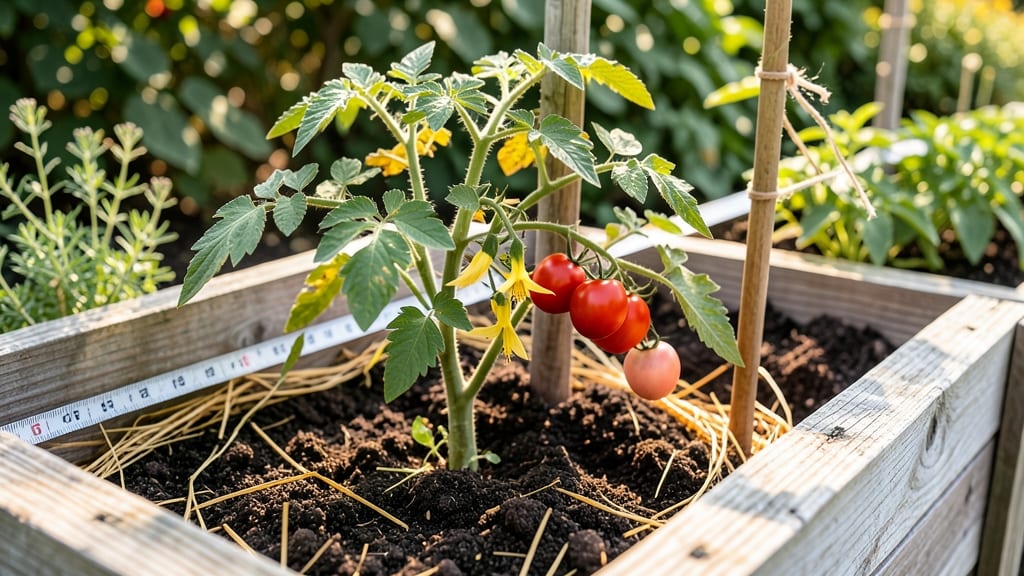
My first raised bed garden tomato spacing mistake cost me 20 pounds of fruit—literally half my harvest—because I crammed plants too close. 🌱 The right spacing isn’t just about fitting more tomatoes in; it’s about airflow, sunlight access, and preventing disease before it starts.
Determinate varieties (the bush types) need 18-24 inches between plants, while indeterminate vining types demand 24-36 inches to sprawl properly.
The math gets even more precise when you factor in your raised bed’s width. A 4-foot-wide bed fits two rows of indeterminate tomatoes with 24-inch spacing, leaving a 12-inch aisle for pruning and harvesting.
I learned this the hard way—trying to reach the middle of a 6-foot bed without stepping on plants leads to broken stems and soil compaction. Smaller beds? Stick to one row per bed or use dwarf varieties like 'Tiny Tim' at 12-inch spacing for high-density yields.
What you’ll end up with is a tomato jungle that produces consistently—no crowded branches blocking sunlight, no fruit rotting from poor airflow. The plants stay healthier, the yields stay reliable, and you’ll actually enjoy harvesting instead of wrestling with overgrown vines.
Plus, proper spacing makes pruning and staking easier, so you spend less time fighting plants and more time enjoying the results.
Works for any raised bed size, from 2x4-foot starter beds to 8x12-foot production plots. The key is matching your spacing to the variety, not just throwing seeds in and hoping for the best.
Here’s how to get it right the first time—and why the extra space pays off in pounds of tomatoes by summer’s end.
📚 In This Guide
- What you need
- Instructions
- Tips and common mistakes
- Wrapping up and next steps
What you need
- ● Raised bed frame: 4’ x 8’ (or custom size) with 10–12” depth (minimum). Cedar or untreated wood works best.
- ● Garden soil: 3–4 cubic feet per square foot of bed space. Mix equal parts of topsoil, compost, and perlite/sand for drainage.
- ● Tomato plants: Determinate varieties: 18–24 plants (spaced 18–24” apart).
- ● Indeterminate varieties: 4–6 plants (spaced 24–36” apart).
- ● Support structures: Cages (5’ tall, 12” diameter) or stakes (6–8’ long) for indeterminate varieties.
- ○ Trellis netting (optional, for sprawling types).
- ● Mulch: Straw or shredded leaves (2–3” layer) to retain moisture.
- ● Fertilizer: Balanced organic (10-10-10) or tomato-specific blend (follow label rates).
- ● Drip irrigation kit for consistent watering.
- ● Pruning shears for trimming suckers.
- ● pH test kit (ideal range: 6.0–6.8).
- ● Row covers (for early-season protection).
- ● Soil thermometer (tomatoes thrive at 70–85°F).
Step-by-Step instructions for raised bed tomato spacing
Here's how to arrange your tomato plants for maximum air circulation, sunlight exposure, and yield potential.
🌱 Step 1: Determine Your Raised Bed Dimensions and Tomato Variety
First, measure your raised bed's length and width to calculate how many tomato plants you can fit. Indeterminate varieties (like 'Sungold' or 'Brandywine') need 18-24 inches between plants and 36-48 inches between rows, while determinate types (like 'Roma' or 'Celebrity') can be spaced 12-18 inches apart with 24-36 inches between rows. Check your seed packets for variety-specific spacing recommendations.
I always sketch a quick grid on paper to visualize the layout. For a 4×8-foot raised bed, you could fit 4 indeterminate plants in a single row or 2 rows of 2 determinate plants each with proper spacing. This prevents overcrowding, which leads to disease and poor fruit production.
📏 Step 2: Calculate Planting Layout Using the "Rule of Thirds"
Divide your bed into thirds to balance plant placement. For example, in an 8-foot-long bed, mark 2-foot intervals to create three planting zones. This ensures even sunlight distribution and easy access for pruning and harvesting. Place taller indeterminate varieties on the north side of the bed to avoid shading shorter plants.
If you're mixing varieties, group plants with similar spacing needs together. For instance, place all indeterminate tomatoes in one section and determinate types in another. This prevents confusion during watering and maintenance. I like to use wooden stakes or landscape fabric markers to outline planting zones before transplanting.
☀️ Step 3: Arrange Plants for Optimal Sunlight and Airflow
Position plants so their canopies don't overlap once they mature. Indeterminate tomatoes can grow 6-10 feet tall, so leave extra space between them. If your bed is narrow (under 4 feet wide), plant in a single row down the center. For wider beds, create two parallel rows with 18-24 inches between plants and 3 feet between rows.
Face plants toward the south (in the Northern Hemisphere) to maximize sunlight exposure. Avoid placing tomatoes in corners or against the bed's edges, where airflow is restricted. Poor airflow increases humidity around the foliage, creating ideal conditions for fungal diseases like early blight. I always leave 6-12 inches of open space around the bed's perimeter for easy maintenance.
🪴 Step 4: Plant and Stake for Structural Support
Dig a hole twice as wide as the root ball but no deeper than the container's depth. Gently remove the plant from its pot and loosen the roots if they're circling. Place the plant in the hole, ensuring the stem is slightly deeper than in the pot (a technique called "setting" that encourages root growth). Fill the hole with soil, pressing lightly to remove air pockets.
Install stakes or cages immediately after planting. For indeterminate varieties, use 5-6 foot bamboo stakes or tomato cages to support the plant's weight. Drive the stake 3-4 inches deep into the soil and tie the main stem loosely with soft plant ties. This prevents stem damage as the plant grows. Water deeply after planting to settle the soil and encourage root establishment.
✂️ Step 5: Monitor and Adjust Spacing as Plants Mature
Check your spacing every 2-3 weeks during the growing season. If plants start to crowd, prune suckers (the small shoots that form in the leaf axils) to maintain airflow. Suckers compete with the main stem for energy, so removing them redirects nutrients to fruit production. Use clean, sharp pruners and make cuts at a 45-degree angle to prevent water from pooling on the wound.
If you notice yellowing leaves or wilting, it could signal overcrowding. Thin out plants if necessary, but avoid removing more than 10-15% of the foliage at once. Instead, focus on pruning lower leaves to improve airflow. I also recommend mulching with straw or shredded leaves to retain moisture and suppress weeds, which further reduces competition for resources.
Tips & tricks for perfect raised bed tomato spacing
These science-backed strategies will help you optimize your tomato garden's layout for maximum yield and plant health.
Variety-Specific Precision: When planning your layout in Step 1, remember that indeterminate varieties like 'Sungold' need that full 18-24 inch spacing between plants—their vines can sprawl dramatically. For determinate types like 'Roma', you can get away with the tighter 12-18 inch spacing because they stay compact. I've seen gardeners accidentally plant indeterminate tomatoes too close together, thinking they're determinate, and end up with tangled messes that produce fewer fruits.
Visual Layout Planning: Before you even dig your first hole, sketch your bed layout on paper using the "Rule of Thirds" from Step 2. This isn't just artistic flair—it's a proven design principle that creates balance. For that 4×8-foot bed, draw your 2-foot intervals and actually walk through the spacing mentally. I once tried planting without this step and ended up with two plants too close to the north edge, where they got shaded by the bed's frame all afternoon.
Airflow Optimization: The 6-12 inch perimeter space mentioned in Step 3 is your secret weapon against fungal diseases. This open zone allows air to circulate around your entire bed, preventing that humid microclimate where early blight thrives. Pro tip: If your bed has corners, consider adding diagonal planting lines rather than straight rows to eliminate those airflow-dead zones where plants often get crowded together.
Structural Support Planning: When installing those 5-6 foot bamboo stakes in Step 4, think ahead about how your plants will grow. Place stakes slightly to the north side of each plant (in the Northern Hemisphere) so they don't cast shadows on the foliage as they mature. I've seen gardeners place stakes too close to the south side, where they block sunlight during critical growth periods. Also, bury those stakes 3-4 inches deep—this creates a stable anchor that won't wobble when you tie your plants later in the season.
Pro Tips for Raised Bed Garden Tomato Spacing
- These science-backed strategies will help you optimize your tomato garden's layout for maximum yield and plant health.
- Variety-Specific Precision: When planning your layout in Step 1, remember that indeterminate varieties like 'Sungold'...
- Visual Layout Planning: Before you even dig your first hole, sketch your bed layout on paper using the "Rule of Third...
Frequently asked questions
Got questions about optimizing your raised bed tomato garden? You’re not alone! Here are answers to the most common queries—so you can plant with confidence and watch those tomatoes thrive.
What’s the ideal spacing for tomato plants in a raised bed?
For determinate (bush) tomatoes, space plants 18–24 inches apart in rows 2–3 feet apart. Indeterminate (vining) varieties need 24–36 inches between plants and 3–4 feet between rows. Taller varieties may require trellising to save space!
When is the best time to plant tomatoes in a raised bed?
Wait until after the last frost when soil temps hit 60°F+. Start seeds indoors 6–8 weeks before transplanting (typically March–April in most zones). A soil thermometer helps—tomatoes hate cold feet!
Can I plant tomatoes closer together if my raised bed is small?
Yes, but expect smaller yields and more competition. For tight spaces, try 12–18 inches apart for determinate types or prune aggressively to encourage airflow. Add companion plants (like basil or marigolds) to maximize space without sacrificing health.
Why are my tomatoes struggling despite proper spacing?
Check for overcrowding (even if spaced correctly), poor drainage (raised beds need holes!), or pests/diseases (like blight or aphids). Yellow leaves? Could be nitrogen deficiency—top-dress with compost. Wilting? Underwatering or root rot—adjust care and monitor soil moisture.
Are there space-saving alternatives to traditional tomato spacing?
Try these tricks:
- Vertical gardening: Use cages, trellises, or stakes to grow indeterminate varieties upward.
- Square-foot gardening: Plant 1 tomato per square foot (4 plants in a 2’x2’ grid) with heavy pruning.
- Dwarf varieties: Choose compact types like ‘Tiny Tim’ or ‘Patio Princess’ for balconies.
Wrapping up and next steps
Perfect tomato spacing in your raised bed isn’t just about guesswork—it’s about science-backed planning that boosts yields and keeps your plants thriving. 🌱 Whether you’re growing cherry tomatoes or heirloom slicers, the right spacing ensures airflow, sunlight, and room to grow.
Now that you’ve got the math down, it’s time to roll up your sleeves and plant!
Ready to take the next step? Sketch your raised bed layout, grab those seedlings, and start planting with confidence. Happy gardening—your future tomato harvests will thank you! 🍅✨