
Planting
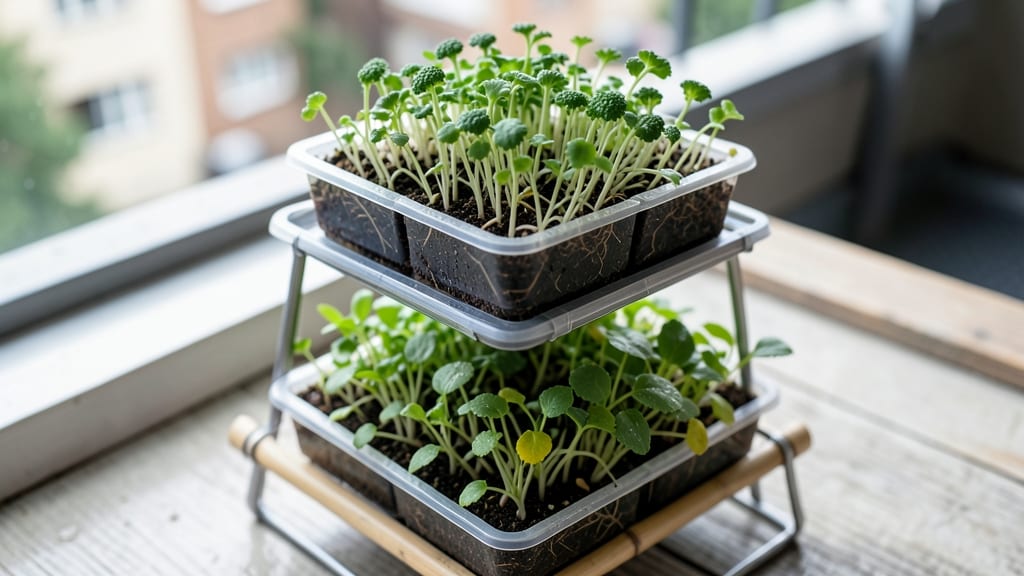
Maximize your small garden space with these 10 raised bed plant layouts designed to boost yields while saving room. Perfect for urban balconies, patios, or tight yards, these combinations pair complementary plants for efficiency and beauty.
Classic Three Sisters Garden Layout

Transform your raised bed into a thriving ecosystem with the Three Sisters Garden Layout, a time-tested Native American technique that maximizes space and minimizes labor. This trio—corn, beans, and squash—grows together in perfect harmony, with each plant supporting the others naturally.
Start by planting corn first, as its stalks will act as trellises for the pole beans you’ll plant around them. The beans fix nitrogen in the soil, enriching it for the squash vines, which sprawl across the bed, suppressing weeds and retaining moisture. In a 4x4-foot raised bed, you can fit 4 corn plants, 8 bean plants, and 2 squash vines, creating a lush, self-sustaining garden.
This layout is ideal for beginners or urban gardeners with limited space, offering a bountiful harvest with minimal maintenance. Plus, it’s a beautiful way to connect with tradition while growing your own food! 🌱
Mediterranean Herb Square Design
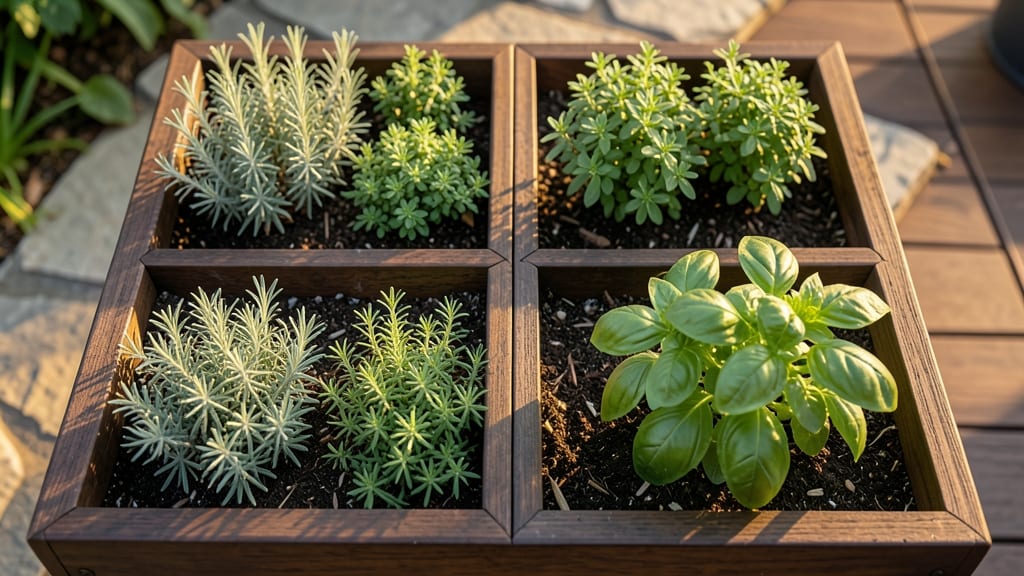
Transform your kitchen garden into a fragrant, functional powerhouse with a Mediterranean herb square—a space-saving design that brings the flavors of Italy and Greece to your fingertips. This 16-inch square-foot layout combines four essential herbs in perfect harmony, making it ideal for small spaces or urban balconies where every inch counts.
Plant one square each of rosemary, thyme, oregano, and basil in a grid pattern, spacing them evenly within the square. Rosemary and thyme thrive in full sun (6+ hours daily) and well-draining soil, while basil prefers partial shade and consistent moisture. The square-foot method ensures no competition for nutrients, and the aromatic trio naturally deters pests like aphids and mosquitoes. Harvest leaves as needed—basil and oregano can be snipped frequently, while rosemary and thyme reward patience with woody stems that last for years.
This layout is perfect for beginner gardeners or anyone short on space who loves fresh herbs. The compact design keeps everything within arm’s reach, making it easy to snip leaves for cooking or tea. Plus, the visual appeal of varying textures and heights adds charm to any garden corner. 🌿
Vertical Salad Tower Layout
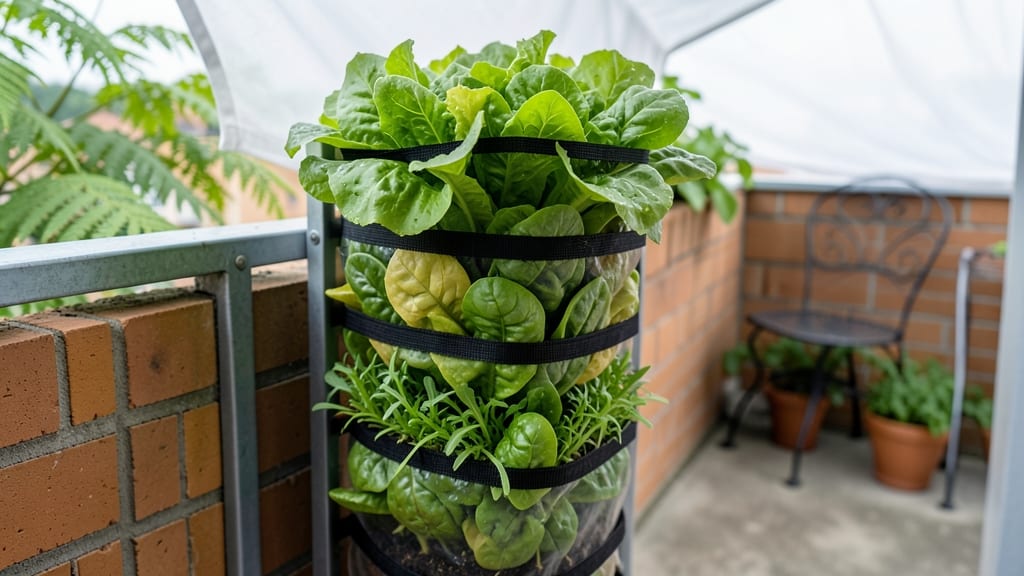
Turn your shady balcony or tiny urban patio into a fresh salad haven with a vertical salad tower layout. This space-saving design lets lettuce, spinach, and arugula grow upward in stacked pockets, perfect for areas with limited sunlight and floor space.
Use a pre-made vertical planter or DIY pockets from recycled containers. Plant leafy greens with varying maturity rates—like quick-growing arugula in the top layer and slower spinach below—to ensure continuous harvests. Keep soil moist (but not soggy) and place in partial shade for best results. This layout thrives in 4-6 hours of indirect light daily, making it ideal for city dwellers.
Urban gardeners with balconies or small yards will love this low-maintenance solution. It’s also perfect for beginners who want fresh greens without the space commitment. 🌿
Pest-Repelling Flower-Vegetable Border
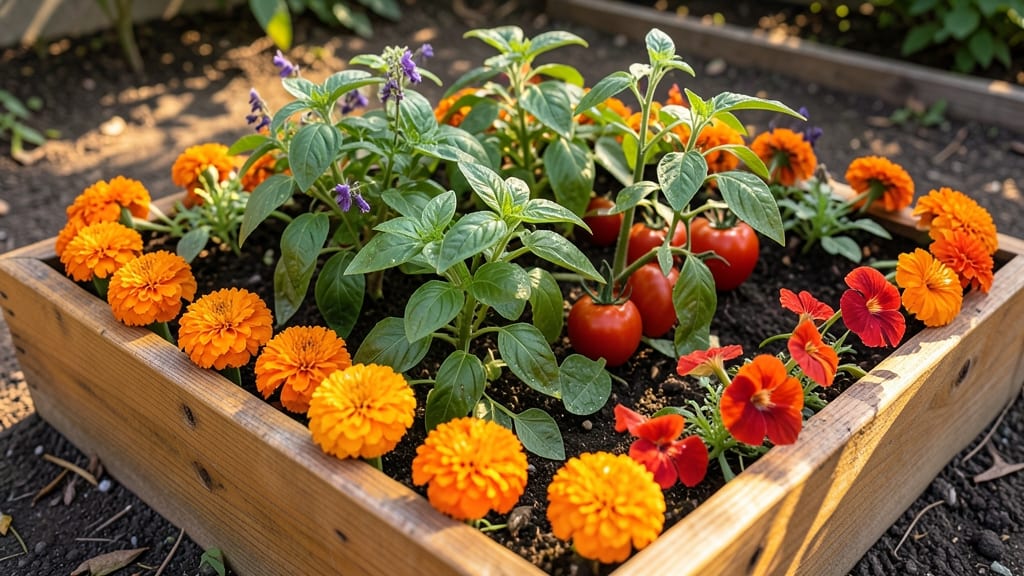
Tired of pests ruining your tomato and pepper harvests? A pest-repelling flower-vegetable border uses nature’s own defense system—bright marigolds, peppery nasturtiums, and fragrant basil—to keep bugs away while adding a pop of color to your raised bed.
Plant marigolds along the outer edges to deter nematodes and aphids, then weave nasturtiums between your tomatoes and peppers—their strong scent confuses pests like squash bugs. Tuck basil near peppers to repel thrips and mosquitoes while enhancing their flavor. This layout works in beds as small as 2x4 feet, making it perfect for urban gardeners or balconies.
This dual-purpose design saves space and time—no chemical sprays needed! It’s especially great for beginners who want low-maintenance pest control with a stunning visual. 🌻
Square-Foot Carrot and Onion Grid
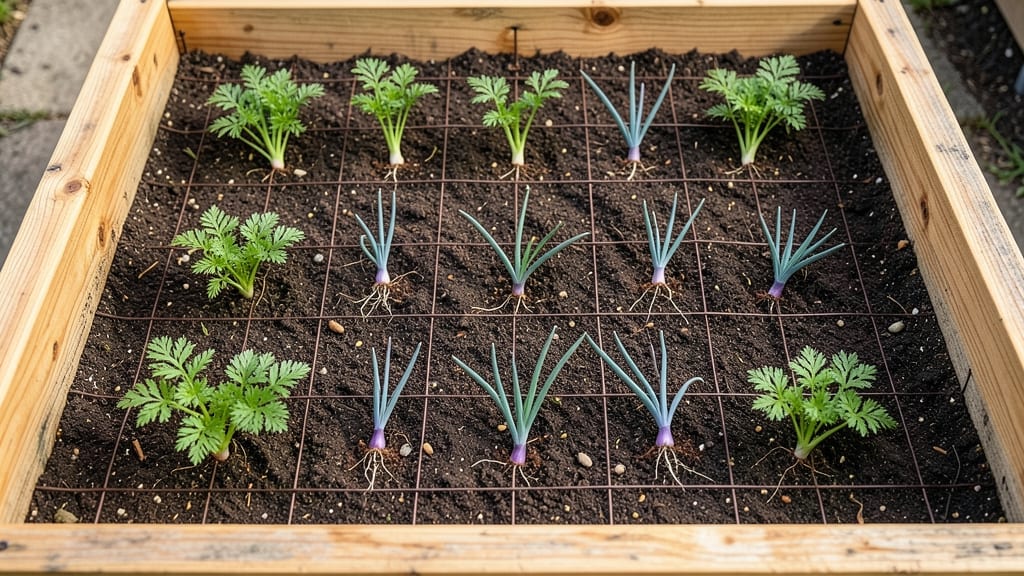
Tired of struggling with overcrowded root vegetables in your small raised bed? The square-foot carrot and onion grid solves this by giving each plant its own dedicated 4-inch square—no more competition for space or tangled roots at harvest time.
Plant carrots and onions in alternating squares to naturally deter pests (onions repel carrot flies) while maximizing your bed's capacity. Use a simple grid system with wooden stakes or string to mark each square, making it easy to track planting and thinning. This layout works especially well for short-season varieties like 'Paris Market' carrots and 'Yellow Granex' onions, which mature quickly in urban environments.
Perfect for urban gardeners with limited space, this method ensures you'll harvest crisp, straight carrots and sweet onions without the frustration of tangled roots. 🌱
Strawberry and Lettuce Interplanting
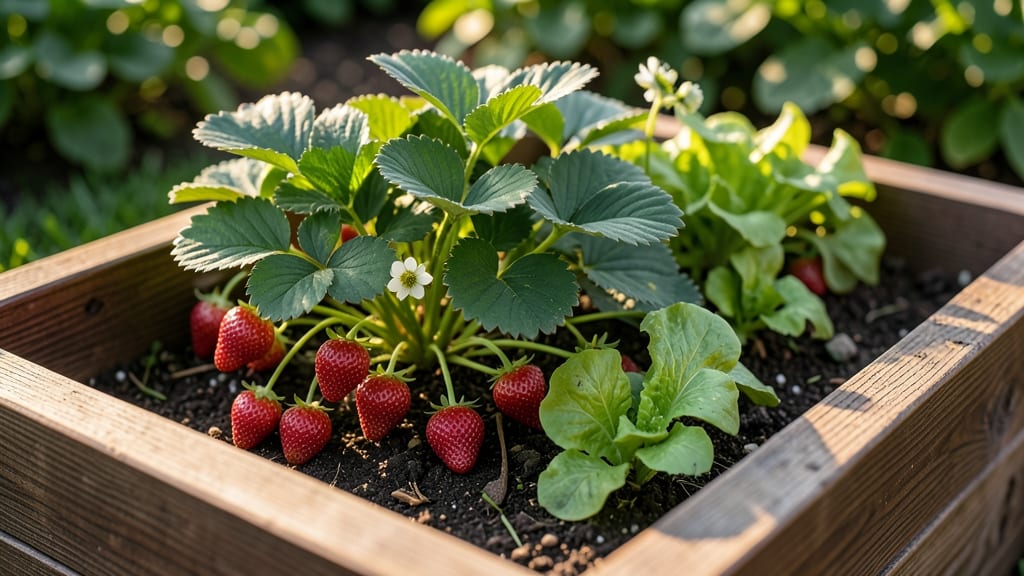
Want to stretch your raised bed’s productivity without sacrificing space? Try pairing June-bearing strawberries with leaf lettuce—a dynamic duo that turns a single bed into a year-round harvest machine. The shallow roots of lettuce nestle between strawberry plants, using vertical space efficiently while providing shade that keeps berries cooler and extends their harvest season.
Start by planting strawberries in early spring, spacing them 12 inches apart. Once they establish, tuck lettuce seeds between the rows in late spring or early fall. The lettuce’s quick growth (30-60 days) ensures you’ll have fresh greens before the strawberries fruit, while the strawberries provide dappled shade that prevents lettuce from bolting in summer. For best results, choose buttercrunch or romaine lettuce—both tolerate partial shade and grow well in cooler months.
This layout is perfect for urban gardeners with limited space or anyone who wants to maximize their raised bed’s potential. You’ll enjoy fresh strawberries in summer and crisp lettuce in spring and fall—all from the same bed! 🌱
Chili Pepper and Basil Companion Bed
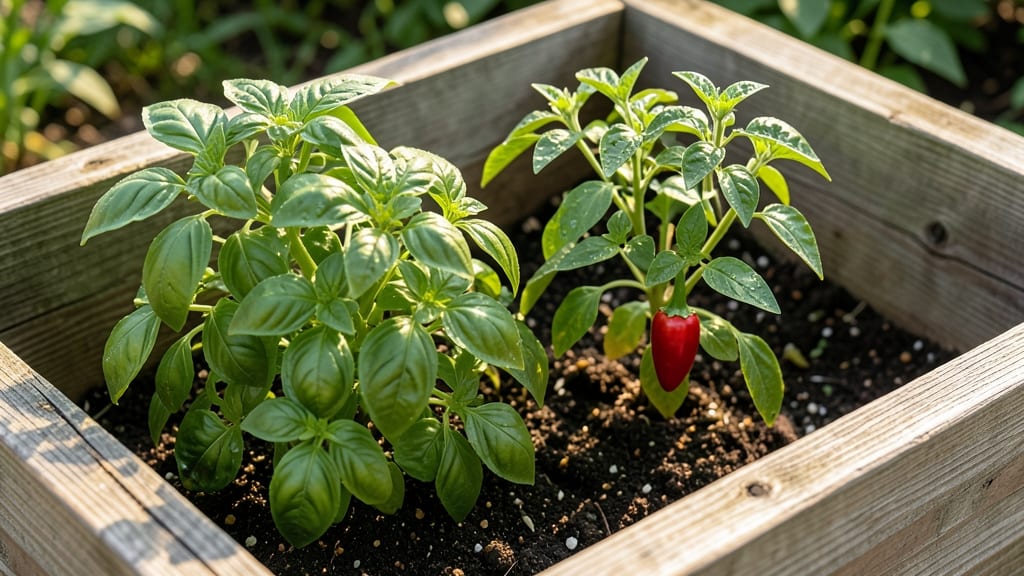
Spice up your small raised bed with a chili pepper and basil companion bed, where fiery flavors and fragrant leaves work together to boost growth and deter pests. This dynamic duo thrives in full sun (6+ hours daily) and shares the same watering needs, making maintenance a breeze while creating a built-in pest control system.
Plant chili peppers in the center of your bed, surrounded by basil plants spaced 12 inches apart. The basil’s strong scent repels pests like thrips and mosquitoes, while its shade helps keep pepper plants cooler in hot afternoons. For extra pollinator appeal, add a few marigolds at the edges—their bright blooms attract bees that pollinate both plants. This layout works perfectly in a 3x3-foot bed, ideal for urban gardeners or balcony containers.
Gardeners who love fresh, homegrown salsas and pest-free harvests will adore this space-efficient combo. The basil also enhances pepper flavor while keeping bugs at bay—nature’s perfect pairing! 🌱
Miniature Potato and Garlic Tower
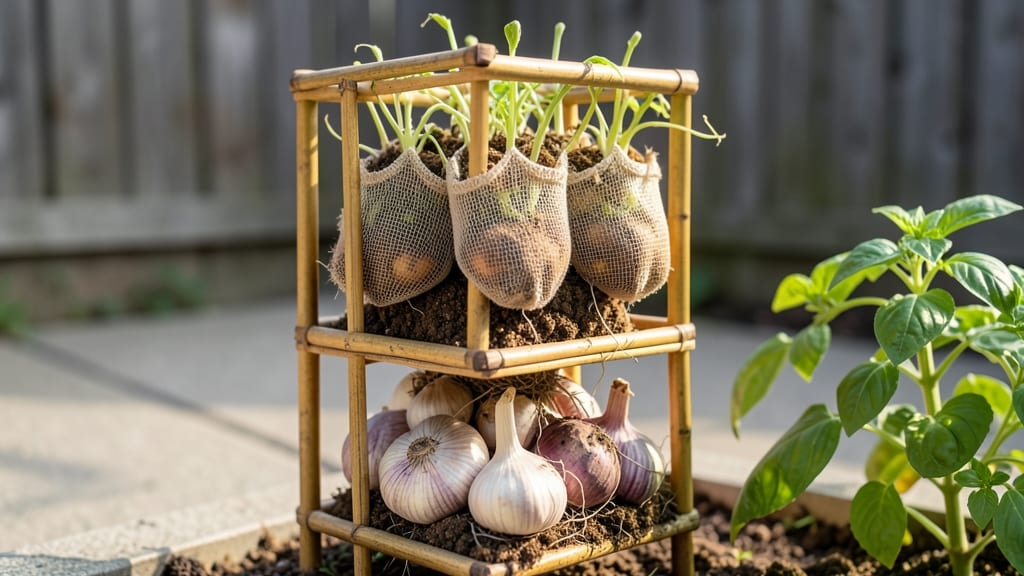
Double your harvest in half the space with a miniature potato and garlic tower—a clever vertical solution for urban gardeners or small yards. This two-tiered system lets potatoes grow upward in hanging pockets while garlic bulbs nestle in the bottom layer, creating a self-contained, space-saving powerhouse.
Start by planting garlic cloves in the bottom layer in early fall for a spring harvest, then add potato seed pieces to the upper pockets once the garlic foliage dies back. The potatoes will trail downward naturally, while the garlic below benefits from the potatoes' shade. This layout works in beds as small as 2x2 feet, making it perfect for balconies or patios with limited floor space.
Ideal for small-space gardeners, this tower maximizes yield without sacrificing aesthetics. Plus, the garlic's natural pest-repelling properties protect your potatoes from common bugs. 🌱
Succulent and Herb Desert Garden
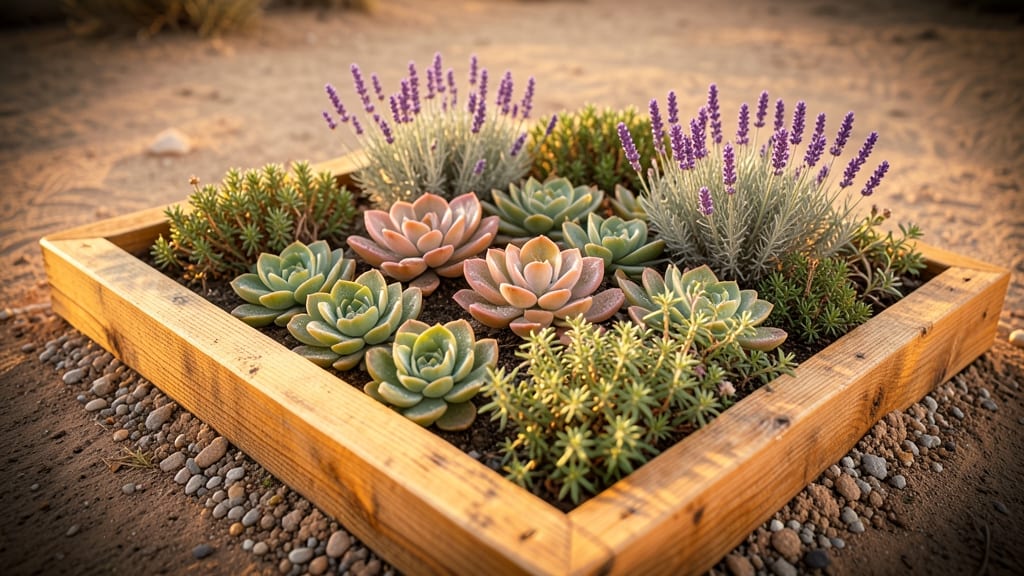
Create a stunning, low-maintenance desert oasis in your urban raised bed with a succulent and herb desert garden—perfect for hot, dry climates or water-conscious gardeners. This layout combines drought-tolerant sedum with fragrant oregano and lavender, all thriving in sunny conditions with minimal watering.
Start by filling your bed with a well-draining cactus/succulent mix and arrange sedum (like 'Autumn Joy' or 'Dragon’s Blood') in clusters, leaving space for oregano and lavender to fill gaps. These plants share similar needs: full sun (6+ hours daily) and infrequent watering (every 2-3 weeks once established). The lavender adds height and fragrance, while oregano spreads gently, creating a textured, aromatic display.
This layout is ideal for urban balconies, rooftops, or fire-prone areas where water conservation is key. The combination of hardy succulents and useful herbs ensures beauty and functionality without the hassle of frequent care. 💚
Microgreens and Sprout Stacking System

Turn your tiny balcony or kitchen counter into a year-round harvest hub with a microgreens and sprout stacking system—the ultimate space-saving solution for urban gardeners. This vertical setup lets you grow fast-maturing greens like broccoli, radish, or sunflower sprouts in stacked trays, each ready to harvest in just 7-14 days without taking up floor space.
Start with a 3-5 tier tower (or DIY your own from plastic bins) and plant each tray with a different variety. Use soil blocks or coco coir for microgreens (like pea shoots or wheatgrass) and jar sprouting for lentils or alfalfa. Rotate trays weekly to maximize sunlight exposure—indoors near a sunny window or outdoors in partial shade. This system thrives on consistent moisture (mist daily) and cool temperatures (60-75°F), making it perfect for apartments or small patios.
Ideal for busy gardeners or beginners, this layout delivers fresh, nutrient-packed greens year-round with minimal effort. Plus, the modular design lets you expand or shrink as needed—no wasted space or soil! 🌱