
Pruning
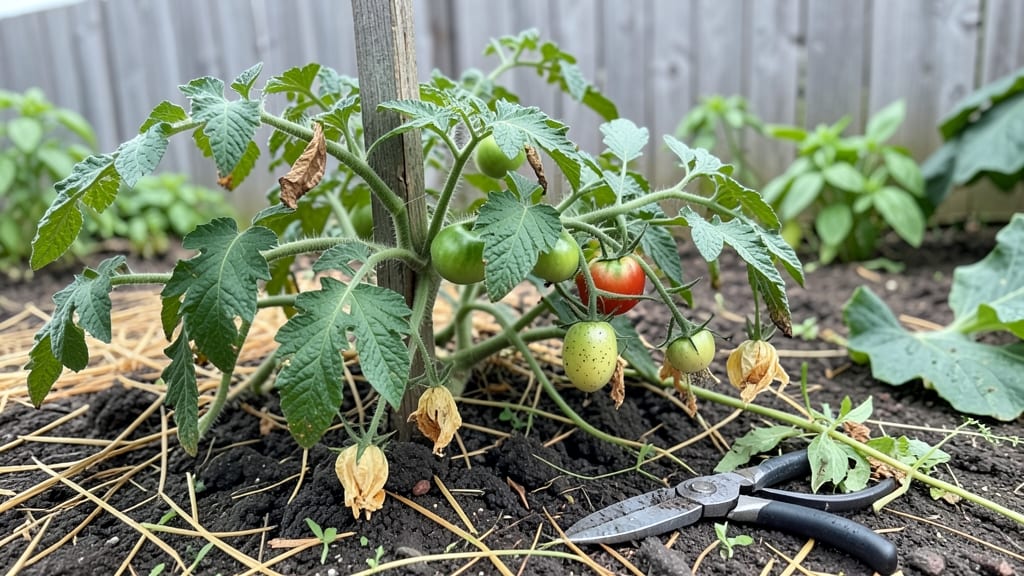
Trimming tomato leaves isn't just about keeping plants tidy—it's the secret to doubling your harvest while preventing disease. I spent years watching my tomatoes struggle with blight and weak fruit until I learned the right way to prune.
The key isn't aggressive cutting but strategic trimming that lets sunlight and air reach where it matters most.
You only need sharp pruners (or clean scissors) and about 15 minutes once a week. Focus on removing the bottom leaves that touch soil—this stops rot—and cut out those "suckers" (the little shoots between stems and leaves).
Early pruning gives plants energy to produce fruit instead of extra foliage, and it keeps pests from hiding in dense leaves.
By midseason, your plants will look like sturdy trees with open canopies, not tangled bushes. The fruits grow larger, ripen faster, and stay cleaner. You'll notice fewer wilting leaves, fewer pests, and a garden that actually produces what you planted for.
The difference is shocking—once you see it, you'll never go back.
Works for both determinate (bush) and indeterminate (vining) tomatoes, though vining types need more frequent attention. Start early, keep it consistent, and your tomatoes will reward you with heavier, healthier fruit all season long. Let's get those pruners ready!
📚 In This Guide
- What you need
- Instructions
- Tips and common mistakes
- Wrapping up and next steps
What you need
- ● Pruning shears: Bypass-style (sharp, clean-cut blades) – 1 pair. Avoid dull tools that crush stems.
- ● Gloves: Heavy-duty gardening gloves (cut-resistant for thorny varieties like Solanum lycopersicum) – 1 pair.
- ● Disinfectant: 70% isopropyl alcohol or a 10% bleach solution (1 part bleach to 9 parts water) – small spray bottle.
- ● Trash bag or bucket: For pruned leaves/debris – 1-2 (depending on plant size).
- ● Watering can or hose: With a gentle spray nozzle – 1 (for post-pruning hydration).
- ● Hand pruners: For smaller stems or tight spaces – 1 pair.
- ● Plant tie or twine: To support heavy tomato branches post-pruning – 1-2 rolls.
- ● Compost bin: For repurposing healthy pruned leaves (avoid diseased ones!).
- ● Plant food: Balanced fertilizer (10-10-10 or tomato-specific) – small bag (apply 2-3 weeks after pruning).
Instructions for pruning tomato leaves to boost your harvest
Here's how I prune tomato plants for stronger growth and bigger yields—without stressing the plant.
Identify and Remove Suckers Early
Suckers are the small shoots that grow in the crotch between the main stem and a branch. They drain energy from your plant instead of directing it to fruit production. I check for suckers every 7-10 days once the plant reaches 12 inches tall, pinching them off just above the leaf they grow from. Use your thumb and forefinger to gently twist and remove them—don't tear the stem, which can damage the plant.
Here's the thing: if you wait too long, suckers turn woody and hard to remove. The earlier you catch them, the easier the process. Focus on the lower third of the plant first, as these suckers compete most directly with your main fruit-producing branches. You'll know you're doing it right when you see no new shoots forming in that area within a few days.
Prune Lower Leaves for Airflow and Sunlight
Remove any leaves that touch the soil or hang below the first flower cluster. These leaves create a damp environment that invites disease and block sunlight from reaching the fruit. I use clean, sharp pruning shears to make a clean cut just above a leaf node or branch. Never tear leaves—it leaves jagged edges that slow healing and attract pests.
You might think removing leaves reduces photosynthesis, but the plant actually benefits from better airflow and sunlight penetration. Aim to keep the lower 12-18 inches of the stem free of foliage, especially in humid climates. If your plants are in containers, you'll need to prune more aggressively since airflow is even more critical in confined spaces.
Thin Overcrowded Branches for Stronger Growth
If your tomato plant develops multiple main stems (instead of one central leader), choose the strongest, most vertical one to keep and prune the others at the base. This ensures all the plant's energy goes into one vigorous stem. I look for stems with the thickest diameter, darkest green leaves, and most upright growth—these are the winners.
For indeterminate varieties (the ones that keep growing all season), I also prune the top of the plant after the first 5-7 fruit clusters have set. This redirects energy to existing fruit rather than new growth. You'll notice your remaining branches thicken and your existing tomatoes grow larger and ripen faster.
Maintain Pruned Plants Through the Season
After your initial pruning, check your plants weekly for new suckers or overcrowded branches. I always prune in the morning when the plants are dry, which reduces the risk of disease entering through fresh cuts. Remove any yellow or diseased leaves immediately—they spread problems faster than you think.
Don't overdo it: never remove more than one-third of the foliage at a time. The plant needs leaves to photosynthesize and feed itself. If you see new growth slowing after pruning, you may have removed too much. Watch for dark green, healthy new leaves as your signal that the plant is recovering and thriving.
Tips & tricks for pruning tomato plants effectively
Pruning tomato plants might seem intimidating, but these simple tricks will help you achieve stronger growth and bigger harvests without stressing your plants.
Timing is Everything: The 7-10 day interval for checking suckers (Step 1) works best when your plants are actively growing but not under stress. Early morning is ideal because plants are hydrated and cuts heal faster. If you notice new suckers appearing faster than 7-10 days, your plant might be getting too much nitrogen—adjust your fertilizer to balance growth and fruiting.
Tool Selection Matters: While you can pinch suckers with your fingers, invest in a small pair of clean, sharp pruning shears for larger cuts. I sterilize my shears with rubbing alcohol between plants to prevent disease spread. For container-grown tomatoes, I use a pair of scissors with rounded tips to avoid damaging the main stems when pruning crowded branches in Step 3.
Visual Cues for Pruning: When pruning lower leaves (Step 2), look for leaves that are touching the soil or hanging below the first flower cluster—these are your targets. For indeterminate varieties, count your fruit clusters from the bottom up. After you've identified 5-7 clusters, that's your pruning point for the top of the plant. This visual guide ensures you're not over-pruning while still directing energy to fruit production.
Seasonal Adjustments: In hot, dry climates, you might need to prune more aggressively to improve airflow, while in cooler climates, you can be slightly more generous with foliage. Always follow the one-third rule from Step 4—this applies year-round. If your plants are struggling after pruning, you've likely removed too much foliage, and the plant needs time to recover before producing new leaves.
Pro Tips for Trim Tomato Leaves
- Pruning tomato plants might seem intimidating, but these simple tricks will help you achieve stronger growth and bigger harvests without stressing your plants.
- Timing is Everything: The 7-10 day interval for checking suckers (Step 1) works best when your plants are actively growing but not under stress.
- Tool Selection Matters: While you can pinch suckers with your fingers, invest in a small pair of clean, sharp pruning shears for larger cuts.
Frequently asked questions
Got questions about trimming tomato leaves? You’re not alone! Here are some of the most common concerns—and straightforward answers to help you prune like a pro.
Why should I trim tomato leaves at all?
Trimming tomato leaves (especially lower ones) improves airflow, reduces disease risk, and directs energy to fruit production. It’s like giving your plant a spa day—less stress, more flavorful tomatoes! Focus on removing yellowed or diseased leaves first.
When is the best time to trim tomato leaves?
Start when your plant is about 1–2 feet tall, then prune throughout the growing season (spring to early summer). Avoid trimming during extreme heat or cold—wait for mild, dry days. Early morning is ideal to let wounds heal faster.
How much of the tomato plant can I safely remove?
For indeterminate tomatoes, trim up to ⅓ of the foliage (focus on suckers and lower leaves). For determinate varieties, minimal pruning is best—just remove diseased or crowded leaves. Never trim more than 20% at once to avoid shocking the plant.
What if my tomato plant looks sad after pruning?
Don’t panic! Mild wilting is normal as the plant adjusts. Water deeply and avoid fertilizing for 1–2 weeks. If leaves turn yellow or drop heavily, you may have over-pruned. Next time, go slower and prioritize healthy growth over aggressive trimming.
Are there alternatives to trimming tomato leaves?
Yes! If pruning feels overwhelming, try these:
- Thinning vines: Space plants 18–24 inches apart to reduce competition.
- Mulching: Keeps soil moist and discourages fungal growth.
- Cage/trellis support: Elevates lower leaves for better airflow.
Wrapping up and next steps
Trimming tomato leaves isn’t just about aesthetics—it’s a game-changer for healthier plants and bigger harvests! 🌱 By removing diseased foliage, improving airflow, and directing energy to fruit production, you’re setting your tomatoes up for success. Remember, consistency and gentle hands are key, so don’t rush the process.
Ready to level up your garden? Grab your pruners and give your tomato plants the TLC they deserve—your future salads will thank you! For extra tips, bookmark this guide or share it with fellow green thumbs. Happy pruning! 🌿