
Flowers
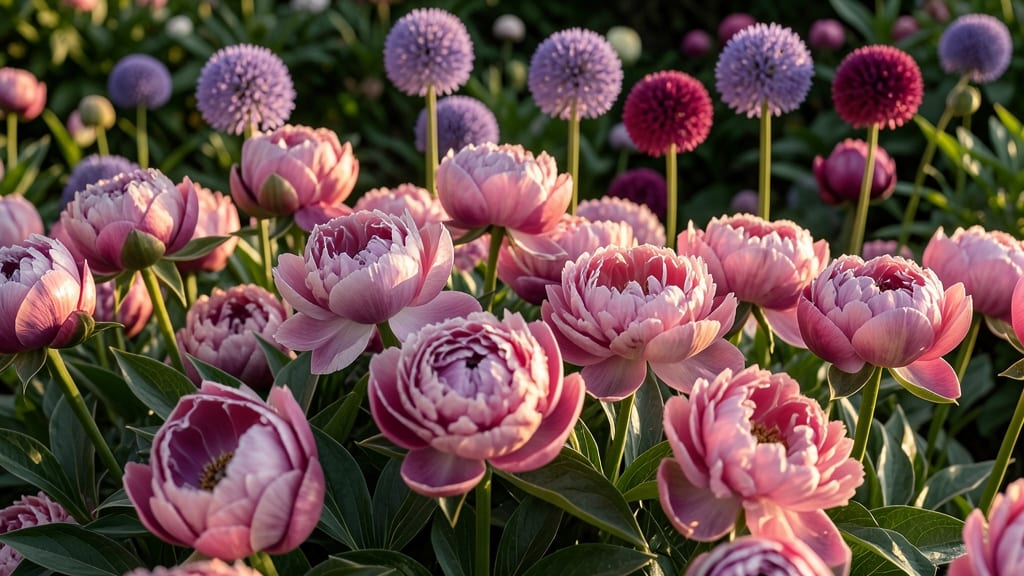
Tired of seasonal color that fades fast? These 10 perennial flower bed designs deliver nonstop blooms with minimal maintenance—no deadheading required. Perfect for busy gardeners who still want a show-stopping landscape.
Black-Eyed Susan Meadow Mix
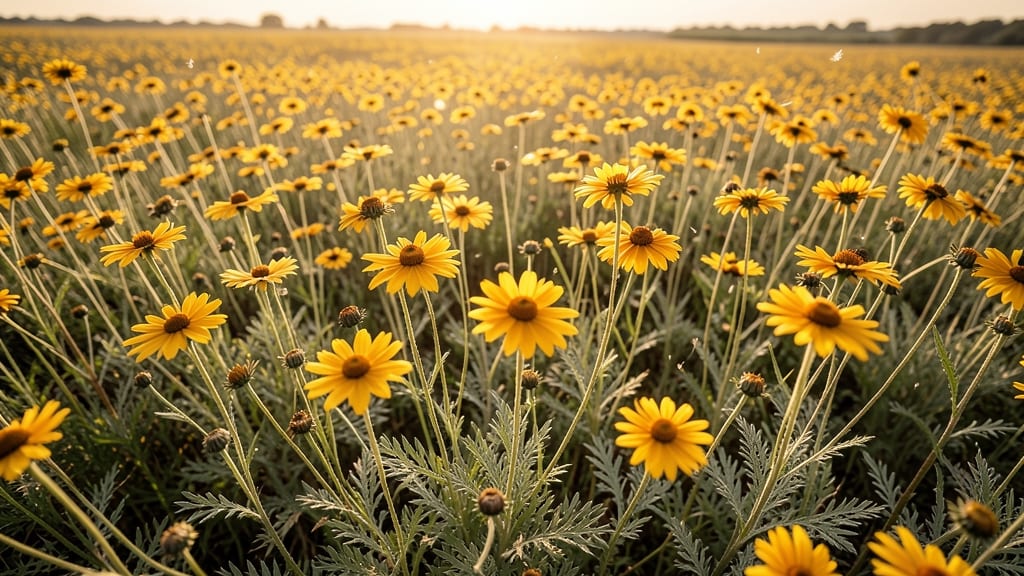
Want a perennial flower bed that practically takes care of itself while attracting butterflies and bees? The Black-Eyed Susan Meadow Mix delivers golden blooms that self-seed year after year, creating a naturalized meadow look with almost no effort.
This hardy mix thrives in full sun and well-drained soil, producing cheerful yellow flowers from mid-summer through fall. The key to its magic? It self-seeds prolifically, filling in gaps and spreading naturally to create a lush, wildflower meadow effect. Plant seeds directly in the spring or fall for the most authentic look.
Perfect for cottage gardens or low-maintenance borders, this mix requires minimal pruning and no deadheading—just watch the pollinators flock in. 🌻
Russian Sage and Lavender Drift
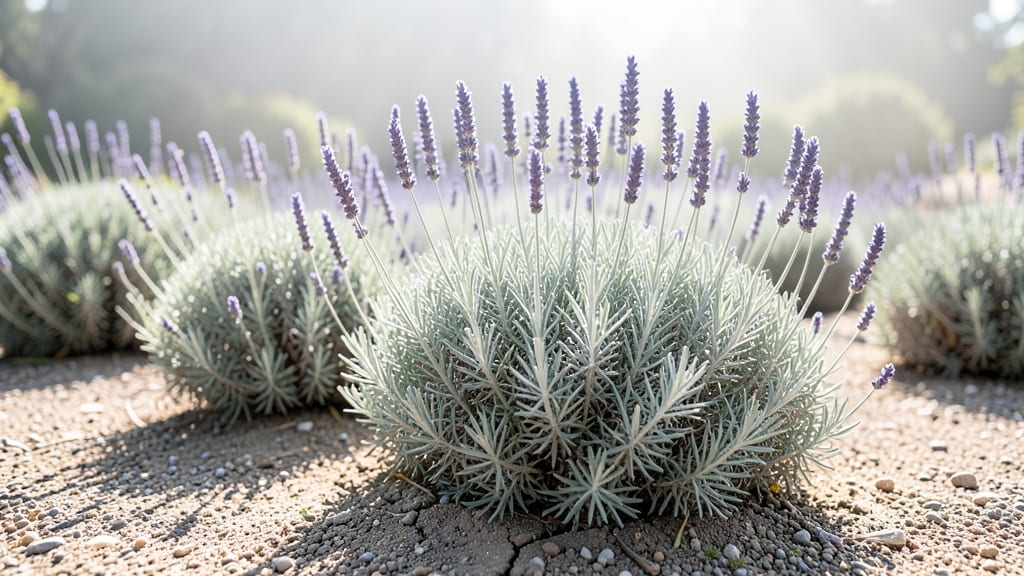
Want a modern, low-water garden that thrives on neglect? The Russian Sage and Lavender Drift combo delivers silvery foliage and purple spikes that bloom from summer straight through fall—no fuss, just beauty. These drought-tolerant stars shine brightest in full sun and well-drained soil, making them ideal for dry climates or busy gardeners.
Plant Russian Sage (Perovskia atriplicifolia) at the back for its airy, 6-foot-tall spikes, while Lavender (Lavandula) in front adds aromatic, silvery-green foliage and soft purple blooms. Both attract bees, butterflies, and hummingbirds while repelling deer—perfect for pollinator-friendly spaces. Mulch with gravel to retain moisture and keep weeds away.
This duo thrives in modern landscapes, container gardens, or even as a living screen. Urban gardeners and eco-conscious plant lovers will appreciate its zero-maintenance charm and year-round interest. 🌿
Coneflower and Yarrow Pollinator Patch
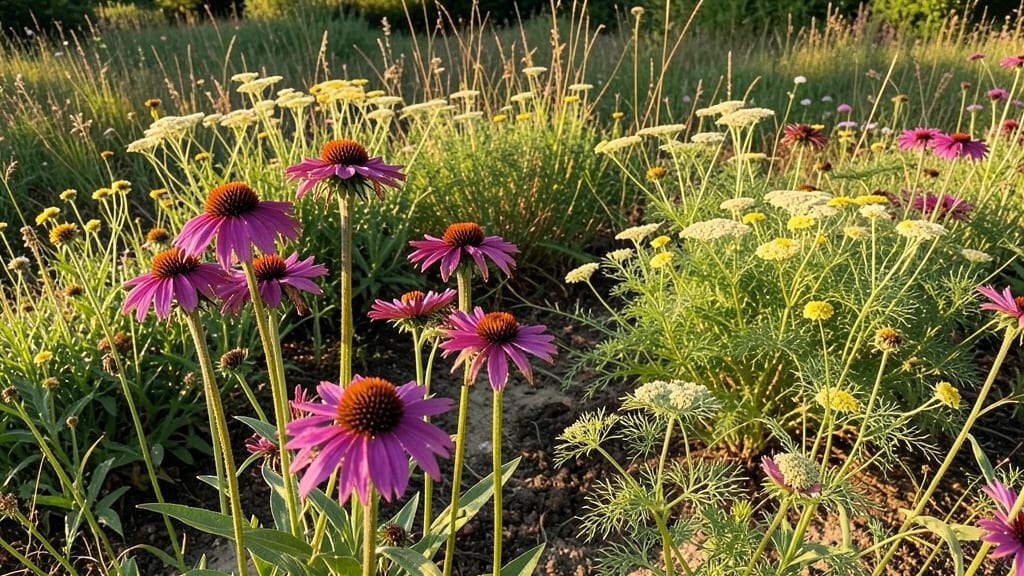
Want a garden that buzzes with life while requiring almost no upkeep? A coneflower and yarrow pollinator patch brings bees, butterflies, and hummingbirds to your yard—all while blooming nonstop from early summer to frost.
Plant purple coneflower (Echinacea) for its bold, daisy-like blooms and bright yellow yarrow (Achillea millefolium) for its fern-like foliage and cheerful flowers. Both thrive in full sun and dry soil, making them perfect for native gardens or drought-prone areas. The best part? They rebloom effortlessly without deadheading, giving pollinators a steady food source.
This mix is ideal for wildlife gardeners, urban homesteaders, or anyone who wants a low-maintenance, high-impact bed. Just add mulch to retain moisture, and watch your garden become a pollinator paradise. 🌻
Shasta Daisy and Catmint Border
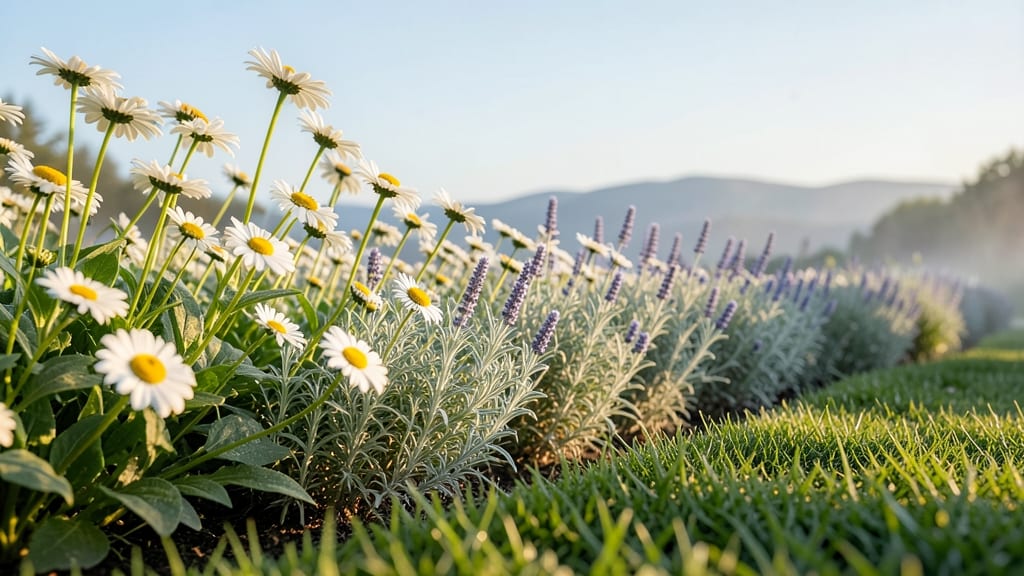
Craving a fragrant, pest-repelling border that thrives with minimal effort? The Shasta Daisy and Catmint Border delivers timeless elegance while keeping your garden healthy—no chemicals required. These classic pairings create a soft, romantic edge that blooms from early summer through fall, even in partial shade where many perennials struggle.
Start with Shasta Daisies (Leucanthemum × superbum) for their bold white blooms and sturdy stems, then tuck in catmint (Nepeta) for its silver-blue foliage and tiny lavender flowers. The catmint’s strong scent deters deer, rabbits, and even some insects, while its drought-tolerant nature means you’ll water less. Plant daisies in the back (3–4 feet tall) and catmint in front (1–2 feet) for a layered look that stays lush with just occasional deadheading.
This border is ideal for cottage gardens, woodland edges, or foundation plantings—perfect for gardeners who love low-maintenance charm with a touch of nostalgia. The fragrant combo also attracts pollinators while keeping pests at bay. 🌷
Daylily Rainbow Curtain
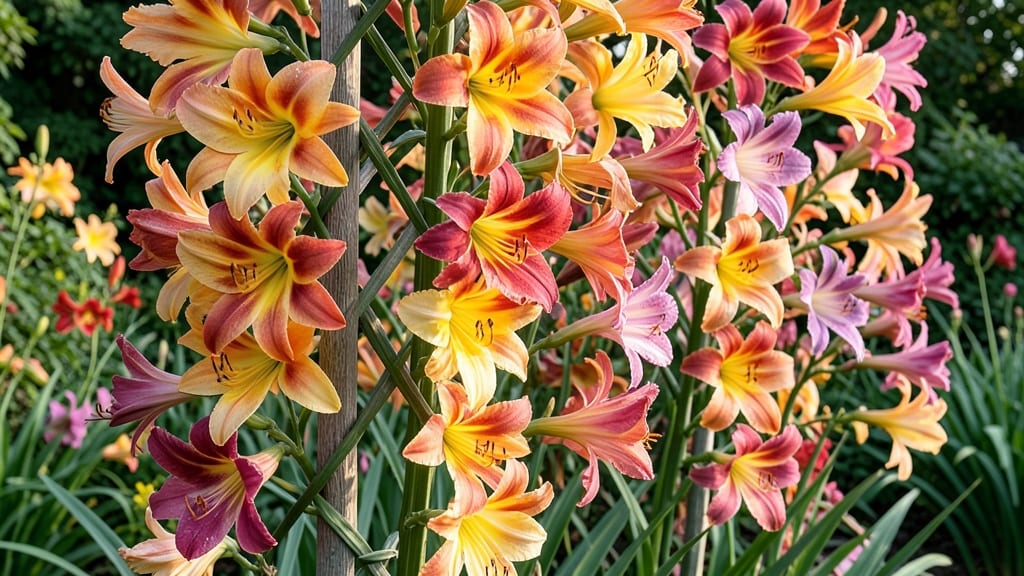
Looking for a perennial flower bed design that fills empty spaces with vibrant color while requiring almost zero effort? The Daylily Rainbow Curtain creates a cascading, ever-blooming display that spreads naturally to fill gaps—ideal for vertical gardens, trellises, or mixed borders where other plants might struggle.
Daylilies (Hemerocallis) are heat-tolerant champions that thrive in full sun to partial shade and produce continuous blooms from early summer through fall. Their grass-like foliage stays tidy, and their colorful, trumpet-shaped flowers come in every hue from pink to orange to yellow. Plant them in clusters along fences, over walls, or at the front of borders—they’ll spread 2-3 feet wide over time, filling in bare spots without needing deadheading.
This design is perfect for urban gardeners with limited space or beginner gardeners who want instant color. Just water occasionally once established, and enjoy a year-round display of cheerful blooms. 🌷
Salvia and Ornamental Grass Prairie
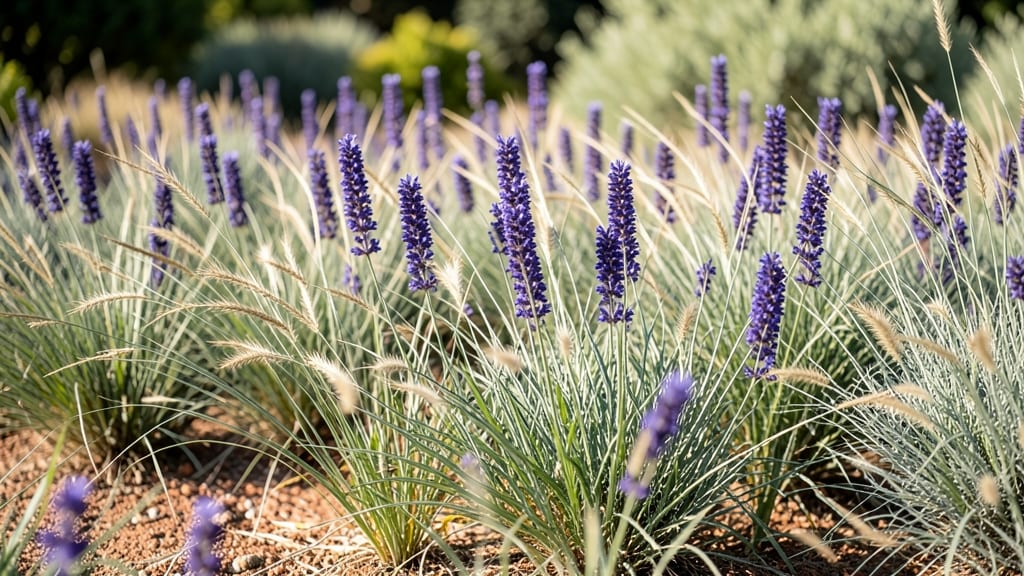
Craving a modern garden that feels like a masterpiece with minimal effort? Pair tall salvia spikes with feathery ornamental grasses for a textural contrast that dances in the wind while requiring almost no care. This drought-resistant duo thrives in full sun and well-drained soil, making it ideal for urban spaces or dry climates.
Start with Salvia 'May Night' (deep purple spikes) or Salvia nemorosa (lavender-blue blooms) as your vertical focal point. Pair it with Miscanthus sinensis or Pennisetum grasses for movement and height variation. Plant them in odd-numbered groupings for natural balance, and mulch with gravel to suppress weeds and retain moisture.
This design is perfect for urban gardeners or anyone seeking a sleek, low-maintenance landscape. The combination of bold colors and swaying textures creates year-round interest with almost zero upkeep. 💚
Hosta and Fern Shade Garden
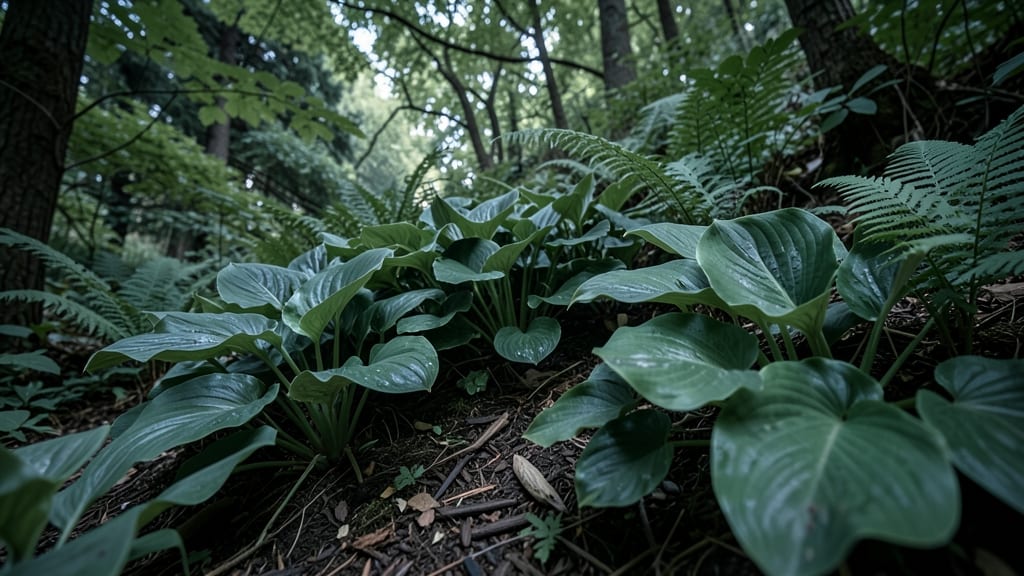
Turn your shady spots into a serene woodland retreat with a hosta and fern shade garden—where lush foliage steals the show without demanding sunlight or high maintenance. This design thrives in dappled shade or full shade**, bringing texture and color to areas where sun-loving plants struggle.
Start with hostas (Hosta spp.) for their striking, blue-green or variegated leaves that range from 6 inches to 3 feet tall, then layer in delicate ferns like maidenhair (Adiantum) or ostrich fern (Matteuccia) for feathery contrast. Add moss and shade-tolerant ground covers like foamflower (Tiarella) to fill gaps naturally. Mulch with leaf litter or shredded bark to retain moisture and suppress weeds—your plants will reward you with year-round interest.
This garden is perfect for woodland gardeners, urban courtyards, or north-facing beds where flowers fade fast. The secret? It’s all about foliage drama—no deadheading, no fuss, just tranquil beauty that thrives where others fail. 💚
Bee Balm and Bergamot Hummingbird Haven
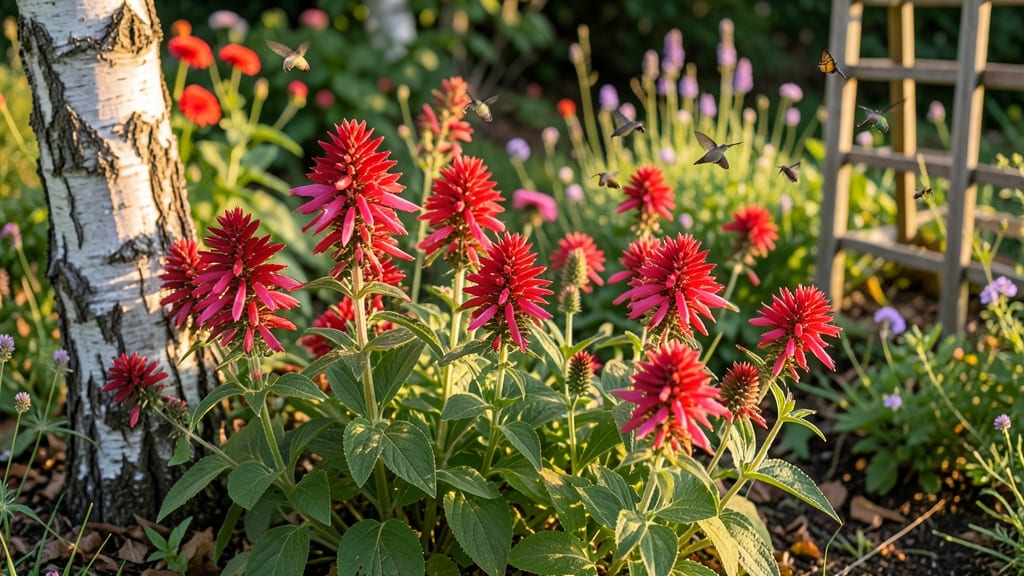
Turn your garden into a hummingbird hotspot with bee balm and bergamot—two self-seeding powerhouses that burst with bright red and pink blooms from early summer to fall. These pollinator magnets thrive in full sun to partial shade, making them ideal for wildflower patches, cottage gardens, or even small containers on patios and balconies.
Plant bee balm (Monarda didyma) for its bold, tubular flowers that hummingbirds adore, and add bergamot (Monarda fistulosa) for delicate lavender blooms that bees can’t resist. Both plants spread easily through self-seeding, so they’ll fill in gaps naturally over time. To keep them healthy, deadhead spent blooms in early fall to encourage next year’s flowers, and divide clumps every 3-4 years to prevent overcrowding.
This dynamic duo is perfect for urban gardeners, wildlife enthusiasts, and beginners who want a low-maintenance way to attract pollinators. Just add a splash of color and watch your garden come alive with fluttering wings and buzzing activity. ✨
Russian Sage and Blanket Flower Sunset Glow
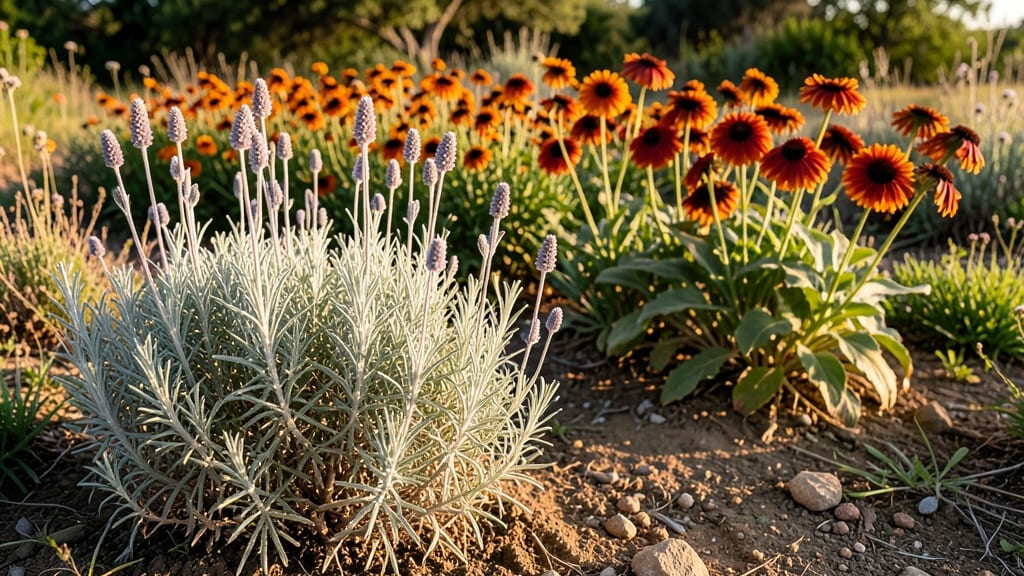
Craving a late-season garden that steals the show when other perennials fade? The Russian Sage and Blanket Flower combo delivers a sunset glow that lasts from August through frost—no deadheading required. These two powerhouses thrive in full sun and even poor, rocky soil, making them perfect for challenging spaces like slopes or dry beds where other plants struggle.
Plant Russian Sage (Perovskia atriplicifolia) at the back for its airy, lavender-blue spikes that sway in the breeze, then add Blanket Flower (Gaillardia) in front for its golden-orange daisy-like blooms with crimson centers. Both are drought-tolerant once established, and their contrasting colors create a warm, fiery display that hummingbirds and bees adore. For best results, space plants 18-24 inches apart and mulch with gravel to keep roots cool.
This pairing is ideal for modern landscapes, rock gardens, or wildflower meadows—especially in regions with hot summers. Gardeners in USDA zones 4-9 will love how this duo keeps blooming long after other perennials call it quits. 🌻
Peony and Allium Fragrant Cloud

Craving a romantic, fragrant display that elevates your garden’s elegance? The Peony and Allium Fragrant Cloud combo delivers lush, scented peony blooms paired with striking globe alliums for a timeless, high-impact look. This duo thrives in full sun to partial shade and blooms in late spring, creating a fragrant spectacle that lasts for weeks.
Plant herbaceous peonies (like 'Sarah Bernhardt' or 'Bowl of Beauty') at the center for their bold, ruffled blooms, then surround them with Allium 'Globemaster' or 'Purple Sensation' for their dramatic, orb-like flowers. The alliums provide height and contrast while the peonies fill the air with their intoxicating scent—perfect for cutting gardens or formal borders. Mulch with compost to retain moisture and extend their bloom time.
This design is ideal for formal gardens, wedding venues, or cutting gardens, offering both beauty and longevity. The alliums also attract pollinators while the peonies add a touch of old-world charm. 🌷