
Companion Plants
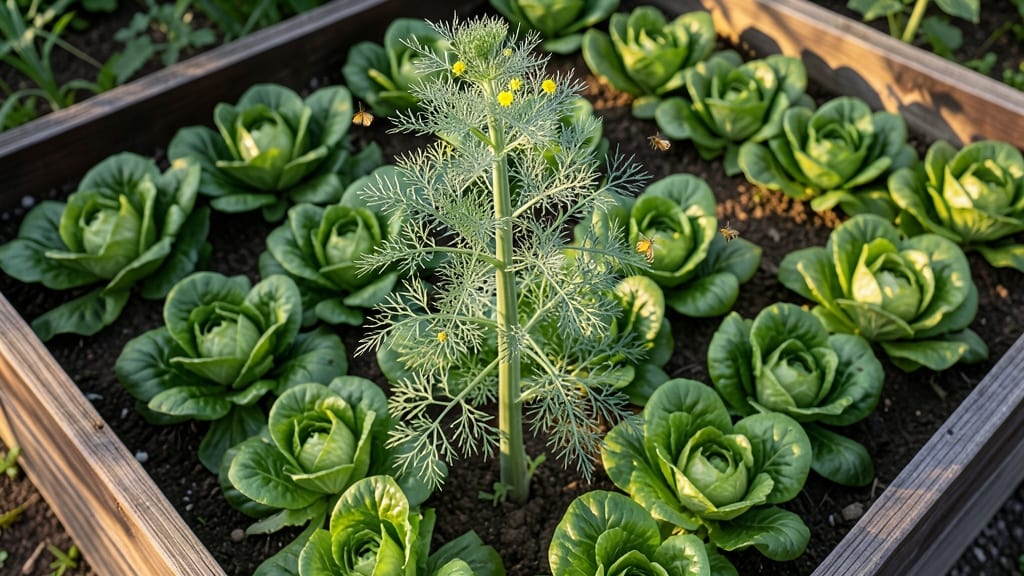
Want to grow more food in less space while naturally repelling pests? These 10 raised bed companion planting layouts combine science-backed pairings with space-saving designs to maximize your vegetable garden's potential—whether you're a beginner or seasoned gardener.
Three Sisters PolyCulture Raised Bed
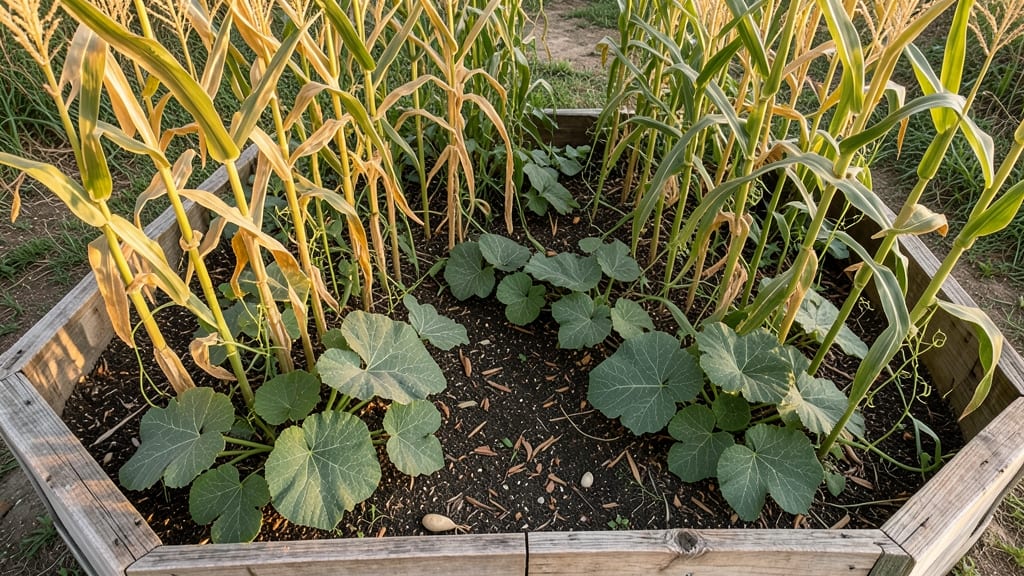
Looking for a low-maintenance, high-yield raised bed that works with nature instead of against it? The Three Sisters PolyCulture—a time-tested Native American trio of corn, beans, and squash—creates a self-sustaining ecosystem that boosts soil fertility, deters pests, and maximizes space. This layout is perfect for organic gardeners who want to reduce synthetic inputs while increasing harvests.
Start by planting corn along the edges of your raised bed to provide vertical support. The pole beans will climb the cornstalks, fixing nitrogen in the soil as they grow—eliminating the need for synthetic fertilizers. Beneath the shadows of the corn and beans, summer squash or winter squash vines spread out, suppressing weeds and retaining moisture. This trio naturally repels pests like raccoons and squirrels, which dislike the combination of tall corn and sprawling squash.
Best for gardeners who prioritize sustainability and tradition, this layout thrives in full sun and well-draining soil. The beans alone can add up to 150 pounds of nitrogen per acre to your soil—making it a game-changer for organic growing. 🌱
Herb-Infused Pest Control Garden Layout
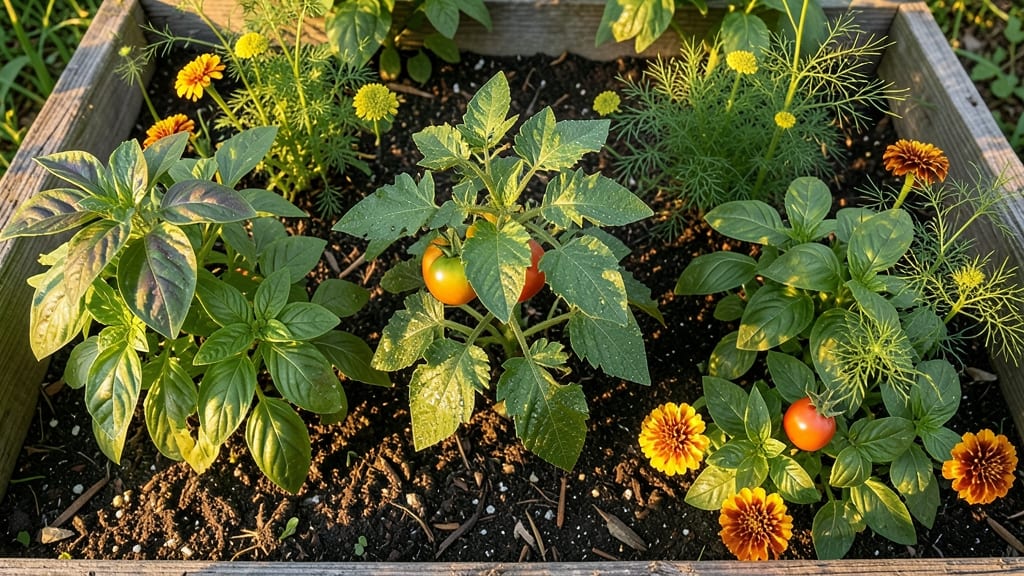
Tired of battling pests in your raised bed while trying to grow tomatoes and peppers? A herb-infused pest control layout uses nature’s own repellents—basil, dill, and marigolds—to create a fragrant shield against aphids, mosquitoes, and whiteflies without chemicals.
Plant basil directly among your tomatoes to deter whiteflies and improve flavor, while dill acts as a mosquito magnet (plant it near the bed’s edge). Surround the perimeter with marigolds, whose strong scent confuses pests and attracts beneficial predators like ladybugs. This layout thrives in 4-6 hours of sun and fits perfectly in a 4’x8’ raised bed, making it ideal for urban gardeners with limited space.
This setup reduces your need for sprays while boosting yield—perfect for small yards or balconies where every inch counts. 🌱
Vertical Trellis Companion Planting Bed
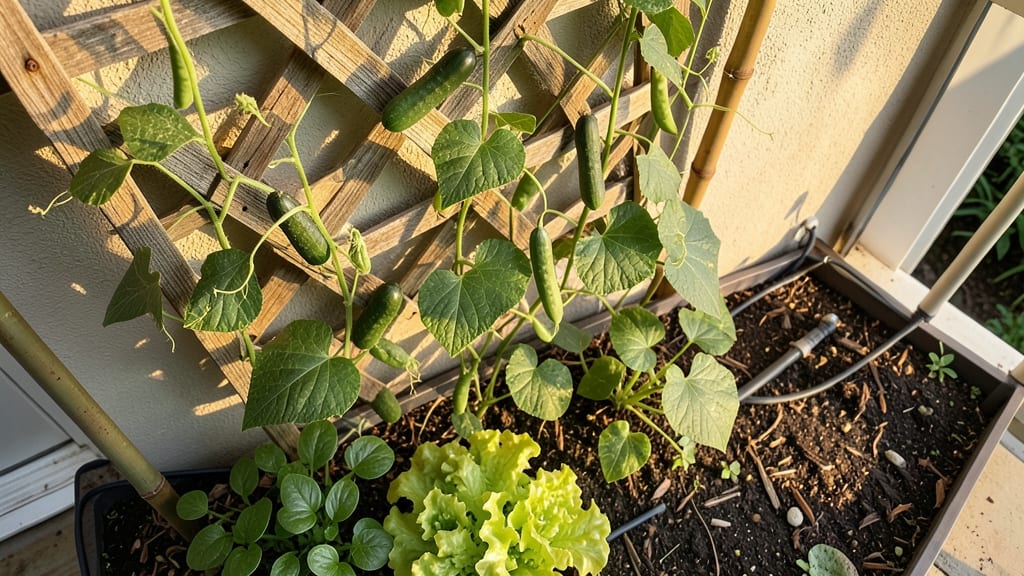
Turn your small balcony or tight backyard into a high-yield garden with a vertical trellis companion planting bed. This space-saving design lets cucumbers, peas, and pole beans climb upward while radishes and lettuce thrive beneath—perfect for maximizing every inch of your growing area.
Install a sturdy trellis along one side of your raised bed to support vining plants like cucumbers and pole beans, which will shade and protect the shallow-rooted greens below. Plant fast-growing radishes first for early harvests, then tuck in lettuce varieties like butterhead or romaine, which prefer cooler conditions. The trellis plants will also deter pests like aphids that target lettuce, creating a natural defense system. Water consistently to keep the soil moist but well-drained, and harvest radishes in as little as 30 days while the trellis plants mature over 60-90 days.
This layout is ideal for urban gardeners, balcony growers, or anyone with limited space who still wants a bountiful harvest. The vertical growth not only saves space but also makes harvesting easier and more efficient. 🌱
Allium and Carrot Pest-Repellent Bed
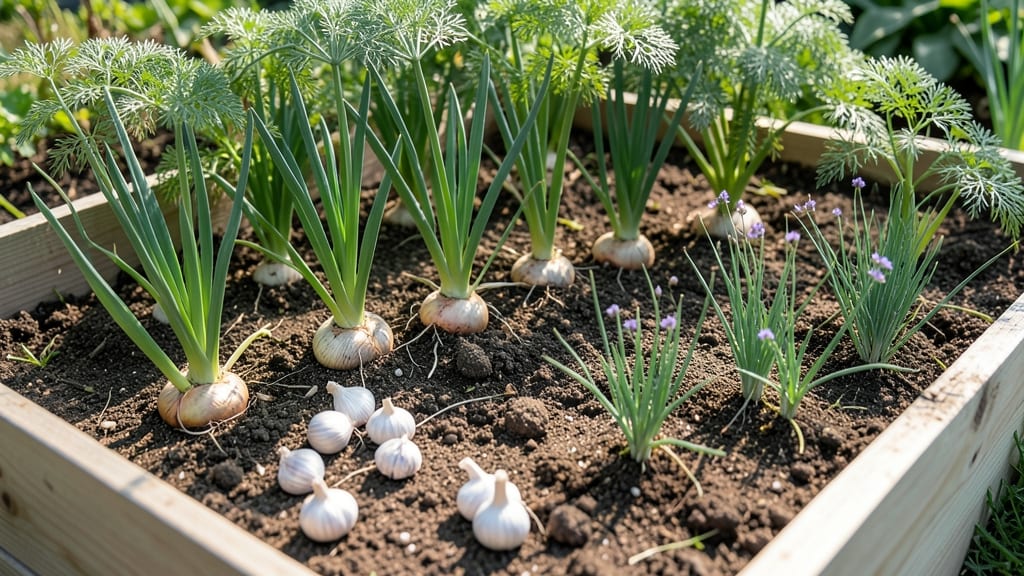
Tired of losing your carrot harvest to pesky flies? A simple allium-carrot bed can save your crop—and your sanity. The sulfur compounds in onions, garlic, and chives naturally repel carrot flies while enhancing the flavor of your roots, creating a win-win for organic gardeners.
Plant onion sets or scallions every 6 inches around your carrots, with garlic bulbs spaced 8 inches apart. Chives can be tucked into the edges for a decorative touch. This layout works especially well in 4-foot-wide raised beds, where the alliums act as a living barrier. The key is to harvest the alliums before they bolt, ensuring they stay fragrant and effective.
This setup is a game-changer for gardeners who want to skip chemical sprays and still get a bountiful harvest. Plus, you’ll enjoy fresh alliums for cooking while your carrots thrive. 🌱
Mediterranean Herb and Tomato Harmony
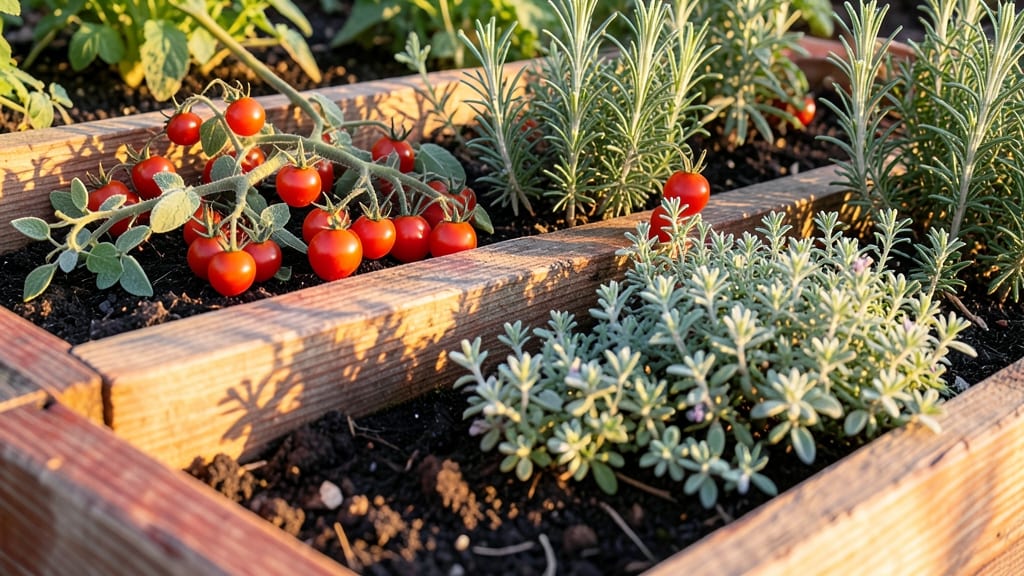
Imagine a raised bed where your tomatoes taste like they’re straight from a Tuscan vineyard, while requiring almost no extra watering or pest control—this is the power of a Mediterranean herb and tomato harmony. The secret lies in pairing cherry tomatoes with oregano, thyme, and rosemary, creating a self-sustaining ecosystem that thrives in dry conditions while keeping pests at bay.
Start by planting cherry tomatoes in the center of your raised bed, surrounded by oregano and thyme along the edges. Tuck rosemary at the corners—its woody stems act as natural trellises for the tomatoes while releasing aromatic oils that repel whiteflies and spider mites. These herbs also improve the flavor of your tomatoes by enhancing their natural sweetness. Water deeply but infrequently (once a week is often enough) to encourage deep root growth, and use gravel mulch to retain moisture and suppress weeds. This layout is ideal for gardeners in USDA zones 7-10, where drought-tolerant plants shine.
This combo isn’t just practical—it’s a sensory experience. The fragrance of rosemary and thyme wafts through your garden, while the tomatoes produce abundant, flavorful fruit with minimal fuss. Perfect for beginners or busy gardeners, this bed proves that low-maintenance doesn’t mean low-reward. 🌿
Brassica and Nitrogen-Fixing Power Bed
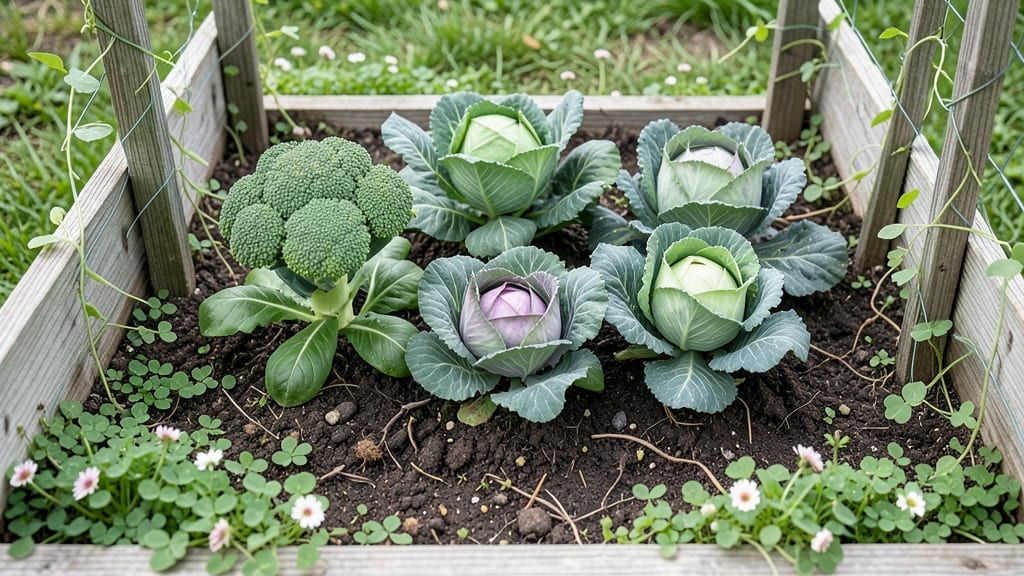
Tired of buying pricey fertilizers just to keep your leafy greens thriving? This Brassica and nitrogen-fixing power bed turns your soil into a nutrient factory while growing your favorite vegetables. The secret? Pairing heavy feeders like broccoli, cabbage, and kale with peas or clover—plants that pull nitrogen from the air and deposit it right where your brassicas need it most.
Start by planting climbing peas or winter clover along the edges of your raised bed, where they’ll fix nitrogen throughout the growing season. Then, interplant your brassicas in the center, spacing them 12-18 inches apart for optimal air circulation. The peas will also provide shade for your greens during hot afternoons, reducing stress and bolting. By the time you harvest your cabbage in late summer, the soil will be so rich that next year’s crops will practically grow themselves.
This layout is a game-changer for gardeners who want to cut fertilizer costs while maximizing yields—especially in small spaces where every square inch counts. Perfect for beginners or eco-conscious growers, this bed proves you don’t need chemicals to get big, healthy harvests. 💪
Strawberry and Borage Flower Bed
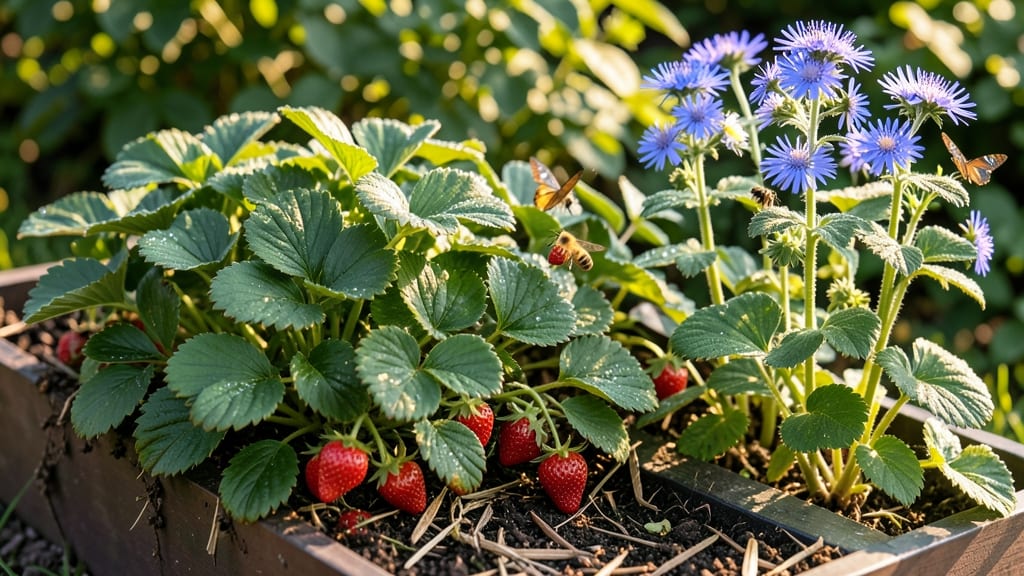
Turn your small raised bed or container garden into a pollinator paradise while boosting your strawberry harvest—simply by adding borage. This dynamic duo not only deters pests like slugs and aphids but also enhances the sweetness of your strawberries through improved pollination.
Plant strawberries along the edges of your bed, leaving space in the center for borage to sprawl. The blue star-shaped flowers of borage attract bees and butterflies, while its cucumber-like foliage repels unwanted insects. For best results, space strawberries 12 inches apart and let borage self-seed—it’ll return year after year with minimal effort.
This layout is perfect for beginner gardeners or those with limited space, as both plants thrive in full sun to partial shade and require minimal maintenance. Plus, the edible borage flowers add a peppery kick to salads, making this a dual-purpose bed! 🌻
Root Vegetable and Flower Interplanting
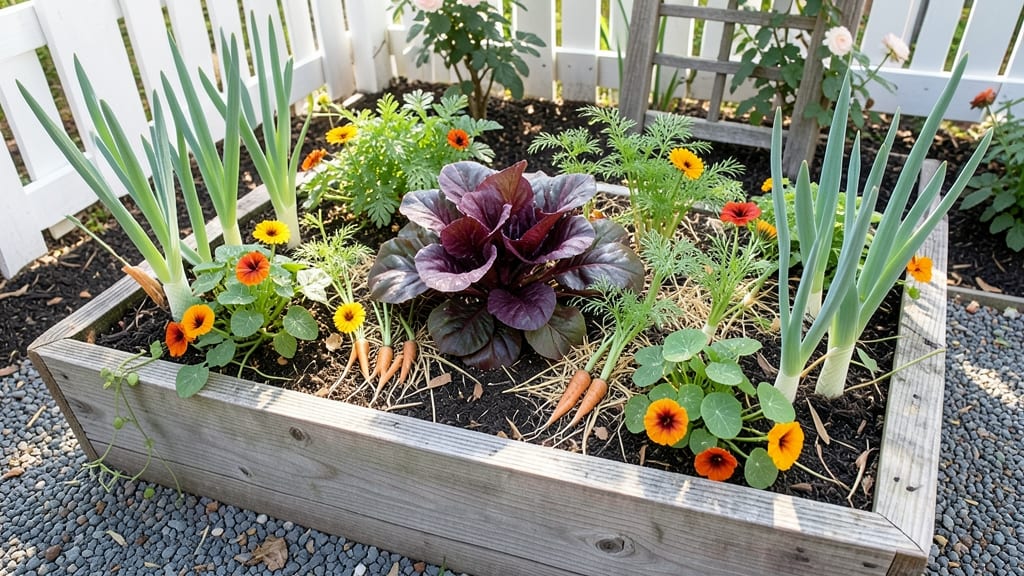
If you love harvesting fresh root vegetables but struggle with pests like carrot flies or aphids, this colorful, low-maintenance raised bed layout is your solution. By pairing beets, carrots, and leeks with nasturtiums and calendula, you’ll create a pest-repelling powerhouse while adding vibrant blooms to your garden.
The edible flowers—nasturtiums and calendula—act as natural pest deterrents, their strong scents confusing insects that might target your roots. Beets and carrots thrive in loose soil, while leeks add height and deter pests with their strong aroma. Plant calendula between rows for cut-and-come-again blooms that also improve soil health by attracting beneficial insects. This layout works beautifully in 4x8-foot raised beds, giving you continuous harvests all season long.
This design is perfect for gardeners who want both beauty and productivity—ideal for small spaces, urban gardens, or anyone who loves a visually stunning harvest. The flowers even make gorgeous bouquets while keeping your roots thriving. 🌻
Nightshade and Legume Synergy Bed
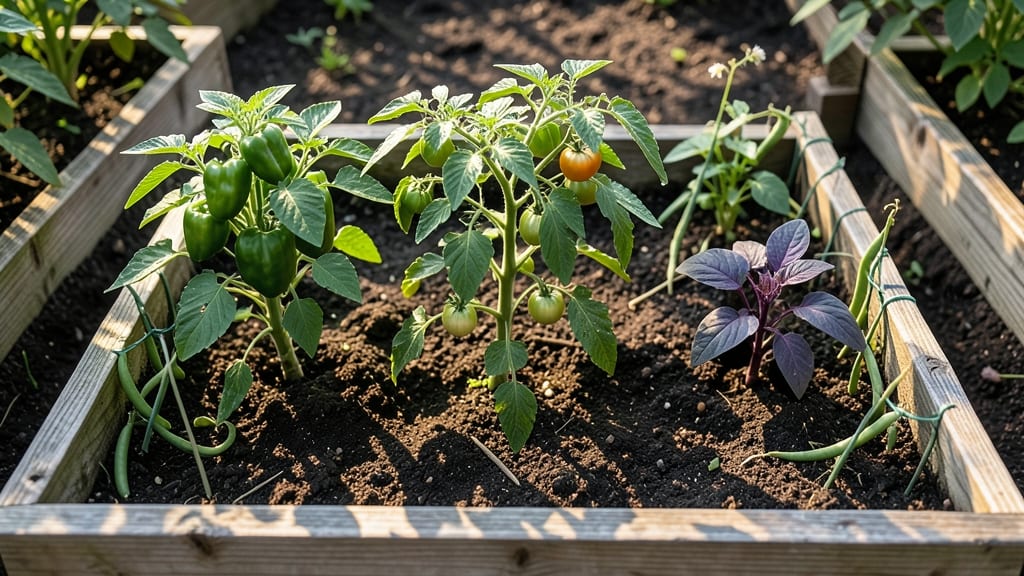
If you love growing heat-loving crops like tomatoes, peppers, and eggplants but struggle with compact spaces, this nightshade and legume synergy bed is your solution. By pairing these three nightshades with beans or peas, you create a self-sustaining ecosystem that fixes nitrogen, deters pests, and maximizes every inch of your raised bed.
Start by planting pole beans or bush peas along the edges or on a trellis to climb vertically. Their deep roots fix nitrogen, enriching the soil for your tomatoes, peppers, and eggplants, which thrive in the same warm, sunny conditions. The beans also act as a natural pest deterrent—aphids and other pests avoid the strong scent of legumes, giving your nightshades a protective barrier. For best results, ensure your bed gets at least 6 hours of sun daily and keep the soil consistently moist but well-draining.
This layout is perfect for urban gardeners, small-space growers, or anyone who wants to reduce fertilizer use while boosting yields. The combination of legumes and nightshades creates a dynamic, low-maintenance bed that rewards you with a bountiful harvest. 🌻
Aromatic Fennel and Lettuce Bed

Struggling to keep your lettuce and greens pest-free without chemicals? Let fennel be your secret weapon—its feathery fronds naturally repel aphids, slugs, and cabbage moths while attracting pollinators like butterflies.
Plant one fennel stalk at the center of your raised bed, surrounded by lettuce, spinach, or Swiss chard. The fennel’s strong scent masks the delicate greens from pests, while its flowers provide nectar for beneficial insects. For best results, space fennel 18-24 inches apart and harvest lettuce leaves from the outside in to avoid shading.
This layout is perfect for gardeners who want crisp, pest-free greens with minimal effort—ideal for spring and fall plantings in partial shade to full sun. 🌿