
Landscaping
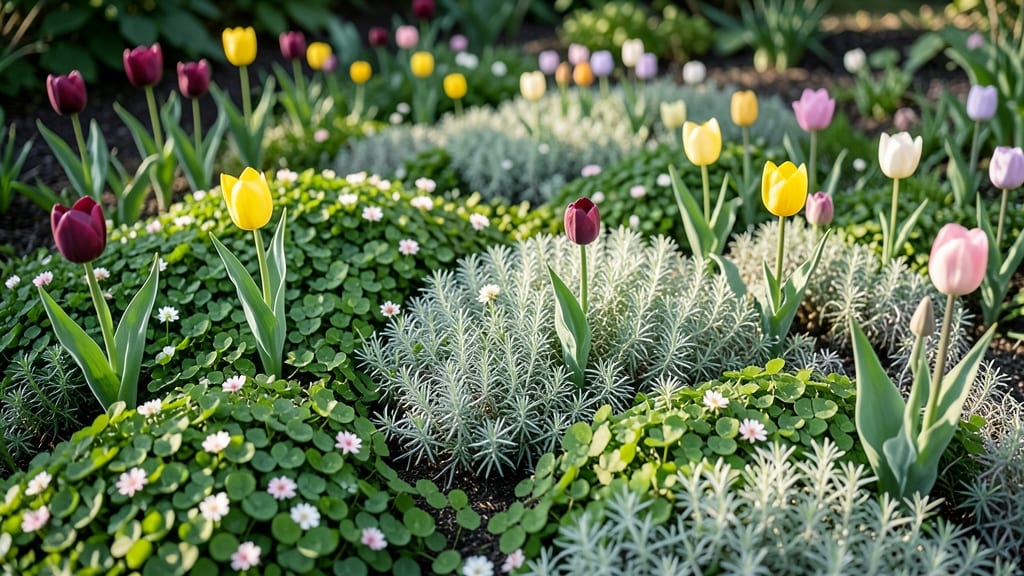
Tulips bring vibrant spring color to gardens, but their blooms fade fast. These ten tulip bed ideas ensure continuous seasonal interest while minimizing deadheading—perfect for low-maintenance gardeners who still want high-impact displays.
Layered Height Tulip Beds With Perennials
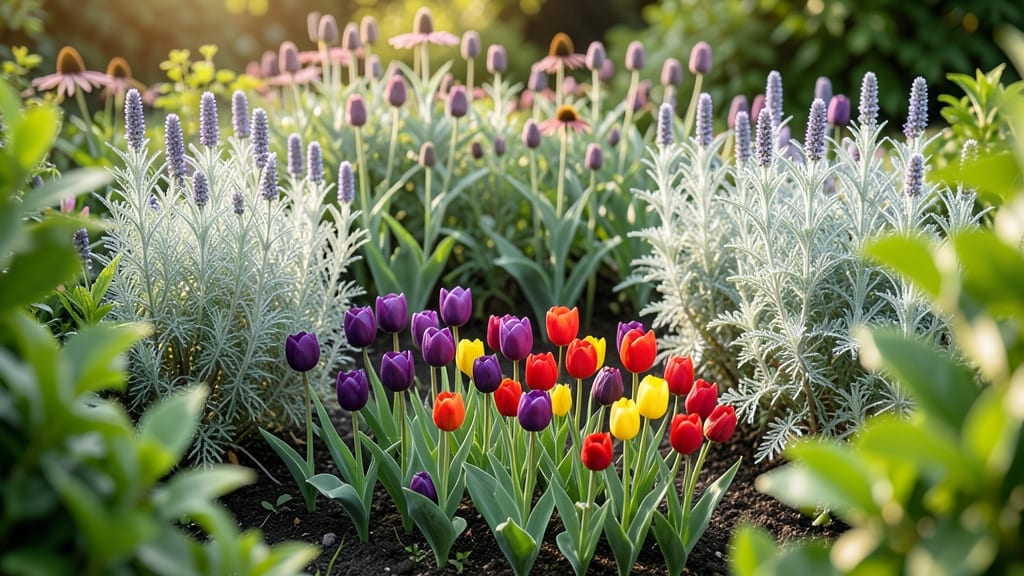
Tired of tulip beds that look bare after spring? Layered height designs with perennials solve this problem by blending early tulips with late-season bloomers like catmint or Russian sage, creating a seamless transition from spring to summer.
Plant tall perennials (3-4 feet) at the back (e.g., Russian sage) to frame shorter tulips in front. Choose tulip varieties that bloom 2-3 weeks earlier than your perennials—this ensures the perennials take over just as tulip foliage yellows. For example, pair Darwin hybrid tulips (late April) with catmint (June-July). Mulch with 2-3 inches of shredded bark to suppress weeds and retain moisture.
This approach works especially well for gardeners who want low-maintenance color without deadheading. The tall perennials also provide vertical interest that softens the sharp lines of tulip beds, making it ideal for both cottage and modern gardens. 🌻
Dutch Border Tulip Designs With Bulb Pairings
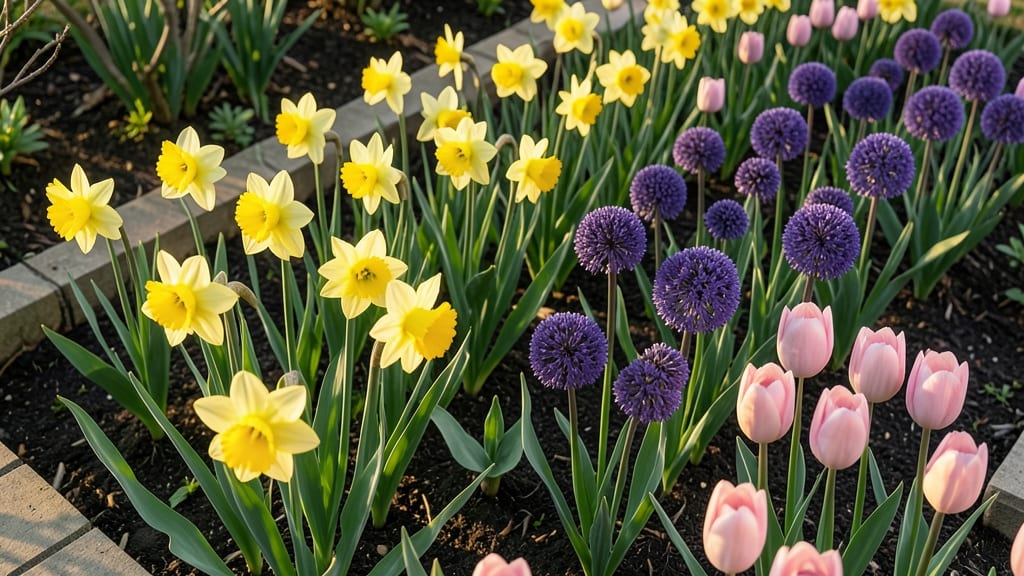
Skip the seasonal gaps with Dutch border designs that blend tulips with daffodils or alliums for a nonstop spring show. This classic European style uses precise geometric patterns to create visual harmony while extending your blooming window from early March through May.
Plant early-blooming daffodils (like 'Tête-à-Tête') alongside tulips, followed by mid-season varieties, then late-blooming alliums ('Purple Sensation') to ensure fresh color every 3-4 weeks. The key is spacing: place bulbs 4-6 inches apart in neat rows, with tulips in the center and daffodils/alliums framing the edges. This creates a symmetrical look that's both timeless and low-maintenance.
Perfect for cottage gardens or formal landscapes, this approach gives you year-after-year reliability with minimal deadheading. The layered blooms also hide fading foliage naturally, making it ideal for gardeners who want beauty without the upkeep. ✨
Woodland-Style Tulip Plantings Under Trees
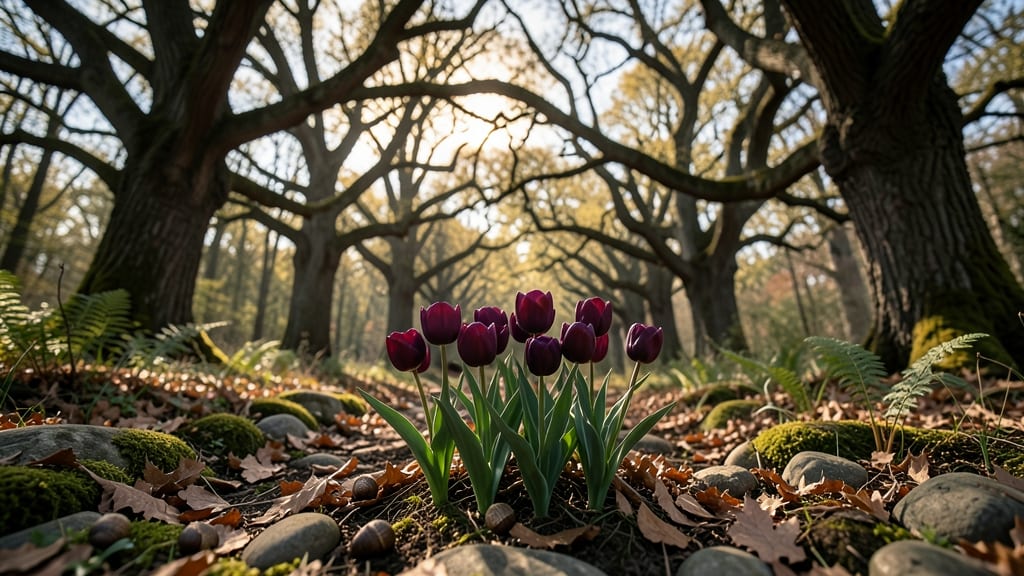
Skip the formal garden bed and bring tulips into the understory where they belong. Woodland-style plantings under deciduous trees create a magical, low-maintenance display that thrives in dappled shade—perfect for areas where full sun isn’t an option.
Plant naturalistic clusters of tulips like 'Darwin Hybrid' or 'Fosteriana' varieties, which handle shade better than delicate species. Pair them with evergreen ferns (like Ostrich Fern) or hellebores to maintain interest when tulips fade. The key is to mimic nature: scatter bulbs loosely rather than in rigid rows, and mulch with leaf litter or wood chips to suppress weeds while retaining moisture.
This approach works beautifully for shade-loving gardeners or those with mature trees—it’s also ideal for urban gardens where space is limited but light filters through canopies. The result? A serene, four-season display that feels wild yet intentional. 🌿
Container Tulip Gardens For Balconies And Patios
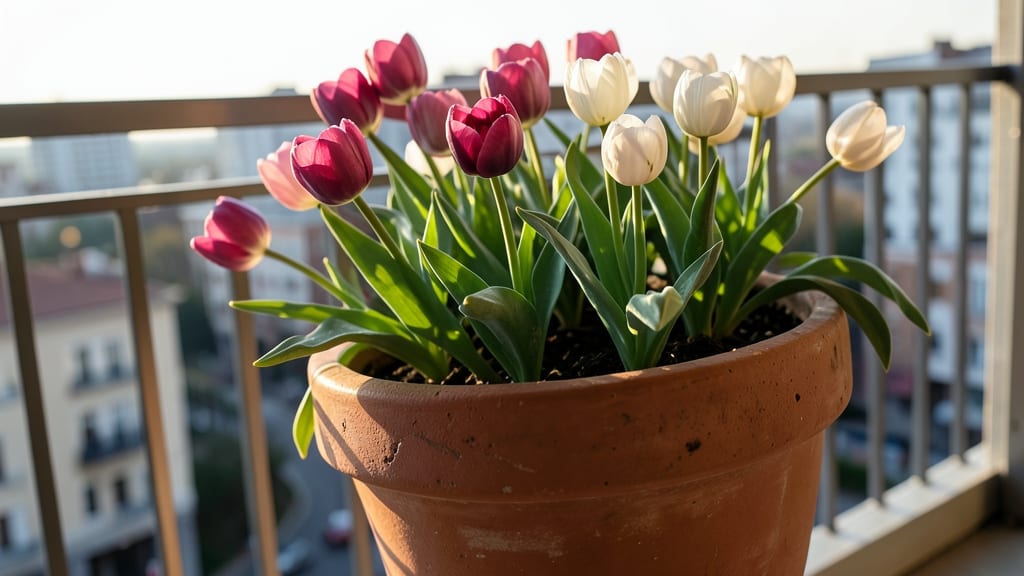
No garden bed? No problem! Container tulip gardens bring spring’s vibrant colors to balconies and patios with minimal space. Compact varieties like 'Tiny Ruby' (deep pink) or 'Sugar Pearl' (soft white) thrive in large pots, offering bold blooms without the commitment of in-ground planting.
Pair them with trailing English ivy or ornamental grasses like fountain grass to soften edges and extend the season. Use well-draining potting mix with added compost, and place containers in full sun (6+ hours) for best results. Water deeply once a week, and fertilize lightly in early spring to encourage robust blooms.
This setup is perfect for urban gardeners or renters who want seasonal color without long-term maintenance. The cascading foliage adds texture, while the tulips provide a pop of color that’s easy to move or store after blooming. 🌻
Monochromatic Tulip Beds For Modern Gardens
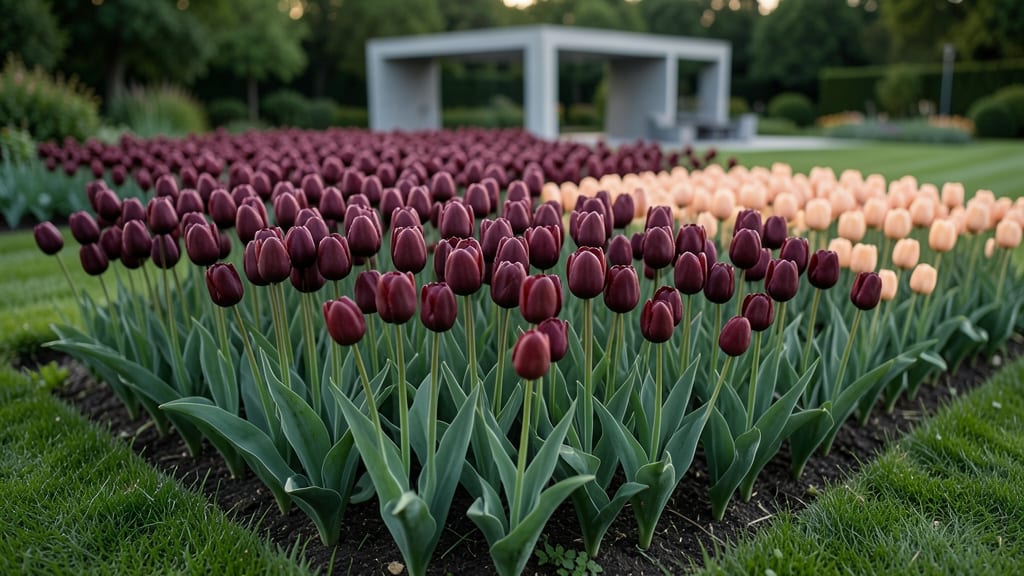
Want a modern garden that feels polished yet effortless? Monochromatic tulip beds deliver clean, high-impact color without the chaos of mixed hues. A single shade—like deep burgundy or soft peach—creates a cohesive look that feels intentional and stylish, while keeping maintenance simple.
Pair your tulips with foliage plants like hostas or ornamental grasses to maintain structure after blooms fade. These plants provide year-round interest and contrast beautifully with tulip colors. For example, dark green hostas pair perfectly with burgundy tulips, while silver-blue grasses complement soft peach varieties. Plant tulip bulbs in geometric patterns for extra sophistication.
This design is ideal for gardeners who love minimalist aesthetics or urban spaces with limited room. The monochromatic approach reduces visual clutter while keeping your garden looking fresh and intentional. 💚
Tulip And Grass Mix Beds For Textural Interest
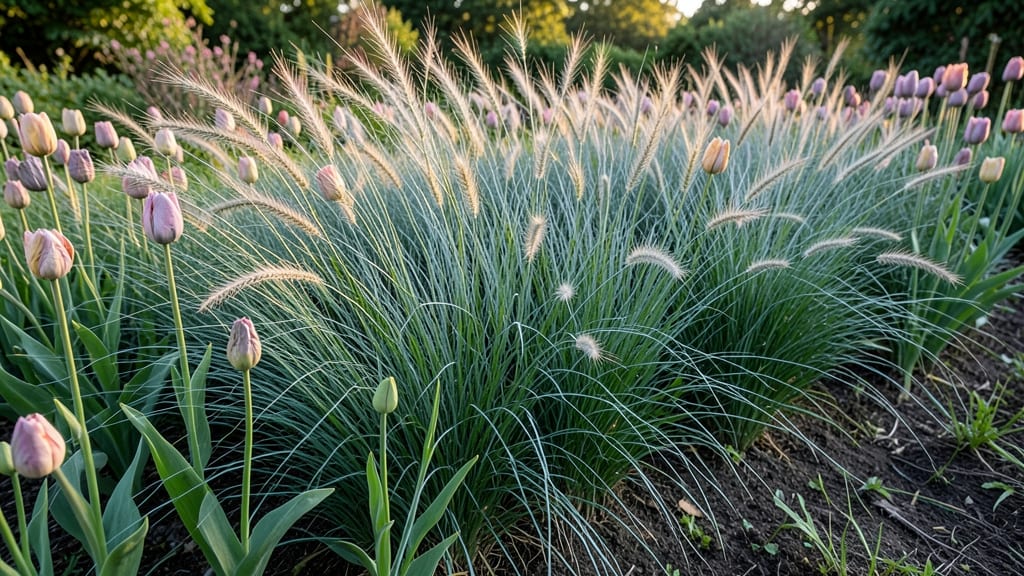
Tired of tulip beds that look bare after their blooms fade? Ornamental grasses like 'Karl Foerster' feathertop grass are the secret weapon for year-round texture and movement. Their upright, airy plumes sway gently in the breeze, adding dimension while masking tulip foliage as it declines naturally.
Plant clumps of feathertop grass (3-4 feet tall) behind tulips for vertical contrast, spacing them 18-24 inches apart. The grasses' golden winter tones create a stunning backdrop for spring tulips, while their deep roots improve soil structure. For a softer look, mix in shorter grasses like Miscanthus sinensis 'Zebrinus' for striped foliage that adds visual intrigue.
This design is perfect for gardeners who want low-maintenance beauty with minimal deadheading—ideal for borders, cottage gardens, or modern landscapes craving texture. 🌻
Fragrant Tulip Varieties For Sensory Gardens

Transform your garden into a fragrant escape with scented tulip varieties like 'Queen of Night' (deep purple with a spicy aroma) or 'Apeldoorn' (soft pink with a sweet vanilla-like scent). These cultivars go beyond visual appeal, filling the air with intoxicating fragrance during peak bloom—typically late April to early May—when most tulips offer only color.
Pair them with lavender or rosemary to create a sensory garden that lingers long after tulip petals fade. The herbs not only complement the scents but also mask tulip foliage as it declines, while their drought tolerance makes maintenance effortless. For best results, plant bulbs in well-draining soil with 6 hours of sun and mulch lightly to preserve moisture.
This approach is perfect for gardeners who love immersive experiences—whether you're designing a cut-flower garden, a small balcony planter, or a fragrant pathway. The lingering aroma turns every stroll through your garden into a sensory delight. 🌷
Tulip And Rock Garden Combinations
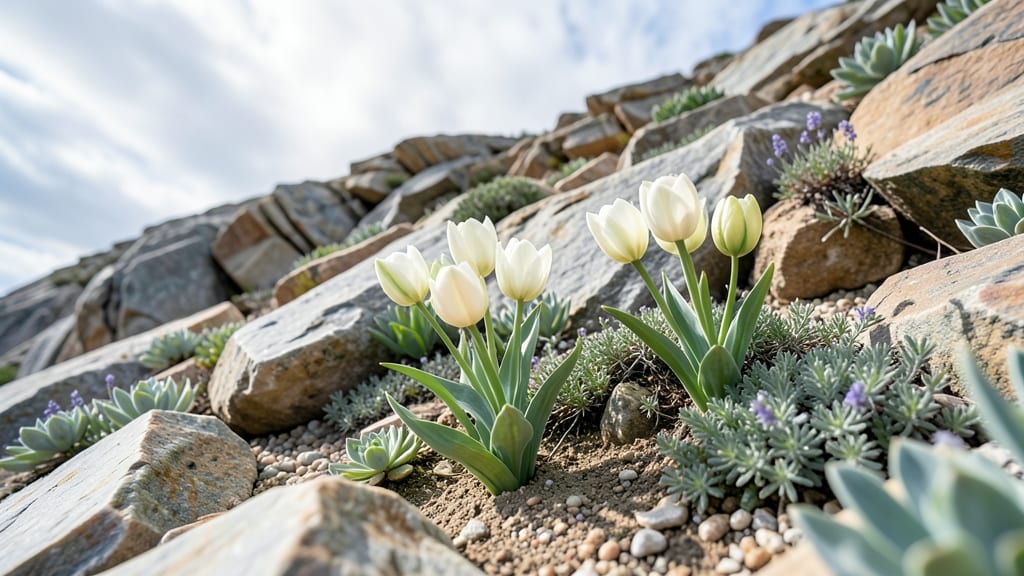
Turn your rock garden into a springtime showstopper without the high maintenance. Alpine tulips like 'White Sim' are perfect for rocky slopes or crevices, blooming early and pairing beautifully with drought-resistant plants like sedum or thyme. This combo thrives in well-draining soil and needs less water once established.
The key to success is planting tulip bulbs in late fall, nestled among small stones or between crevices where thyme or sedum already grows. Since alpine tulips bloom early and fade quickly, their companions take over—sedum adds late-summer color, while thyme stays green all season long. You’ll spend minimal time deadheading because the foliage blends naturally into the rocky terrain.
This design is ideal for urban gardeners with limited space or anyone who wants a low-water, high-impact display. The natural stone backdrop enhances the tulips' delicate blooms while keeping weeds at bay. 🌱
Tulip And Flowering Shrub Pairings
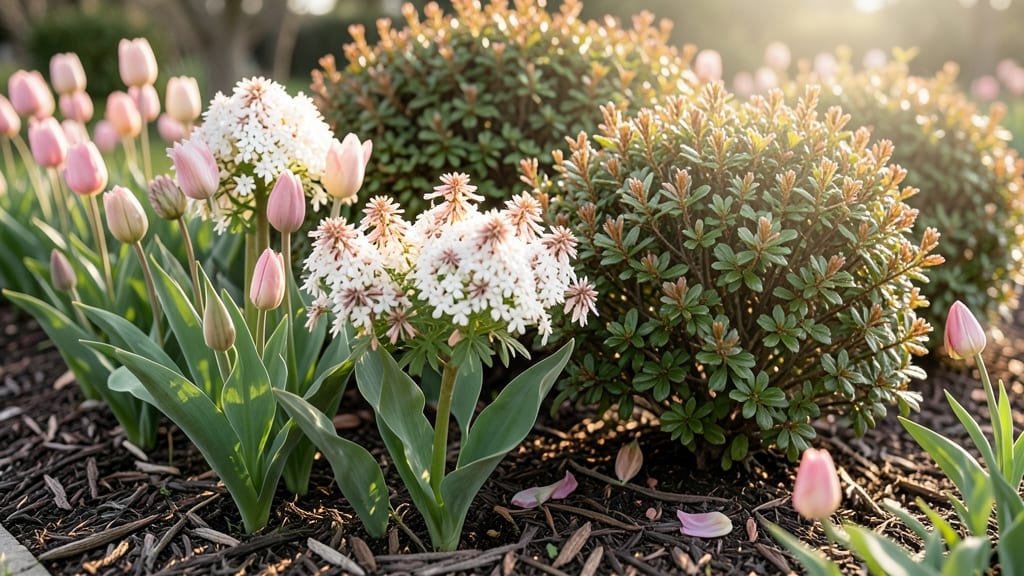
Tired of tulip beds that look bare after spring? Dwarf flowering shrubs like 'Dwarf Fothergilla' solve this problem by blooming alongside tulips in early spring, then taking center stage as the tulip foliage fades. This creates a seamless transition from spring color to summer interest without gaps.
Plant white or pink tulips at the base of 3-4 foot tall shrubs like fothergilla, abelia, or weigela for a layered look. These shrubs thrive in full sun to part shade and require minimal pruning. Their glossy foliage provides structure even when tulips are dormant, making this pairing ideal for small spaces or foundation plantings.
Perfect for gardeners who want year-round structure with minimal effort, this combination works especially well in urban gardens where space is limited but visual impact matters. 💚
Tulip Lawn Alternatives With Clover Ground Cover

Tired of mowing between your tulip clumps? Swap grass for a clover or creeping thyme ground cover to create a lush, weed-resistant base that thrives without extra effort. This eco-friendly alternative stays green year-round, reducing watering needs while keeping your tulips looking polished.
Plant white dutch clover or creeping thyme in late spring after tulips finish blooming—these hardy covers spread quickly, choking out weeds naturally. For best results, space tulip bulbs 4-6 inches apart and let the ground cover fill the gaps, creating a soft, textured carpet that complements your blooms. The clover even fixes nitrogen in the soil, boosting tulip health for years to come.
This design is perfect for urban gardeners or anyone seeking a low-maintenance, pollinator-friendly alternative to traditional lawns. Say goodbye to mowing and hello to a vibrant, self-sustaining tulip bed. 🌿